

New Delhi | HL June 26, 2026
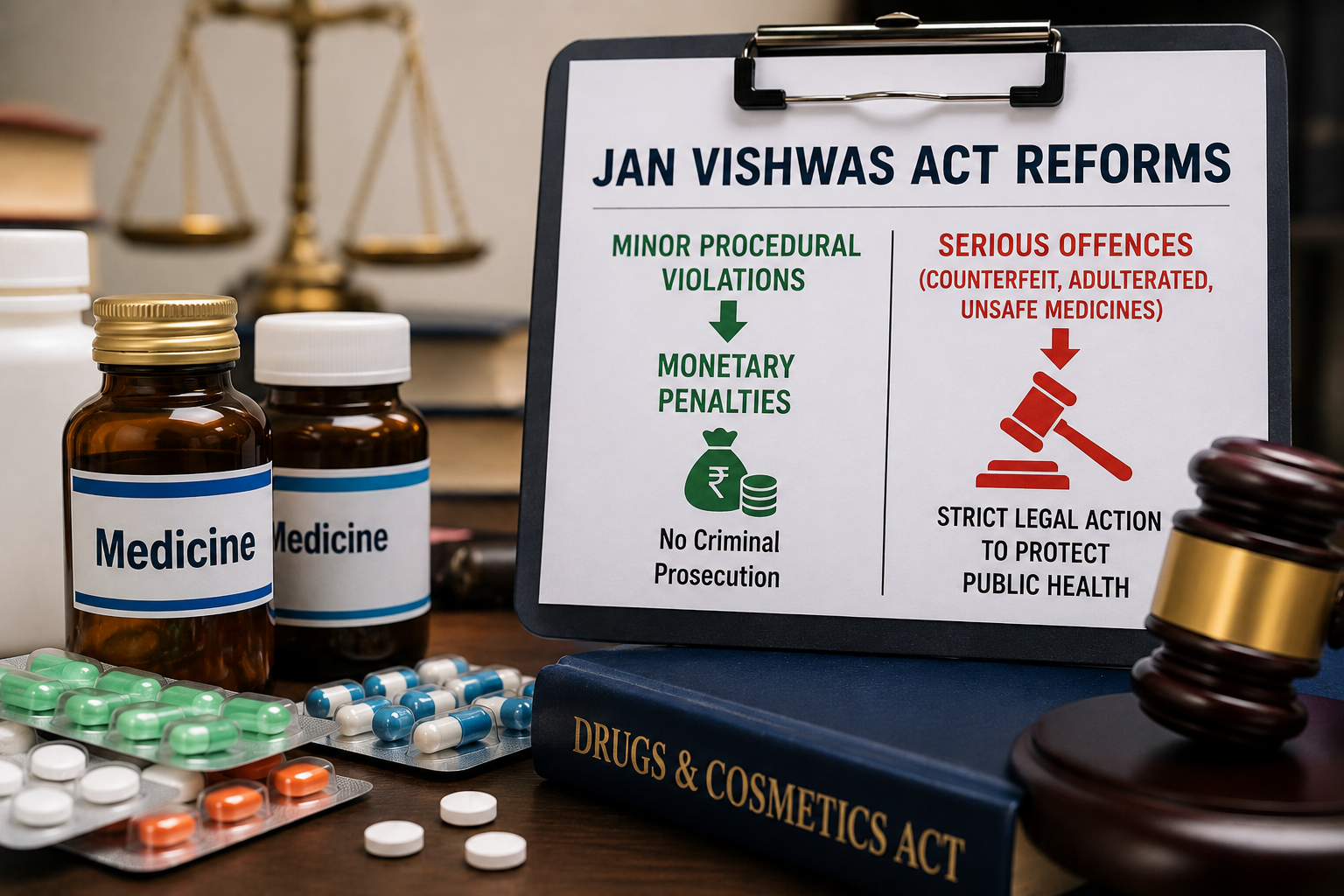
The Central Government has introduced a major regulatory reform for the healthcare sector by implementing key provisions of the Jan Vishwas (Amendment of Provisions) Act, replacing criminal prosecution with administrative monetary penalties for several minor procedural violations under drug and food safety laws. The move is aimed at making regulatory compliance more efficient while maintaining strict safeguards for public health.
Under the revised framework, businesses will no longer face criminal proceedings for technical or procedural lapses that do not directly compromise public safety. Instead, designated adjudicating authorities will impose financial penalties for offences such as record-keeping deficiencies, delays in submitting mandatory information and other documentation-related violations. The government says the changes will reduce unnecessary litigation, improve regulatory efficiency and encourage voluntary compliance.
The reforms are part of the Centre’s broader effort to create a trust-based regulatory system that distinguishes between technical mistakes and offences that endanger public health. Officials said enforcement agencies will now be able to focus more effectively on serious violations instead of pursuing criminal cases over minor compliance issues.
Importantly, the government has clarified that the changes do not dilute penalties for offences involving counterfeit, adulterated, spurious or unsafe medicines. Manufacturers, distributors or sellers dealing in drugs that pose a risk to human life will continue to face stringent criminal prosecution under existing provisions of the Drugs and Cosmetics Act. Similar strict action will also continue against violations that compromise drug quality, patient safety or consumer welfare.
Among the amendments, certain procedural provisions under the Drugs and Cosmetics Act have been converted into an administrative penalty regime. Minor compliance failures, including lapses related to statutory records and disclosure requirements, will now be adjudicated through a civil mechanism rather than criminal courts. The reforms also establish adjudicating authorities and an appellate mechanism to ensure timely disposal of such cases.
According to the government, the objective is to create a balanced regulatory environment that supports legitimate businesses while preserving zero tolerance for violations that threaten public health. Authorities have stressed that the decriminalisation applies only to low-risk procedural offences and should not be interpreted as a relaxation of standards governing the manufacture, sale or distribution of medicines.
The latest reforms come at a time when regulatory oversight of the pharmaceutical sector has intensified following several high-profile cases involving alleged substandard medicines. The Centre maintains that while compliance procedures are being simplified, enforcement against dangerous or fraudulent products will remain as rigorous as ever.