

New Delhi: HL September 06, 2026
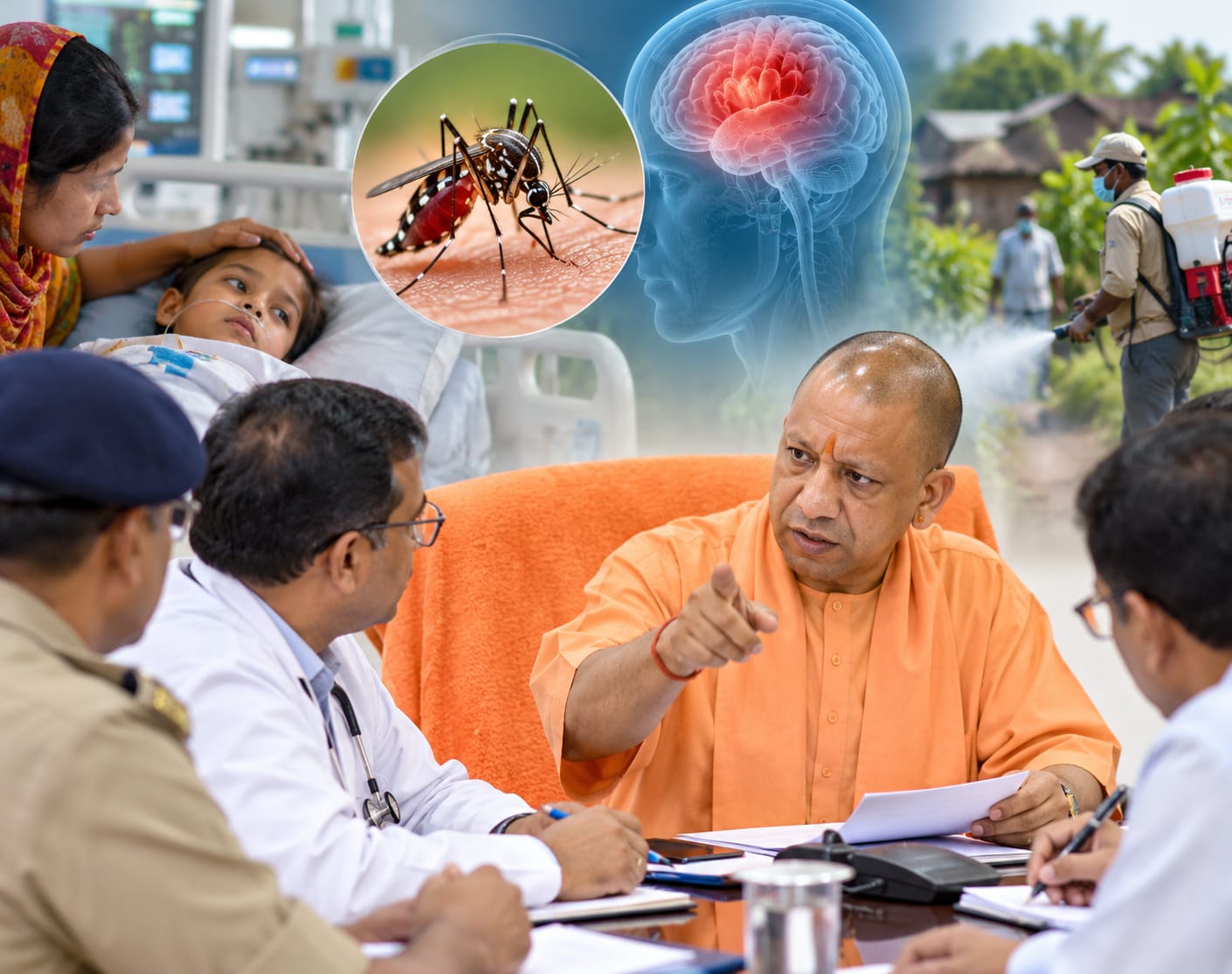
For decades, Gorakhpur and the surrounding districts of eastern Uttar Pradesh were synonymous with the devastating impact of Japanese Encephalitis (JE) and Acute Encephalitis Syndrome (AES). Every monsoon, hospitals witnessed an influx of critically ill children, while encephalitis became one of the region’s most persistent public-health challenges.
The latest government figures indicate a dramatic improvement in the wider Japanese Encephalitis situation in Uttar Pradesh. According to data reported in September 2026, the state recorded 235 JE cases and 21 deaths in 2019, compared with 63 cases and two deaths in 2025. During the first seven months of 2026, just four JE cases and no deaths were reported in Uttar Pradesh.
The turnaround is particularly significant for Gorakhpur, which had historically been one of the country’s worst-affected areas. The district became a major focus of the state’s encephalitis-control strategy, with health care, sanitation, vaccination, surveillance and community-level interventions being brought together.
Yogi Adityanath’s Gorakhpur Model Shows Results
Chief Minister Yogi Adityanath, who represents Gorakhpur politically and has repeatedly highlighted encephalitis as a major public-health priority, has overseen a sustained campaign against the disease since taking charge of Uttar Pradesh.
The strategy moved beyond treating patients after they became critically ill. It placed greater emphasis on prevention, early detection, sanitation, vaccination, clean drinking water and rapid referral to hospitals.
The state’s Dastak campaign, launched in 2018, involved door-to-door surveillance and awareness activities across encephalitis-affected districts. Health workers were tasked with identifying children with fever at an early stage and ensuring that serious cases reached medical facilities quickly. The campaign also brought departments dealing with health, sanitation, drinking water, rural development and education into a coordinated effort.
A detailed report on Gorakhpur’s transformation noted that AES and JE cases in the district fell sharply after the state introduced a coordinated programme involving sanitation, improved health facilities, specialist doctors, vaccination and early case detection.
From Encephalitis Epicentre to Public-Health Success Story
Gorakhpur’s transformation is important because the disease had affected the region for generations. The city’s Baba Raghav Das Medical College became one of the country’s major referral centres for encephalitis patients.
The government’s approach increasingly focused on strengthening facilities closer to villages so that patients did not have to reach a tertiary hospital only after their condition had become critical.
Primary and community health centres were upgraded, paediatric services were strengthened and dedicated facilities were developed for children suffering from high fever and neurological symptoms. These measures helped shift the response from crisis management to early intervention and prevention.
The Numbers Tell the Story
The national picture also shows a substantial decline in Japanese Encephalitis cases. Central government data show that India recorded 2,545 JE cases and 266 deaths in 2019, while 2025 recorded 975 cases and 110 deaths—a decline of roughly 62% in cases.
Uttar Pradesh performed considerably better than its earlier disease burden would have suggested. Between 2019 and 2025, the state registered approximately a 73% decline in JE cases and nearly 90% decline in deaths, according to the figures reported from government data.
The Uttar Pradesh government has also highlighted vaccination, public awareness and inter-departmental coordination as important elements of its encephalitis-control programme.
Why Gorakhpur Matters
The importance of the Gorakhpur experience goes beyond the district itself. It demonstrates that controlling a disease such as encephalitis requires much more than hospital treatment.
The response has involved:
Door-to-door fever surveillance
Early diagnosis and referral
Japanese Encephalitis vaccination
Improved sanitation and waste management
Access to safer drinking water
Strengthening PHCs and CHCs
Better paediatric and critical-care facilities
Public awareness campaigns
Coordination between multiple government departments
This comprehensive approach has helped Uttar Pradesh make considerable progress against a disease that once caused recurring fear across eastern UP.
A Major Health-Care Turnaround for Eastern Uttar Pradesh
The fall in encephalitis cases and deaths is particularly noteworthy because Gorakhpur was once at the centre of one of India’s most serious encephalitis crises. Independent reporting has described the district’s subsequent progress as a major public-health turnaround, while also cautioning that continued surveillance is necessary because encephalitis has not disappeared completely.
For Chief Minister Yogi Adityanath, the progress carries special significance because Gorakhpur has long been associated with the disease and with the demand for stronger medical infrastructure.
The latest numbers therefore represent more than a statistical improvement. They indicate how political priority, sustained administration, preventive health care and local-level intervention can change the trajectory of a long-standing public-health crisis.
Bihar Also Sees Sharp Fall in Japanese Encephalitis Cases, But Mortality Remains a Concern
Bihar has recorded a substantial decline in Japanese Encephalitis (JE) cases over the past six years, although the state continues to face a comparatively high case-fatality burden.
According to the latest National Centre for Vector Borne Diseases Control (NCVBDC) data, Bihar reported 135 JE cases and 27 deaths in 2019. By 2025, the numbers had fallen to 28 cases and five deaths—a reduction of about 79% in cases and 81% in deaths.