
New Delhi : HL September 12, 2026
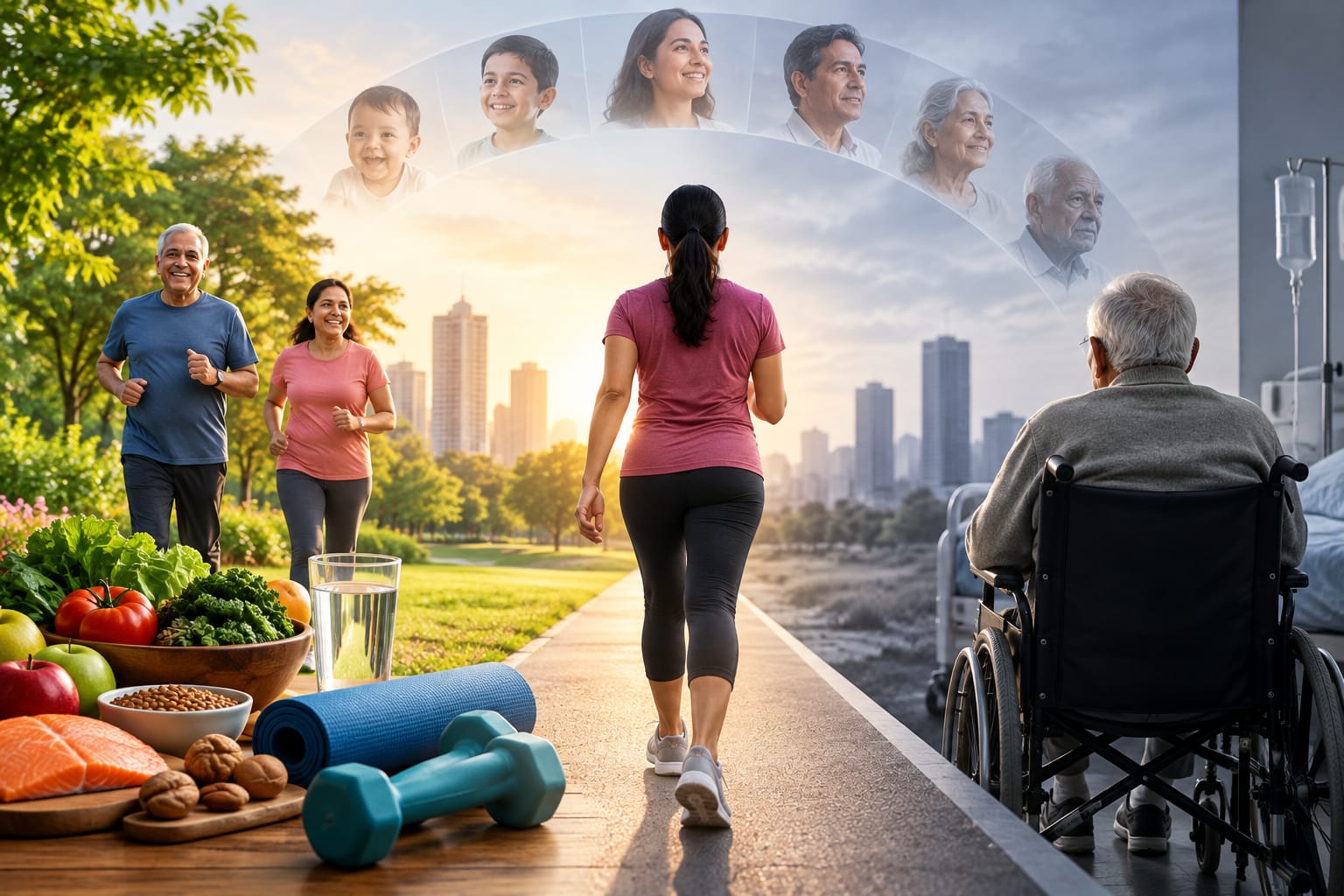
The concept of Healthy Life Expectancy (HALE) looks beyond the number of years a person lives. It estimates the average number of years a person can expect to live in relatively good health, without the burden of significant illness or disability.
India’s HALE remains considerably lower than its overall life expectancy, highlighting a major public-health challenge. The gap means that many people may spend a substantial part of their later lives dealing with chronic diseases, reduced physical capacity or dependence on healthcare and others for everyday activities.
India’s Healthspan Challenge
The difference between lifespan and healthspan is becoming increasingly important as India faces a growing burden of non-communicable diseases.
Diabetes, cardiovascular disease, obesity and other lifestyle-related conditions are affecting Indians at relatively young ages. These illnesses can remain manageable for years but may eventually affect mobility, independence and quality of life.
The result is a situation in which people may live longer without necessarily enjoying more years of healthy, active living.
Why Muscle Strength Matters
Healthy ageing is not only about preventing disease. Maintaining physical strength is also crucial.
Muscle mass and strength naturally decline with age, but inactivity can accelerate the process. Loss of strength can make everyday activities such as climbing stairs, carrying groceries, getting up from a chair or maintaining balance increasingly difficult.
Regular physical activity, including appropriately designed resistance and strength exercises, can help preserve functional capacity as people grow older.
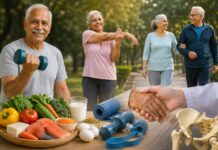
For seniors, exercise programmes do not necessarily have to involve heavy weights. Supervised resistance training, balance exercises, mobility work and functional movements can all form part of an age-appropriate fitness programme.
Walking Is Important, But It Is Only One Part of Fitness
Walking is one of the simplest ways to remain physically active. Daily walking can contribute to cardiovascular fitness, mobility and overall activity levels.
However, a particular step-count target should not be considered a complete definition of fitness.
A comprehensive approach to healthy ageing also needs to address strength, balance, flexibility and cardiovascular fitness. Combining different forms of physical activity may be more beneficial than concentrating exclusively on the number of steps taken each day.
Nutrition and Healthy Ageing
Nutrition is another important component of healthspan.
A balanced diet requires an appropriate combination of protein, carbohydrates, healthy fats, fibre, vitamins and minerals. Traditional foods can certainly form part of a healthy diet, but no individual ingredient can compensate for an overall dietary imbalance.
Adequate protein becomes particularly important with ageing because maintaining muscle mass is closely connected with physical independence.
The Need to Focus on Healthspan
India’s demographic transition makes the issue increasingly relevant. As more people live into their 60s, 70s and beyond, the country’s healthcare priorities must increasingly include preventing disability and preserving independence, not simply treating diseases after they appear.
This creates a broader definition of successful ageing: being able to remain mobile, physically capable and socially independent for as long as possible.
The ultimate goal should therefore not simply be to increase lifespan. It should be to close the gap between lifespan and healthspan.
For India, improving Healthy Life Expectancy will require a combination of preventive healthcare, better nutrition, regular physical activity, early detection of chronic diseases and greater awareness of strength and functional fitness.
India life expectancy
India life expectancy for 2026 is 71.03, a 0.29% increase from 2025.
India life expectancy for 2025 was 70.82, a 0.29% increase from 2024.
India life expectancy for 2024 was 70.62, a 0.29% increase from 2023.
India life expectancy for 2023 was 70.42, a 0.33% increase from 2022.
Strength Training for Senior Citizens
Some seniors may avoid resistance exercise because of concerns about injuries, hernia or other physical complications. However, appropriately designed and supervised strength training can be an important component of healthy ageing.
For older adults, the objective does not necessarily have to be lifting heavy weights. Training can focus on balance, functional strength, mobility, coordination and the ability to perform everyday activities independently.
A Potential Wellness Business Opportunity
With only a small proportion of Indians regularly using gyms, the fitness industry potentially has a large untapped market. One particularly interesting opportunity is the development of specialised fitness programmes for senior citizens.
Instead of conventional gyms focused primarily on younger customers, dedicated programmes could offer:
Supervised strength training
Mobility and balance exercises
Functional fitness
Beginner-friendly resistance training
Age-appropriate exercise programmes
Personalised fitness assessments
Small-group sessions for older adults
Such services could address both a growing health requirement and an emerging consumer market.