
New Delhi: HL September 24, 2026
India reaffirmed its commitment to universal, affordable and people-centred healthcare at the 81st United Nations General Assembly (UNGA81) in New York, highlighting the country’s progress in universal health coverage, hepatitis elimination and sickle cell disease care.
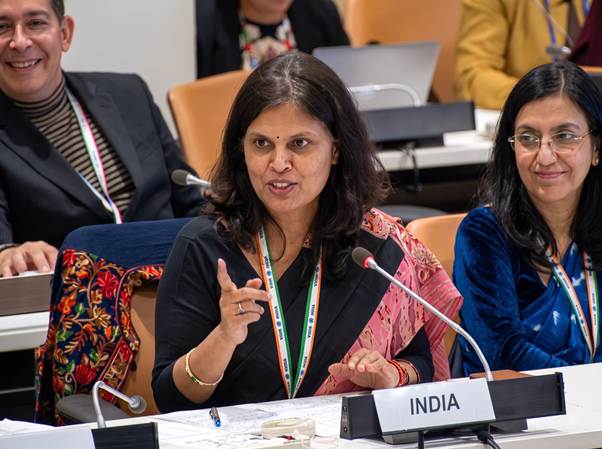
Union Health Secretary Smt. Punya Salila Srivastava participated in key global health engagements on the sidelines of UNGA81, where she presented India’s experience in strengthening healthcare delivery, expanding financial protection and using digital technologies to improve access to health services.
At the Seventh Annual Ministerial Meeting of the Group of Friends of Universal Health Coverage (UHC) & Global Health, she highlighted India’s network of more than 1.8 lakh Ayushman Arogya Mandirs, providing comprehensive primary healthcare services close to communities.
These centres provide services covering reproductive and child health, screening and management of non-communicable diseases, mental health, elderly and palliative care, as well as preventive, promotive and curative healthcare.
The Health Secretary also highlighted the role of Ayushman Bharat Pradhan Mantri Jan Arogya Yojana (AB-PMJAY) in providing financial protection to vulnerable and underserved populations. The Free Drugs and Diagnostics Service Initiative and the Prime Minister’s National Dialysis Programme were also highlighted as measures aimed at reducing the financial burden on patients.
India’s Digital Health Expansion
India’s growing digital health ecosystem was another key focus at the global forum. According to the Health Ministry, more than 900 million citizens have unique health identities, while interoperable digital registries of health facilities and healthcare professionals and ABHA-enabled health records are supporting continuity of care.
The Union Health Secretary also highlighted the expansion of telemedicine through e-Sanjeevani, which has facilitated more than 497 million teleconsultations. Other technology-enabled initiatives, including teleradiology, AI-enabled X-rays and Mobile Medical Units, are helping extend healthcare services to remote and underserved populations.
India’s Commitment to Hepatitis Elimination by 2030
At the UNGA81 side event on “Advancing Global Action to Eliminate Hepatitis,” Smt. Punya Salila Srivastava reiterated India’s commitment to the goal of eliminating Hepatitis B and C as public health threats by 2030.
Viral hepatitis screening services are being provided through nearly 1.80 lakh primary healthcare facilities, including Health and Wellness Centres, as well as tertiary care facilities. The programme has expanded to 1,039 treatment centres.
Since the launch of the National Viral Hepatitis Control Programme in 2018, nearly 225 million beneficiaries have been screened.
The Health Secretary stressed the importance of early diagnosis, affordable treatment and integrated prevention and care. Measures to prevent mother-to-child transmission have also been integrated into the reproductive, maternal, neonatal, child and adolescent health framework.
India Joins Global OneSCD Partnership
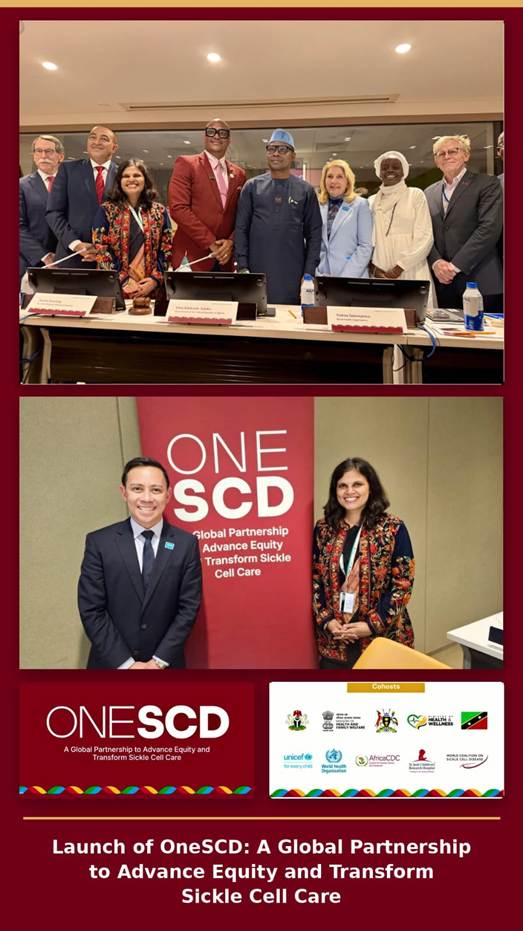
India also co-hosted the launch of OneSCD: A Global Partnership to Advance Equity and Transform Sickle Cell Care, bringing together international partners to strengthen global action against Sickle Cell Disease.
The partnership includes the Government of Nigeria, WHO, UNICEF, Africa CDC, World Coalition on Sickle Cell Disease and St. Jude Children’s Research Hospital.
Speaking at the launch, Smt. Punya Salila Srivastava highlighted India’s National Sickle Cell Anaemia Elimination Mission, launched in 2023 with the goal of eliminating Sickle Cell Anaemia as a public health problem by 2047.
Under the mission, more than 7.29 crore people have been screened, over 20 lakh carriers identified and approximately 2.5 lakh people diagnosed. More than 4.93 crore Sickle Cell Cards have also been distributed.
India’s approach combines population-level screening, early diagnosis, counselling, treatment, follow-up and digital tracking to strengthen the continuum of care for people living with Sickle Cell Disease.
The Health Secretary further highlighted efforts to expand access to affordable point-of-care diagnostics and hydroxyurea therapy, along with research into an indigenous gene-editing therapy.
India’s participation in the UNGA81 engagements underlined its focus on strengthening accessible, affordable and digitally enabled health systems. The country also reaffirmed its commitment to working with international partners on universal health coverage, hepatitis elimination and equitable care for Sickle Cell Disease.