


NEW DELHI: HL October 18, 2026
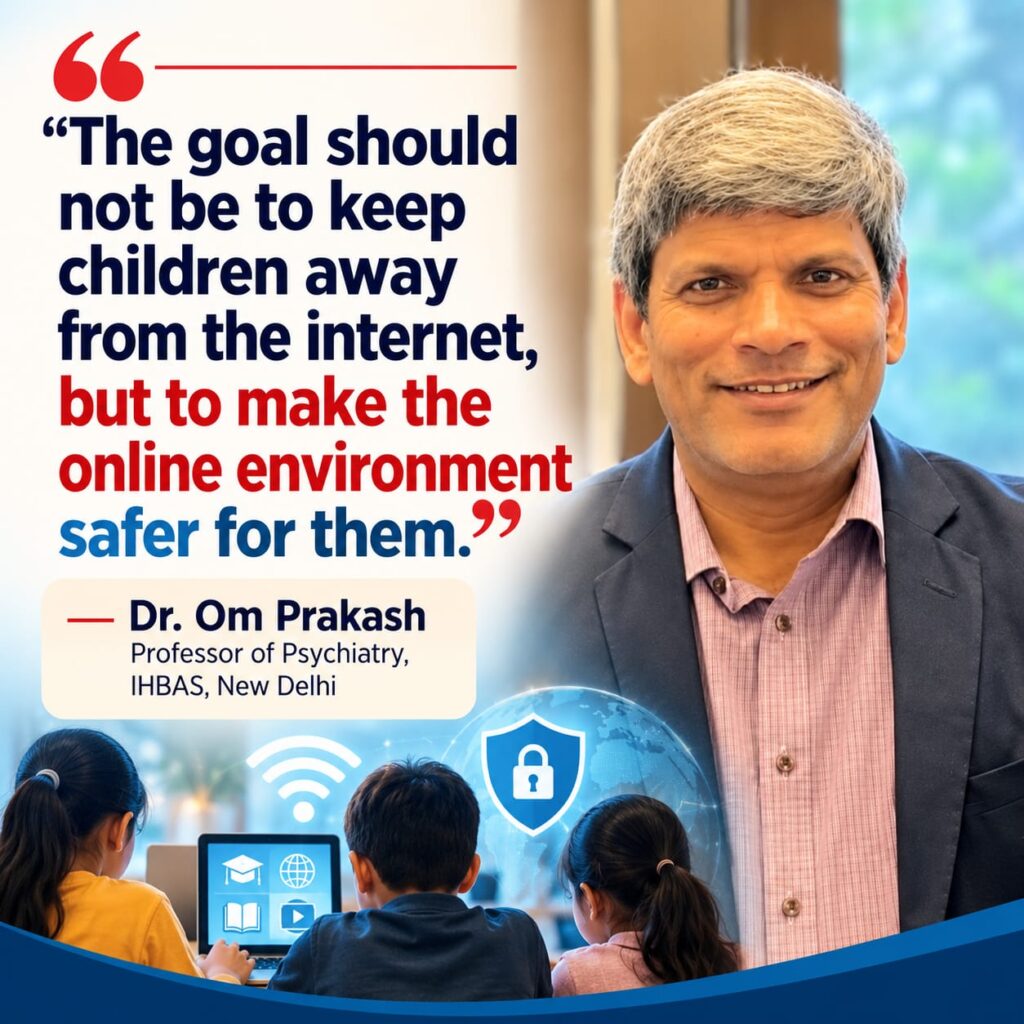
Protecting children from online harm should not mean shutting them out of the digital world, according to a perspective on children’s internet rights by Dr. Om Prakash, Professor of Psychiatry at the Institute of Human Behaviour and Allied Sciences (IHBAS), New Delhi.
The discussion comes amid growing concerns about excessive screen time, cyberbullying, harmful online content and the impact of social media on children’s mental health. It also draws attention to the importance of balancing children’s constitutional rights with appropriate safeguards against digital exploitation.
The Supreme Court’s recent observations on internet access and child protection have brought renewed focus to the responsibilities of technology companies, parents, schools and policymakers in creating a safer digital environment.
Internet Access Is Important for Children’s Education and Development

The internet has become an essential resource for education, communication, information and social participation. For children in remote areas and those with limited access to educational facilities, digital platforms can provide opportunities that may otherwise be unavailable.
Online communities can also help children with special needs connect with others who have similar experiences and access useful information and support.
A blanket prohibition on internet use could therefore have unintended consequences, particularly for children who depend on digital resources for learning and communication.
The challenge, experts argue, is to ensure that children can benefit from technology without being exposed to avoidable risks.
Excessive Social Media Use Raises Mental Health Concerns
Excessive or problematic social media use has been associated with sleep disturbances, anxiety, depressive symptoms, cyberbullying and unhealthy social comparison among young people.
Some adolescents struggle with pressure to remain constantly connected, while others experience distress following negative interactions in online groups. Late-night scrolling may interfere with sleep, and prolonged digital engagement can affect concentration and everyday routines.
However, the relationship between social media and mental health is complex. The amount of time spent online is only one factor; the type of content consumed, the nature of online interactions and the individual circumstances of a child also matter.
This makes it important to focus on children’s actual online experiences and well-being rather than relying exclusively on screen-time limits.
Why Blanket Age Restrictions May Not Be Enough
Restricting access to social media based solely on age may not address the underlying problems associated with unsafe platform design and harmful online behaviour.
Children may find ways around age-verification systems or move to platforms with weaker safeguards. In a country as diverse as India, restrictions could also affect children differently depending on their family circumstances, school environment, digital literacy and access to technology.
Age-based restrictions may still have a role, particularly for younger children and services that present significant risks. However, their effectiveness should be assessed by examining whether they improve safety, sleep, emotional well-being and protection against abuse.
Supreme Court Highlights the Need to Balance Rights and Safety
The Supreme Court’s observations have drawn attention to the need to protect children’s rights while addressing online risks through proportionate safeguards.
The constitutional framework governing freedom of speech and expression and the right to life and personal liberty is relevant to the debate over internet access. At the same time, recognising digital access does not mean that every website, service or category of online content must remain unrestricted.
The broader policy challenge is to ensure that protective measures are effective, reasonable and consistent with children’s rights.
Greater Accountability Needed from Social Media Platforms
Technology companies have an important role in preventing online harm. Parents cannot reasonably be expected to monitor every interaction or understand every feature designed to keep users engaged.
Platforms should strengthen child-safety settings, improve content moderation, make reporting mechanisms accessible and respond promptly to abusive material. They should also examine whether recommendation systems and engagement-driven features expose young users to harmful content or encourage excessive use.
Possible safeguards include private accounts by default for children, restrictions on unsolicited contact from strangers, age-appropriate content controls and stronger systems to detect and remove child sexual abuse material.
Technological measures such as hash matching and the sharing of verified databases of known abusive material can also support coordinated efforts to prevent its circulation.
Parents and Schools Must Strengthen Digital Literacy
Parents have a role beyond setting daily screen-time limits. Regular conversations about children’s online experiences can help identify problems before they become serious.
Children should be encouraged to discuss cyberbullying, uncomfortable messages, suspicious contacts and harmful content without fearing automatic punishment for seeking help.
Schools can complement these efforts by teaching students about online privacy, responsible sharing of personal information, digital manipulation, cyberbullying and the consequences of unsafe online behaviour.
A supportive approach can help children develop the skills needed to navigate the internet responsibly.
A Balanced Approach to Children’s Digital Rights
Age restrictions, parental supervision and technical controls may form part of a broader child-protection strategy, but they should not replace accountability from digital platforms or evidence-based policymaking.
The central objective should be to reduce online harm while preserving children’s opportunities to learn, communicate and participate in society.
As digital technology becomes increasingly integrated into education and everyday life, protecting children and respecting their rights must remain complementary priorities.