

By Sandeep /New Delhi: November 17, 2026
As winter approaches, pet owners often become extra protective of their dogs and cats, dressing them in woollen coats, covering them with blankets and using heating devices to keep them warm. However, excessive protection can sometimes do more harm than good. Veterinary experts and PLRC India Directors Dr. Ajay Sood of Dog and Cat Clinic, Preet Vihar and Dr. R. T. Sharma of Pet Hospital and Boarding Shelter, Vasant Kunj, advise pet owners to understand their animal’s individual needs and maintain a balance between warmth, hygiene, nutrition and physical activity during the winter season.
Winter Clothing: Avoid Excessive Covering
One of the most common mistakes pet owners make during winter is dressing their dogs in multiple layers of woollen clothing, even when the animals do not need them.
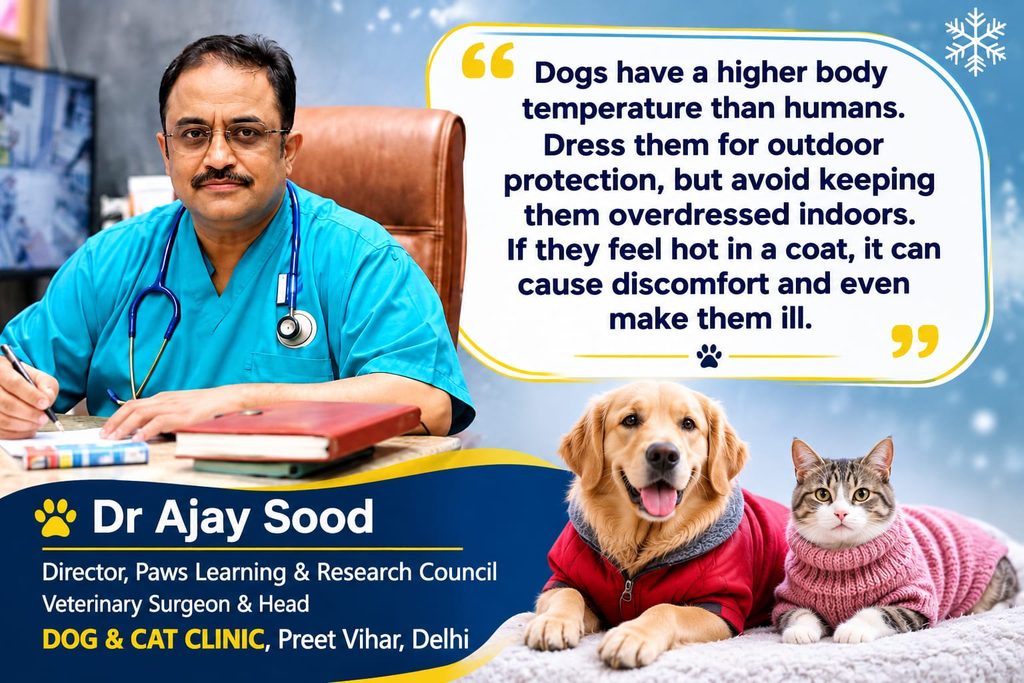
Dogs have a different body-temperature regulation mechanism from humans and do not sweat through their skin in the same way. Therefore, excessive covering is generally unnecessary.
Pet owners tend to overprotect their dogs during winter. They make them wear coats, woollen clothes and additional layers of covering. Out of affection, they keep covering their pets, but it is not always required. often pets coming to clinic after one or two months with skin problems.
Excessive use of woollen clothing and continuous covering may contribute to skin irritation, allergies, eczema and fungal infections, particularly when clothing traps moisture or is not cleaned regularly.
Owners should consider their pets’ breed, coat type and the surrounding temperature before deciding whether winter clothing is necessary. Dogs may need suitable coats outdoors, but these should be removed when they return to a warm indoor environment if they appear uncomfortable or overheated.
Avoid Direct Heating and Excessive Use of Blow Dryers
Another common mistake is exposing pets to direct heat from room heaters or hot-air blowers. Excessive heat can dry out their skin and cause discomfort. Direct exposure to hot air may also be unsuitable for animals with respiratory sensitivities.
Pet owners should maintain a comfortable indoor temperature and provide warm, dry bedding rather than relying on excessive heating.
Protect Pets from Cold Floors at Night
Cold floors can make sleeping uncomfortable for pets, particularly puppies, kittens, senior animals and smaller breeds.
Doctor recommends providing a separate, comfortable sleeping area with soft bedding or a blanket instead of allowing pets to sleep directly on cold flooring. Even in homes where air conditioning is used, owners should ensure that pets have access to a warm and comfortable resting place.
A light layer of clothing may be appropriate for animals that feel cold, depending on their breed and the room temperature. Owners should also ensure that bedding remains clean and dry.
Choose the Right Time for Winter Walks
Regular exercise remains important during winter, but the timing of outdoor walks should be adjusted according to weather conditions.
Doctor recommends taking dogs out during late morning when sunlight is available and early evening rather than exposing them to extreme cold during early mornings or late nights.
The duration and distance of walks should depend on the dog’s breed, age, fitness and tolerance to cold. Active breeds such as German Shepherds and Labradors generally require more physical activity than smaller breeds.
Owners should accompany their dogs during walks and avoid allowing them to roam freely without supervision.
Balanced Diet and Adequate Protein
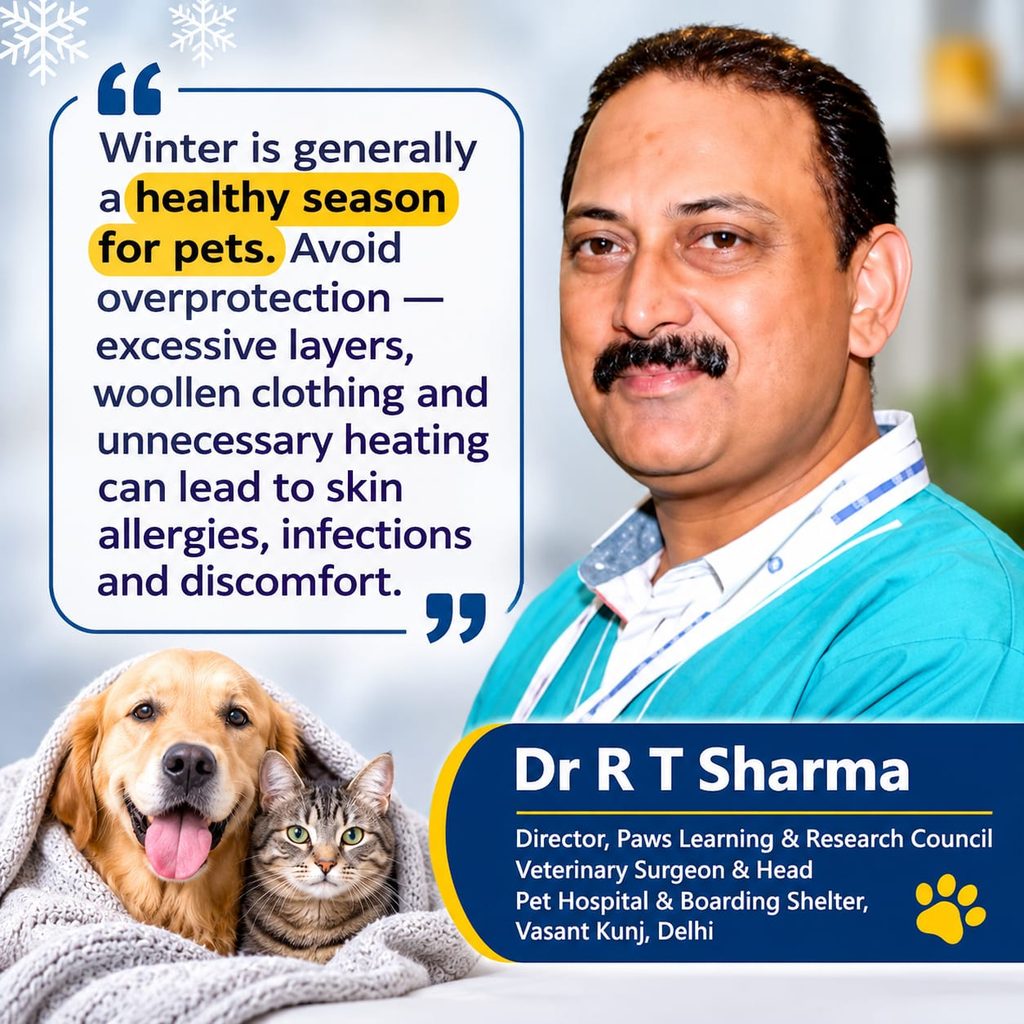
Nutrition plays an important role in maintaining pets’ health during winter. Provide them a balanced diet with adequate protein according to the animal’s nutritional requirements.
Pets can be given a high-protein diet if they do not have kidney-related problems. However, dietary changes should always be discussed with a veterinarian. Every animal has different nutritional requirements.
Pet owners should avoid overfeeding and excessive treats. A dog’s diet should be based on its age, breed, activity level and health condition rather than simply increasing food intake during winter.
Air Pollution Can Affect Pets Too
Air pollution is not just a human health concern; it can also affect dogs and cats. Pets with existing respiratory conditions or other health vulnerabilities may experience coughing, breathing difficulties and respiratory stress when pollution levels rise.
Expert advises, keeping pets indoors during periods of poor air quality and avoiding unnecessary outdoor exposure when pollution is high.
Nebulisation may be recommended in certain cases under veterinary supervision. If a pet develops persistent coughing, vomiting or breathing difficulties, owners should seek veterinary advice rather than attempting treatment at home.
Firecracker Noise Can Cause Anxiety and Stress
Loud noises from firecrackers can trigger anxiety and stress in dogs and cats. Some animals become restless, hide, bark excessively or show signs of fear in response to sudden loud sounds. anti-anxiety medicines or sedation may be prescribed in selected cases, depending on the animal’s behaviour and condition. Such medication should only be given under veterinary supervision.
Specially designed calming accessories, including anxiety wraps or pressure garments, may also help some pets.
owners stay with their pets during stressful situations, provide a familiar and comfortable environment and avoid leaving anxious animals alone.
Regular Grooming and Health Monitoring
Winter grooming should not be neglected. Regular brushing helps maintain coat hygiene and allows owners to identify skin problems, wounds, unusual lumps and ticks at an early stage.
Pet owners should examine their animals regularly, maintain routine vaccination schedules and consult a veterinarian if they notice excessive shivering, lethargy, loss of appetite, persistent itching or breathing difficulties.
Responsible Pet Ownership Is the Key
Veterinary experts emphasise that winter care is not about covering pets with multiple layers of clothing or keeping them indoors throughout the season. It is about understanding their individual needs and providing appropriate warmth, nutrition, exercise and healthcare.
Spending quality time with pets, taking them for regular walks and monitoring changes in their behaviour are equally important for their physical and mental well-being.
Important message for pet owners
Winter care is about providing the right amount of warmth, not excessive protection. Observe your pet’s behaviour and adjust its clothing, diet, exercise and sleeping arrangements according to its individual needs.