
By Sandeep/ New Delhi: November 17, 2026
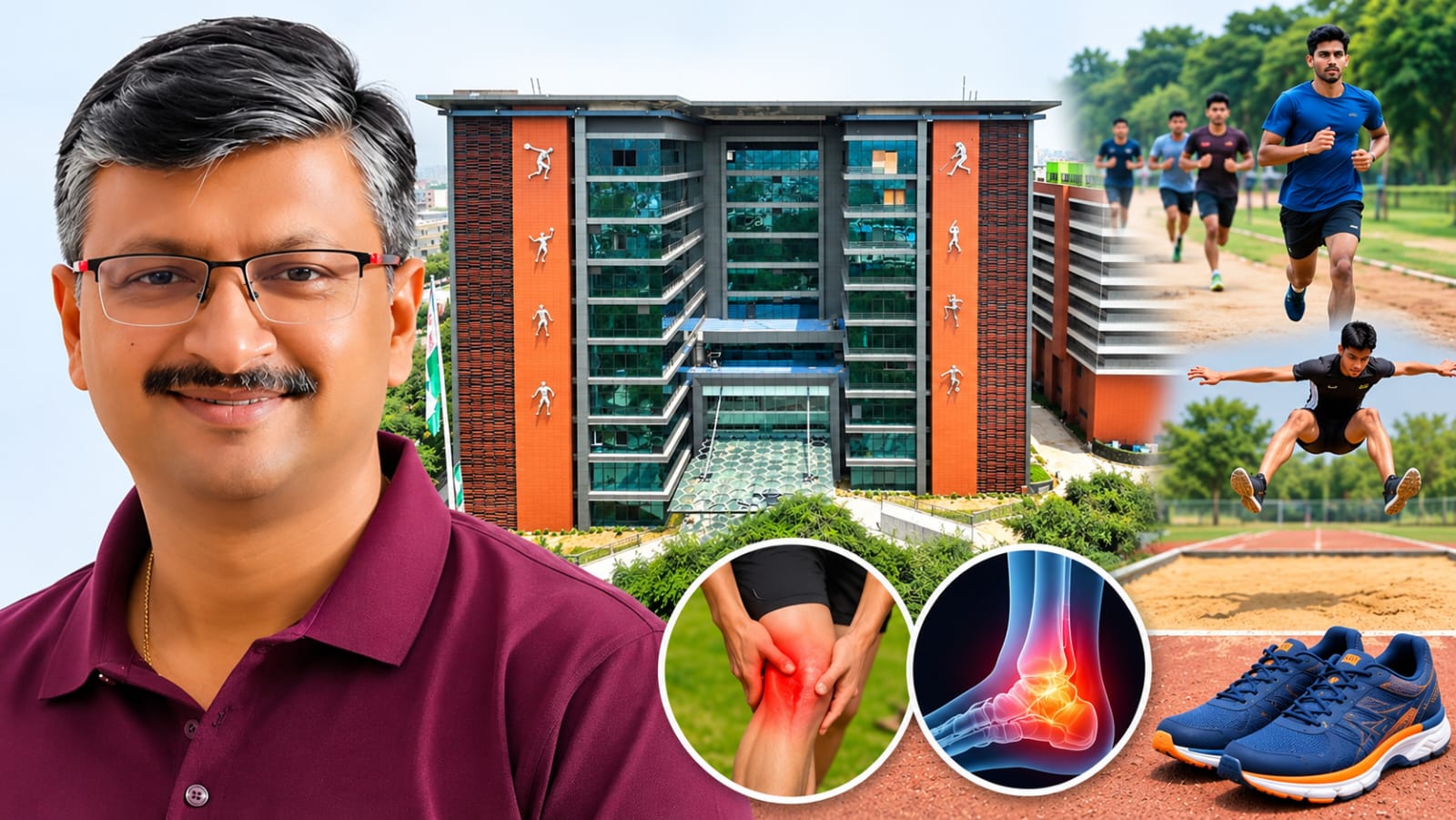
Young aspirants preparing for recruitment examinations for the Police, Central Armed Police Forces (CAPF) and the Indian Army are increasingly facing the risk of sports-related injuries during physical test preparation. According to Dr. Vineet Jain, Director- Professor at the Sports Injury Centre, Safdarjung Hospital, many candidates spend months or even years preparing for competitive examinations with little or no regular physical activity.
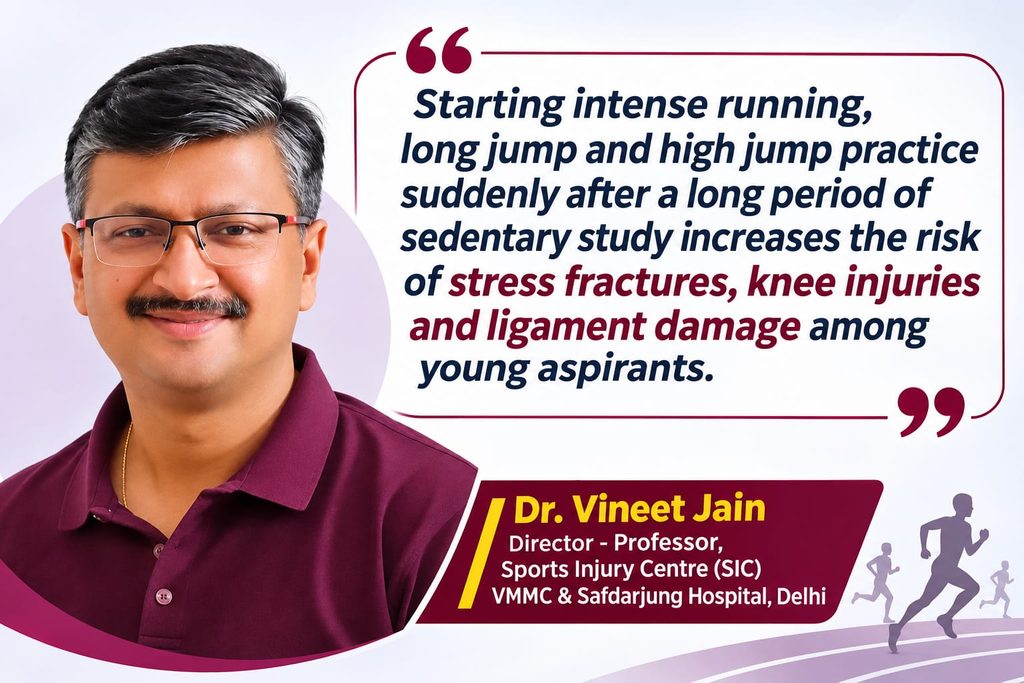
However, after clearing the written examination, they suddenly begin intensive training involving running, long jump and high jump. This abrupt increase in physical activity, without allowing the body sufficient time to adapt, can significantly increase the risk of serious injuries. Many candidates also begin training at nearby grounds without adequate facilities or professional guidance.
Sudden Increase in Training Load Behind Rising Injuries
Physical fitness requirements vary across different recruitment examinations. While some require candidates to complete 1,500 metres, others prescribe 1,600 metres or 2,000 metres within a specified time. The time limit may range from five to seven minutes, depending on the recruitment guidelines.
For candidates who have spent long periods sitting and studying, suddenly running a specified distance within a short time can be physically demanding.
A sudden increase in exercise intensity, medically referred to as a ‘sudden increase in training load’, puts excessive stress on muscles, bones, tendons and ligaments. Without gradual conditioning, candidates may develop stress fractures, knee pain, ankle sprains and ligament injuries.
Incorrect Long Jump Technique Can Cause Serious Injuries
Apart from running, physical efficiency tests often include activities such as long jump and high jump. Proper jumping and landing techniques are essential to prevent injuries.
During a long jump, an incorrect landing or sudden twisting of the leg can cause serious knee injuries, including ligament tears.
The landing area for long jump should ideally have fine, soft sand to absorb the impact when candidates land. However, in several places, grounds are prepared simply by digging up the soil, which may not provide adequate cushioning.
Landing on an unsuitable surface can cause the foot to get trapped or twisted, increasing the risk of ankle and knee injuries.
SIC to Study Injury Patterns Among Aspirants
To understand the growing problem, the Sports Injury Centre at Safdarjung Hospital is undertaking an observational cohort study. The project has received the necessary ethical clearance, and the process of collecting patient data is set to begin.
The primary objective is to identify the types and patterns of injuries affecting young people preparing for physical recruitment examinations, including Police, CAPF and other government services.
The study will also examine which physical activities and test components are associated with a higher incidence of lower-limb injuries.
A secondary objective is to provide appropriate medical treatment to injured candidates and assess their recovery and return to physical activity. Patients with stress fractures and ligament injuries will receive treatment, including surgical intervention wherever required.
Dr. Vineet Jain is the Principal Investigator of the research project. The team also includes Senior Resident Dr. Deepak Godhwal, Dr. Happy Gahlawat and Dr. Shivita Kantrar.
Running on Hard Surfaces May Increase Impact on Knees
Choosing the right running surface is another important factor in injury prevention. Continuous running on hard surfaces, particularly concrete roads, can increase the impact on the feet and knees.
Grass, relatively soft soil and specially designed running tracks may offer better alternatives. Several parks are now developing running tracks using recycled rubber and sponge-like materials that can absorb some of the impact generated while running.
There is a growing need to ensure that such training locations have safe surfaces, adequate facilities and proper guidance.
Comfortable Fit More Important Than Expensive Running Shoes
The selection of appropriate running shoes is also important. The price, brand or amount of cushioning should not be the only considerations. Comfort and proper fitting are more important.
Several running shoes available in the market feature carbon plates and additional cushioning. However, excessive cushioning does not necessarily make a shoe better. In some cases, heavily cushioned shoes may affect a runner’s ability to feel the ground, maintain grip and achieve proper balance.
Candidates should avoid purchasing shoes solely on the basis of online photographs or prices. They should try the shoes in a store, walk around and ensure that they fit comfortably. Shoes should fit properly at the time of purchase rather than relying on the assumption that they will become comfortable after repeated use.
Gradual Training Essential Before Physical Tests
Young aspirants should avoid starting intensive training immediately before their physical examinations. Running distance and speed should be increased gradually to allow the body to adapt to the physical demands.
Regular warm-ups, strength training, correct running techniques, adequate rest and recovery are equally important.
Safe training grounds, proper landing surfaces, suitable footwear and professional guidance can help reduce the risk of sports injuries.
Preparing for a physical examination requires more than determination and hard work. A structured and gradual training programme is equally essential to help candidates achieve their recruitment goals without compromising their health.