
New Delhi: HL July 09, 2026
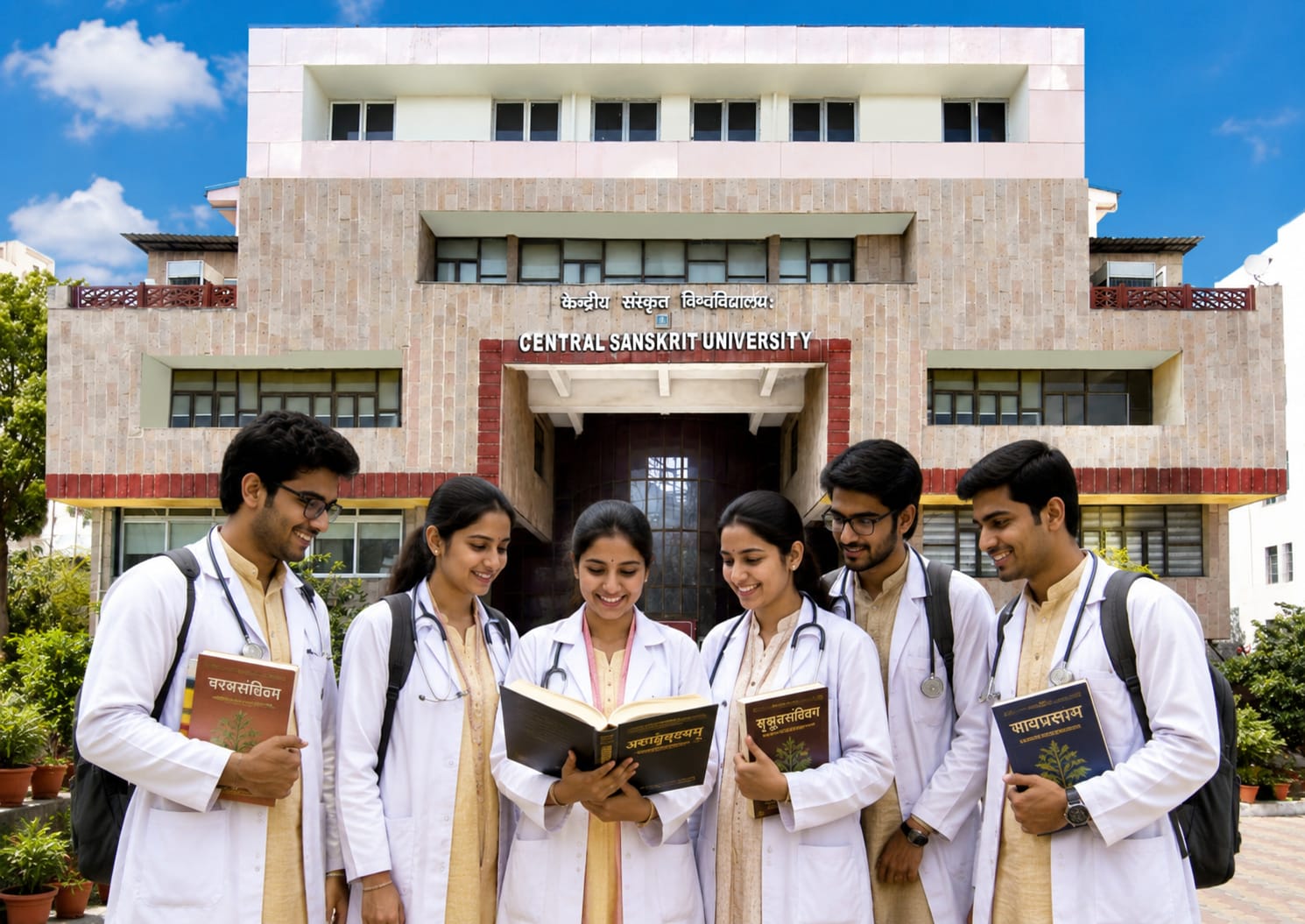
In a significant move to promote Ayurveda and strengthen traditional Sanskrit education, Sanskrit students will soon have a dedicated pathway to pursue a Bachelor of Ayurvedic Medicine and Surgery (BAMS) through a newly designed integrated programme.
The initiative, introduced by the National Commission for Indian System of Medicine (NCISM), is aimed at creating a seamless transition from Sanskrit education to professional Ayurvedic medical training. Under the new framework, students who complete Class 10 from recognised Sanskrit institutions will be eligible to appear for a dedicated entrance examination for admission.
The integrated programme will span 7.5 years, beginning with a two-year Pre-Ayurveda Programme (PAP) at approved Ayurveda Gurukulams. During this phase, students will receive intensive instruction in Sanskrit, Ayurvedic fundamentals and basic sciences. Those who successfully complete the preparatory course will then continue into the regular BAMS programme.
The new academic model is designed to preserve the traditional Gurukul system while equipping students with the knowledge and skills required for modern Ayurvedic practice. By combining classical learning with contemporary medical education, the programme seeks to prepare graduates for careers in India’s growing AYUSH sector.
To support the initiative, Ayurveda Gurukulams are planned in selected locations where students will undergo the preparatory phase before joining the professional degree course. Authorities believe the programme will not only expand career opportunities for Sanskrit students but also encourage greater interest in traditional education.
Education experts say the initiative could help bridge the gap between ancient Indian knowledge systems and modern healthcare education. It is expected to strengthen the pool of qualified Ayurvedic professionals while ensuring that the study of classical Sanskrit texts remains closely linked with clinical practice.
Officials maintain that the integrated programme marks an important step towards preserving India’s traditional medical heritage while creating new academic and professional opportunities for students from Sanskrit institutions.