
New Delhi: August 17, 2026
Food is something every family trusts. From milk and spices to sweets, edible oils, packaged products and restaurant meals, people assume that what reaches their plate is safe. But when food is adulterated, that trust can become a serious public-health risk.
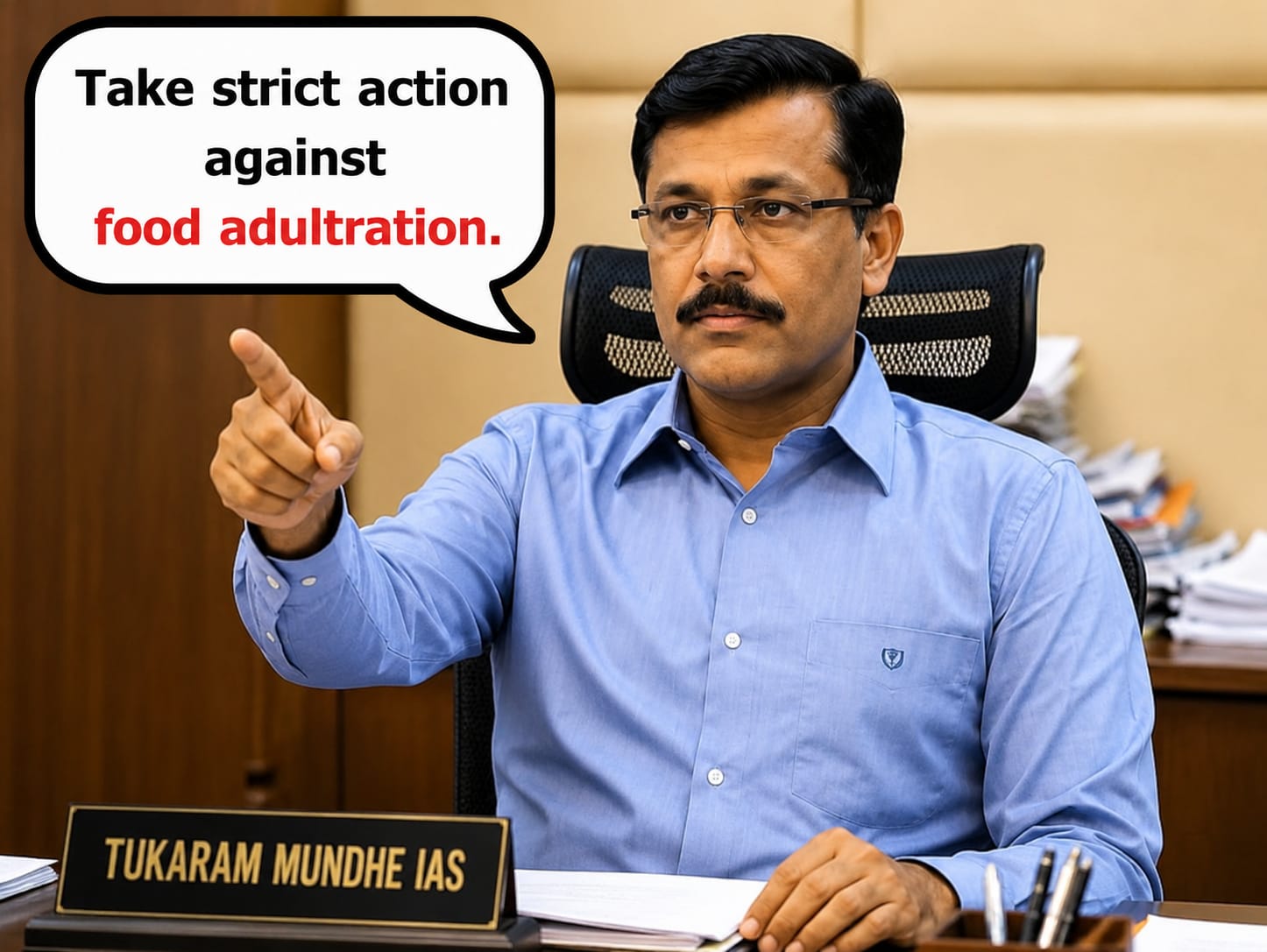
This is why the enforcement-driven approach of IAS officer Tukaram Mundhe has attracted attention—and raises a larger question: Does every district in India need officers who are willing to inspect, question and act when food-safety rules are violated?
A 2005-batch IAS officer, Mundhe is currently serving as Commissioner of Maharashtra’s Food and Drug Administration (FDA). His latest assignment has once again put him in the spotlight because of an intensive campaign against food adulteration, unsafe food practices and violations of food-safety regulations.
25 transfers in a 21-year career
Mundhe was born on June 3, 1975, in Tadsonna village of Beed district, an area known for drought-related hardships. Coming from a farming family, he has spoken about working in the fields and helping sell vegetables in weekly markets while continuing his education.
His early schooling was at a Zilla Parishad school. He later pursued higher education and prepared for the UPSC Civil Services Examination.
His determination paid off when he secured All India Rank 20 in the 2004 Civil Services Examination and subsequently joined the IAS in 2005.
One of the most talked-about aspects of Mundhe’s career has been the frequency of his transfers.
His appointment as Maharashtra FDA Commissioner in 2026 was reported as his 25th transfer in a 21-year IAS career. His career has included more than 16 major assignments, with his uncompromising approach to administration frequently becoming a subject of public discussion.
Supporters view the repeated transfers as evidence that he has refused to compromise on rules and administrative principles. Critics, meanwhile, have questioned whether his enforcement-heavy style leaves enough room for consultation and flexibility.
Food adulteration can silently damage health
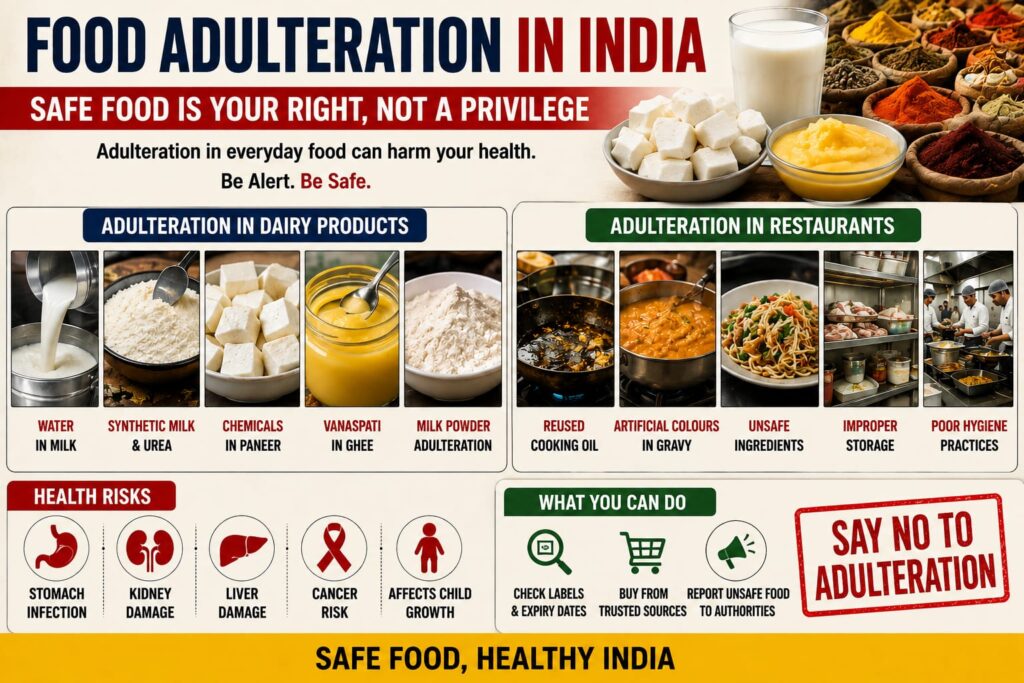
Food adulteration is not merely about getting less value for money. Depending on the substance involved and the level and duration of exposure, contaminated or adulterated food can contribute to food poisoning, organ damage and other serious health problems.
The danger is particularly concerning because consumers often cannot identify adulteration simply by looking at the food.
A bright colour, attractive packaging or familiar brand name does not automatically guarantee safety. This makes strong regulatory surveillance, laboratory testing and enforcement essential.
Why the Tukaram Mundhe model matters
Mundhe’s recent work as Maharashtra’s Food and Drug Administration Commissioner has put food safety at the centre of public attention.
His reported inspections and enforcement actions have highlighted an uncomfortable reality: rules are effective only when someone is prepared to enforce them.
Food-safety authorities need to regularly inspect manufacturing units, warehouses, restaurants, retailers and food markets. Violations need to be investigated, samples tested and appropriate legal action taken.
The objective should not be to create fear among legitimate businesses. It should be to create a system in which honest food businesses are protected and consumers are protected from those who deliberately compromise safety.
India needs enforcement, not just regulations
India already has food-safety laws and regulatory institutions. The bigger challenge is ensuring that these rules work effectively on the ground.
Every district has its own food markets, restaurants, dairy suppliers, manufacturers, warehouses and informal food businesses. Monitoring such a huge network requires manpower, laboratories, technology and—perhaps most importantly—officers willing to take responsibility.
That is where the broader lesson from Mundhe’s style of administration becomes important.
Every district may not need another Tukaram Mundhe by name, but every district needs officers with the same commitment to accountability, inspection and public safety.
Protecting children should be the priority
The food-adulteration debate becomes even more serious when children are involved.
School-going children consume milk, snacks, sweets, juices, packaged foods and meals outside their homes. Parents cannot personally test everything their children eat.
A strong food-safety system therefore acts as an additional layer of protection between consumers and unsafe products.
Regular inspections near schools, strict action against unsafe food sellers and rapid testing of suspicious products can help reduce risks.
Honest businesses should welcome strict enforcement
There is another important side to the issue.
Strict enforcement should not be viewed as being against business. In fact, it can protect businesses that follow the rules.
A manufacturer that spends money on hygiene, quality control and safe ingredients should not have to compete with someone cutting costs through adulteration or unsafe practices.
Effective enforcement creates a level playing field.
The real need: a nationwide food-safety culture
The answer is not simply more raids.
India needs a combination of regular inspections, modern laboratories, trained food-safety officers, transparent sampling, speedy prosecution, strong penalties, consumer awareness and technology-based monitoring.
Consumers also have a role. Checking labels, expiry dates and packaging, purchasing from reliable sources and reporting suspected violations can strengthen the system.
From Dairy Products and Street Food to Five-Star Hotels, No One Should Be Above Food-Safety Rules
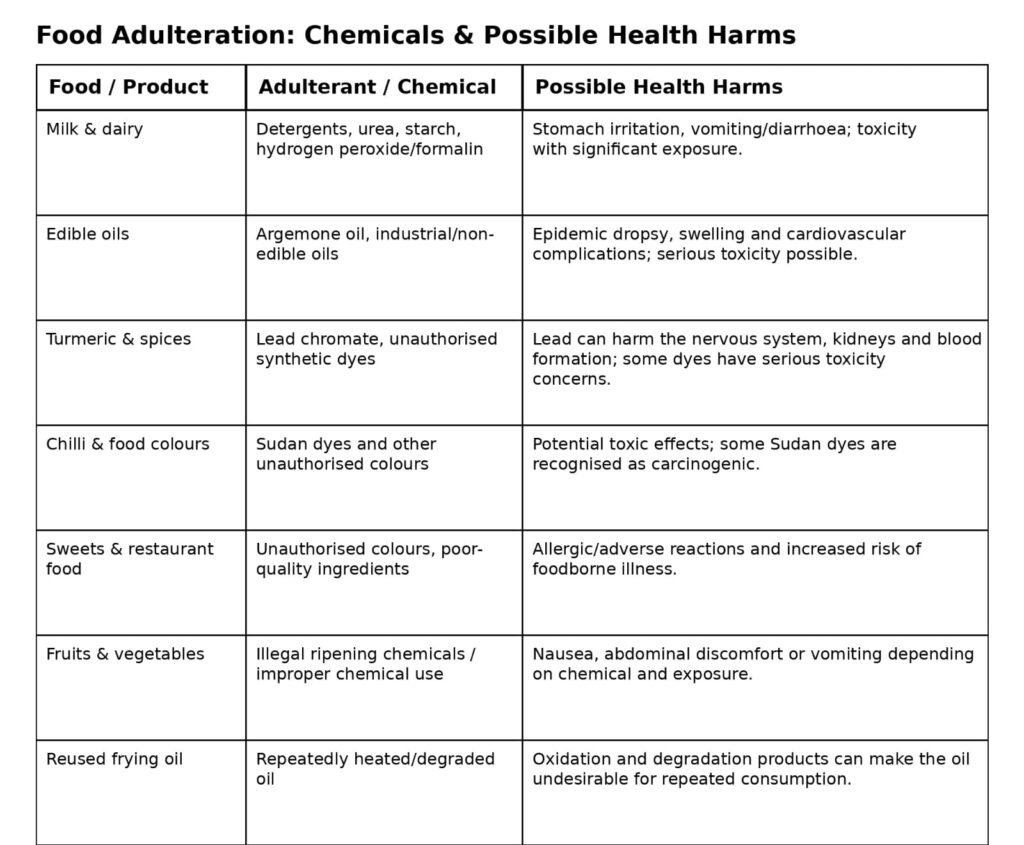
Food adulteration and food-safety violations are not problems limited to roadside vendors or small restaurants. Dairy manufacturers, sweet shops, restaurants, food outlets—and even five-star hotels—must operate under the same principle: food served to consumers must be safe.
The issue is particularly important because consumers often associate premium prices, attractive interiors and well-known brands with better food safety. But appearance and price alone cannot guarantee compliance with food-safety standards.
Dairy products need constant monitoring
Milk, paneer, khoya, ghee, butter and other dairy products are consumed by millions of Indian families every day. Any contamination, adulteration or poor handling can turn an essential food item into a health risk.
Regular sampling and laboratory testing are therefore essential, particularly across the supply chain—from manufacturers and distributors to retailers and commercial kitchens.
Restaurants must also face scrutiny
Restaurants handle large quantities of milk products, cooking oil, spices, sauces, meat, vegetables and other ingredients every day.
Food-safety authorities need to check not only what is visible to customers but also kitchens, storage areas, refrigerators, raw-material supplies, cooking practices and hygiene systems.
Repeated use of cooking oil, improper storage temperatures, contaminated water and expired ingredients are among the issues that can create food-safety risks.
What about five-star hotels?
This is where the debate becomes even more important.
A five-star hotel should not receive a free pass simply because it is expensive or prestigious.
If a small restaurant can be inspected, sampled and penalised for violating food-safety rules, the same principle should apply to luxury hotels, large restaurant chains, banquet halls, clubs and corporate food establishments.
In fact, high-end establishments serve thousands of customers, including tourists, business travellers, foreign visitors and large groups at weddings and conferences. The scale of responsibility is therefore even greater.
The objective should not be to target five-star hotels. It should be to ensure that the same transparent standards apply to every food business—small or large, roadside or luxury.
No VIP treatment in food safety
There should be no distinction between:
Street vendor → Small restaurant → Food chain → Sweet shop → Five-star hotel
The standards may vary according to the nature of the operation, but the basic right of consumers to safe food remains the same.
India needs stronger surveillance, more food-testing laboratories, trained inspectors, regular sampling, transparent reporting and swift action wherever violations are scientifically established.
The bigger question
If an ordinary family buys a ₹90 packet of paneer, it deserves safe food.
If a customer spends ₹5,000 on a meal at a luxury hotel, that customer deserves exactly the same protection.
Food safety should not depend on the size of the bill.
India doesn’t need selective enforcement. It needs universal enforcement.
And that is why the larger lesson from the Tukaram Mundhe debate is simple:
Every district needs a strong food-safety system. Every food business must be accountable. And no kitchen—from a roadside stall to a five-star hotel—should be beyond inspection.