
By Ekta Purohit /New Delhi: November 16, 2026
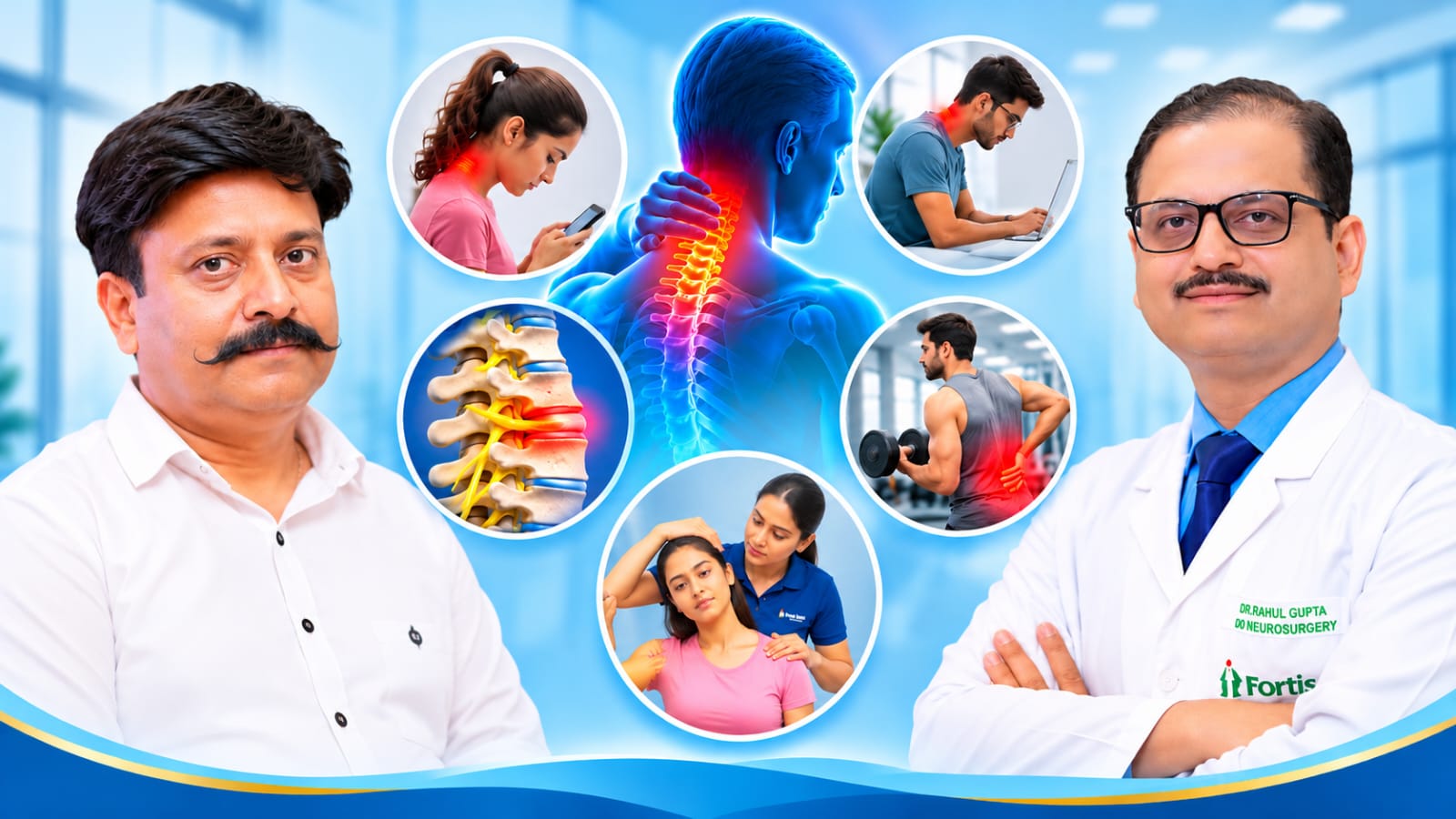
Prolonged mobile phone use, excessive screen time, poor posture, sedentary lifestyles and improper exercise techniques are contributing to a growing burden of cervical and lumbar spine problems, particularly among young people. Highlighting the increasing concerns surrounding Tech Neck Syndrome, cervical disc herniation and spinal cord compression, Dr. Rahul Gupta, Senior Director and Head of Neurosurgery at Fortis Hospital, Noida, and Dr. Ashu Gupta, Head of Department (HOD), Physiotherapy, Sports Injury Centre (SIC), Safdarjung Hospital, New Delhi, have emphasised the importance of spinal health, early diagnosis, preventive care and appropriate treatment.
While Dr. Rahul Gupta explains the neurological complications associated with cervical spine disorders, spinal cord compression and the need for timely medical intervention, Dr. Ashu Gupta highlights the role of physiotherapy, posture correction, strengthening exercises and ergonomic practices in preventing and managing spinal problems.
Cervical Spine: Why Is Neck Health So Important?
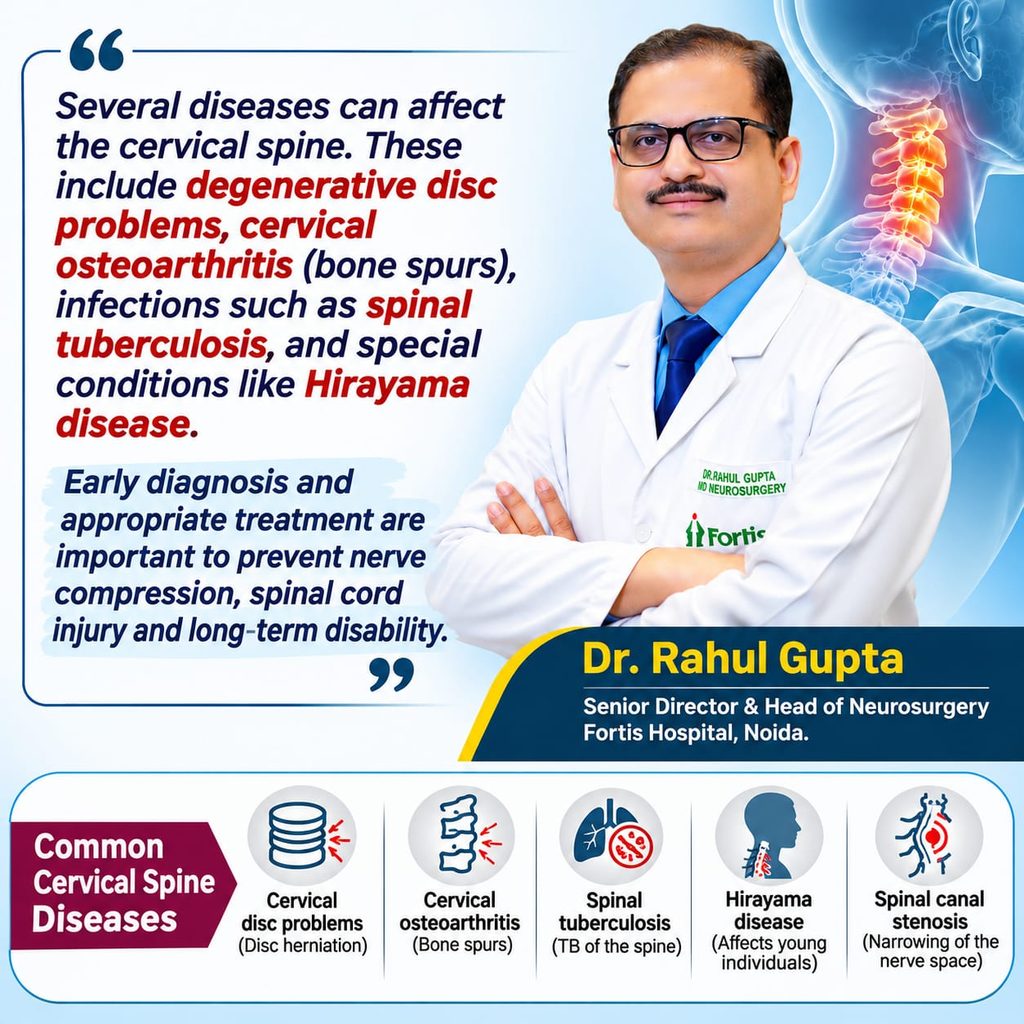
The cervical spine comprises seven vertebrae and plays a crucial role in supporting the head, enabling neck movement and protecting the spinal cord. It also provides passage to important blood vessels, including the vertebral arteries, which supply blood to the posterior parts of the brain.
Dr. Rahul Gupta explained that serious cervical spine injuries can have devastating consequences. Damage to the vertebral arteries may cause posterior circulation strokes, while fractures or displacement of cervical vertebrae can injure the spinal cord.
Severe spinal cord injuries may result in weakness or paralysis affecting all four limbs, loss of bladder and bowel control and, in extreme cases, life-threatening complications.
Tech Neck Syndrome: How Excessive Mobile Phone Use Affects the Neck
One of the emerging concerns is Tech Neck Syndrome, a condition associated with prolonged downward bending of the neck while using smartphones, laptops and other digital devices.
The natural alignment of the cervical spine allows the head to remain balanced over the shoulders. However, continuously looking down at mobile screens places additional mechanical stress on the neck muscles, ligaments and supporting structures.
Over time, this can contribute to muscle fatigue, stiffness, persistent pain and postural abnormalities.
Dr. Rahul Gupta also highlighted concerns about cervical kyphotic deformity, an abnormal forward curvature of the cervical spine, which may be observed in younger individuals with prolonged poor postural habits.
High-Speed Road Accidents Can Cause Severe Neck Injuries
The cervical spine is particularly vulnerable during high-speed road accidents. Sudden braking or rear-end collisions can cause rapid forward and backward movement of the head and neck.
Such movements may result in ligament injuries, cervical fractures and spinal cord damage. Although wearing seat belts significantly reduces the risk of serious injuries and fatalities, it does not completely eliminate the possibility of cervical spine injuries.
Hirayama Disease: A Rare Cervical Spinal Cord Disorder in Young People
Another important neurological condition affecting young people is Hirayama disease. It generally occurs in younger individuals and can cause progressive weakness and wasting of the muscles in the hands and forearms.
In this condition, forward bending of the neck can cause abnormal displacement and stretching of the lower cervical spinal cord, potentially resulting in spinal cord damage.
Dr. Gupta explained that selected patients with progressive disease may require surgical intervention. Cervical spine stabilisation using screws and fixation techniques may be performed to restrict excessive forward bending and prevent further neurological damage.
Hirayama disease is a distinct neurological disorder and should not be confused with routine neck pain or ordinary postural problems.
Cervical Disc Herniation: When Does Neck Pain Become Serious?
Cervical disc herniation occurs when the soft inner material of a spinal disc protrudes and may compress nearby nerve roots or, in some cases, the spinal cord.
Patients may experience:
- Persistent neck pain.
- Pain radiating towards the shoulder, arm and fingers.
- Numbness or tingling sensations.
- Weakness in the hands or arms.
- Reduced grip strength.
Dr. Gupta emphasised that persistent or severe symptoms require proper clinical evaluation.
Cervical Osteoarthritis and Bone Spurs Can Compress the Spinal Cord
Age-related degeneration can affect the cervical discs and joints, resulting in cervical osteoarthritis.
One consequence is the development of osteophytes, commonly known as bone spurs. These bony projections may grow towards the spinal canal and reduce the space available for the spinal cord. This condition is known as cervical spinal canal stenosis.
In severe cases, spinal cord compression can cause:
- Weakness in the arms and legs.
- Difficulty walking.
- Poor balance and coordination.
- Reduced hand dexterity.
- Other neurological complications.
Dr. Gupta advised people to avoid forceful or extreme neck movements, particularly when underlying degenerative cervical spine conditions are present.
When Is a Cervical Collar Necessary?
A cervical collar is not necessary for every episode of neck pain. It is generally prescribed in specific situations, such as cervical spine instability, certain injuries or following selected cervical spine surgeries. The collar provides external support and restricts excessive neck movement while the affected structures heal.
Isometric Exercises Can Help Strengthen Neck Muscles
Dr. Rahul Gupta also highlighted the importance of appropriate neck-strengthening exercises to maintain cervical muscle strength and stability. Isometric exercises involve contracting the neck muscles against gentle resistance without significant movement of the neck.
These exercises can help strengthen supporting muscles while minimising unnecessary cervical spine movement. However, individuals with existing neck problems should perform them under the guidance of a physiotherapist or medical professional.
Tech Neck: A Growing Concern in the Digital Lifestyle
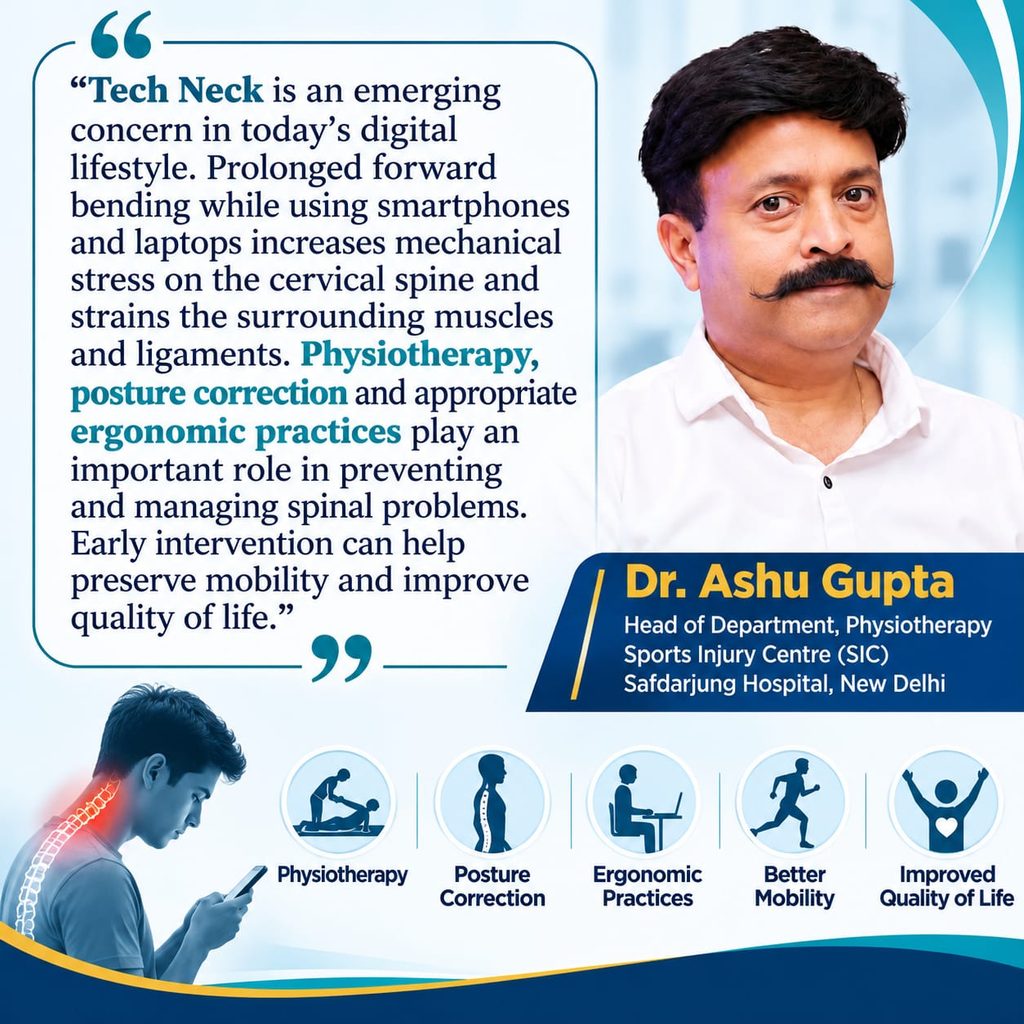
One emerging concern is Tech Neck, also known as Text Neck Syndrome. It refers to neck pain and musculoskeletal strain associated with repeatedly bending the head forward while using smartphones, laptops and tablets.
According to Dr. Ashu Gupta, maintaining a forward-head posture for prolonged periods can increase the mechanical load on the cervical spine and strain the surrounding muscles and ligaments.
Common symptoms include:
- Persistent neck pain and stiffness.
- Shoulder pain and upper-back discomfort.
- Headaches originating around the neck.
- Reduced neck mobility.
- Pain radiating towards the arms.
- Tingling or numbness when nerves are affected.
Although Tech Neck does not automatically lead to structural spinal damage or surgery, persistent symptoms should not be ignored.
From Poor Posture to Cervical and Lumbar Spine Disorders
Apart from Tech Neck, several spinal conditions are being diagnosed in younger individuals. These include cervical disc herniation, lumbar disc prolapse, sciatica, cervical radiculopathy and degenerative disc disease.
Dr. Ashu Gupta highlighted that improper weightlifting techniques, excessive gym training without supervision, prolonged sitting and inadequate recovery can aggravate existing spinal problems.
A slipped or herniated disc can compress nearby nerves, resulting in pain, weakness, tingling or numbness in the arms or legs.
In severe cases, cervical spinal cord compression can affect balance, coordination and walking ability. Such symptoms require prompt medical evaluation.
Physiotherapy: The First Line of Rehabilitation
Highlighting the growing importance of physiotherapy, Dr. Ashu Gupta said that physiotherapy is no longer limited to rehabilitation after an injury or surgery. It is increasingly emerging as an important part of preventive healthcare, sports performance, healthy ageing and lifelong mobility.
Physiotherapy plays a significant role in managing many cervical and lumbar spine conditions. It helps improve mobility, strengthen supporting muscles, correct movement patterns and restore functional ability.
According to Dr. Gupta, a structured and individualised physiotherapy programme may include:
1. Posture Correction: Training patients to maintain neutral neck and spinal alignment while working, studying or using smartphones.
2. Neck and Shoulder Strengthening: Exercises targeting deep neck flexors, shoulder stabilisers and upper-back muscles.
3. Core Strengthening: Improving abdominal and back muscle strength to support the lumbar spine.
4. Mobility Exercises: Carefully selected stretching and mobility exercises to reduce stiffness and improve movement.
5. Manual Therapy: Selected hands-on techniques to address pain and restricted mobility.
6. Ergonomic Education: Guidance on workstation arrangement, screen height, sitting posture and regular movement breaks.
Dr. Gupta emphasised that physiotherapy must be individualised according to the patient’s diagnosis and clinical condition. Patients with significant neurological symptoms or suspected spinal cord compression require medical assessment before beginning an exercise programme.
8 Expert Tips to Protect Your Spine
Dr. Ashu Gupta recommended the following preventive measures to maintain spinal health:
- Maintain proper posture: Keep your neck in a neutral position while sitting, standing and walking.
- Keep screens at eye level: Adjust laptop and computer screens to avoid prolonged downward bending.
- Hold mobile phones higher: Bring smartphones closer to eye level instead of continuously looking down.
- Take regular movement breaks: Avoid remaining seated in the same position for prolonged periods.
- Strengthen supporting muscles: Practise appropriate neck, shoulder and core-strengthening exercises under professional guidance.
- Follow correct gym techniques: Avoid excessive weightlifting and improper exercise techniques without supervision.
- Avoid extreme neck movements: Do not forcefully rotate, bend or stretch the neck.
- Recognise warning signs: Do not ignore persistent pain, numbness, weakness, reduced grip strength or difficulty walking.
Early Diagnosis, Prevention and Rehabilitation Can Help Preserve Mobility
With increasing screen time, sedentary lifestyles and changing workplace habits, cervical and lumbar spine health deserve greater attention, particularly among younger populations.
Both experts emphasised that spinal health requires awareness, preventive care, timely diagnosis and individualised treatment. Persistent neck or back pain, numbness, tingling sensations, limb weakness, difficulty maintaining balance or walking should never be ignored. Early medical assessment and appropriate rehabilitation can help prevent further complications and preserve long-term mobility.