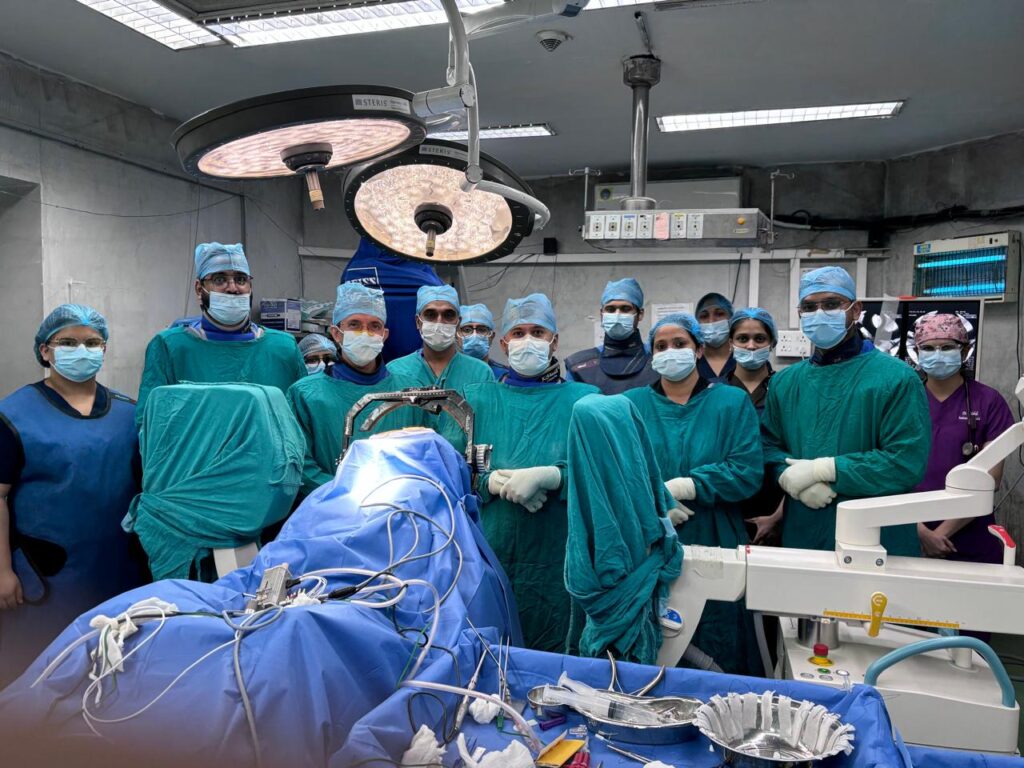
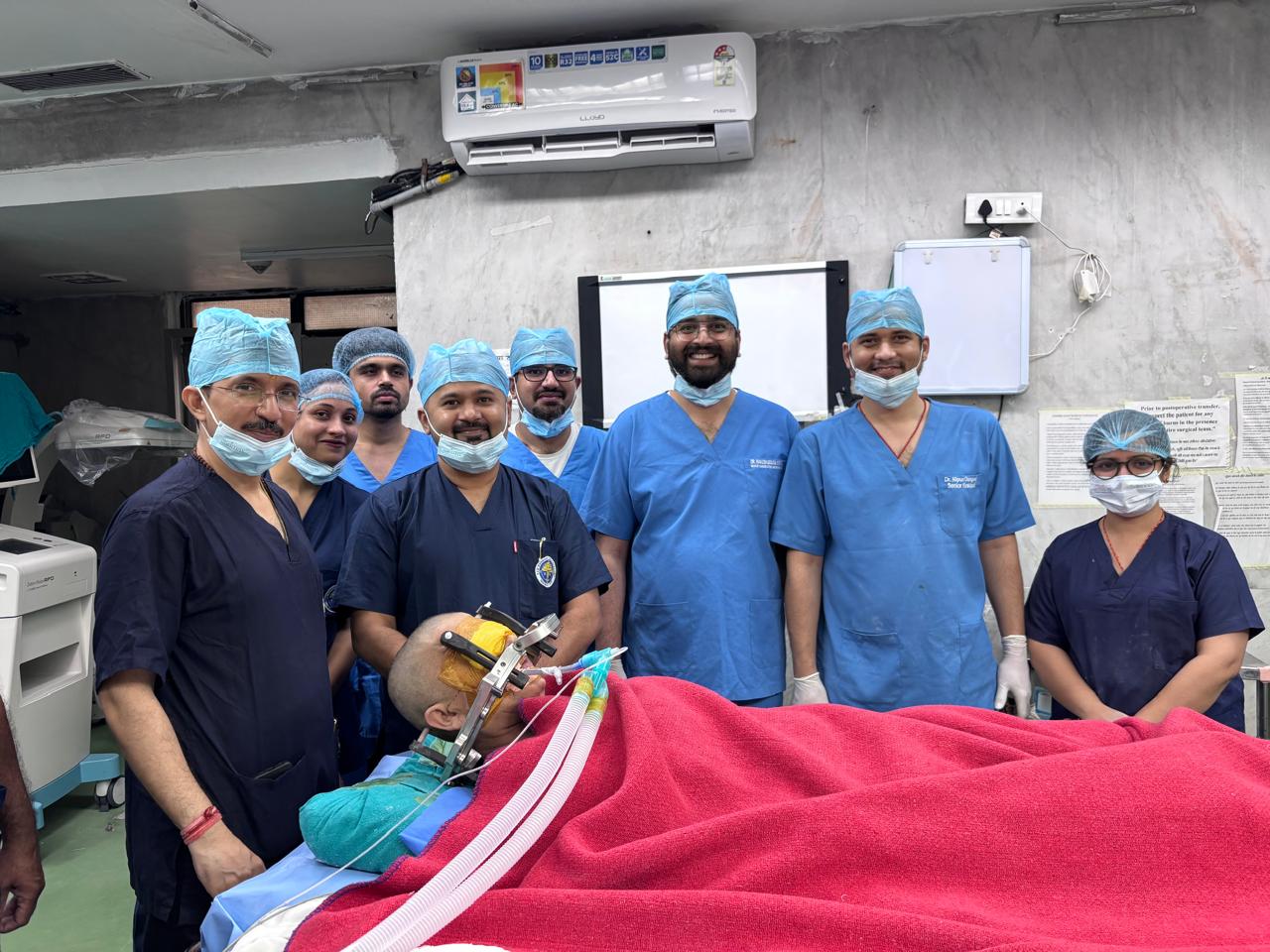

- Experts from four departments, led by Neurosurgeon Dr. Sharad Pandey, carried out the complex Parkinson’s surgery
New Delhi, Ekta |HL
A 55-year-old patient from Kathmandu, struggling with constant tremors, body stiffness and difficulty walking due to Parkinson’s disease, has found fresh hope at Dr. Ram Manohar Lohia Hospital. A Deep Brain Stimulation (DBS) surgery was successfully performed on the patient in the hospital’s Neurosurgery Department. In common parlance, this technology is called a “brain pacemaker.” It helps regulate abnormal nerve signals in the brain, which can bring relief from symptoms such as tremors, rigidity and slowness of movement. The procedure is being seen as an important step forward for functional neurosurgery at the hospital.
Team from four departments shared the responsibility
The surgery was performed by Prof. Sharad Pandey and his neurosurgery team, with specialists from the neurology, radiology and anaesthesia departments also assisting. The team included Prof. Ajay Chaudhary (Neurosurgery); Prof. Jyoti Garg and Prof. Ashish Duggal (Neurology); Prof. Namrata Sachdev (Radiology); and Prof. Sandeep Kumar and Prof. Sanjeev Sharma (Anaesthesia). For expert guidance during the procedure, Dr. Himanshu Champarani, a neurosurgeon at Max Hospital, Gurugram, was invited as a proctor.
Electrodes are placed in the brain
A “brain pacemaker” will help control severe symptoms of Parkinson’s disease. As explained by Dr.Pandey to Healthlive the patient suffered from persistent tremors along with uncontrolled movements (dyskinesia), stiffness, slowness in walking, and fluctuating effects of medication. In DBS, small electrodes are implanted in specific areas of the brain that control body movements. By delivering controlled electrical impulses, they help regulate abnormal nerve activity. This can reduce the symptoms of Parkinson’s as well as the “on-off phenomenon.”
What is the on-off phenomenon?
When Parkinson’s medication is working, the patient is able to move around better for some time. This is called the “on” state. As the effect of the medicine wears off, tremors, stiffness and difficulty walking can return. This is called the “off” state. This fluctuation between the effect of the medication and the symptoms is known as the on-off phenomenon.
Dr. Pandey said this surgery is now new hope for the Parkinson’s patients and a milestone for our hospital.