

By Ekta Purohit / NEW DELHI: October 24, 2026
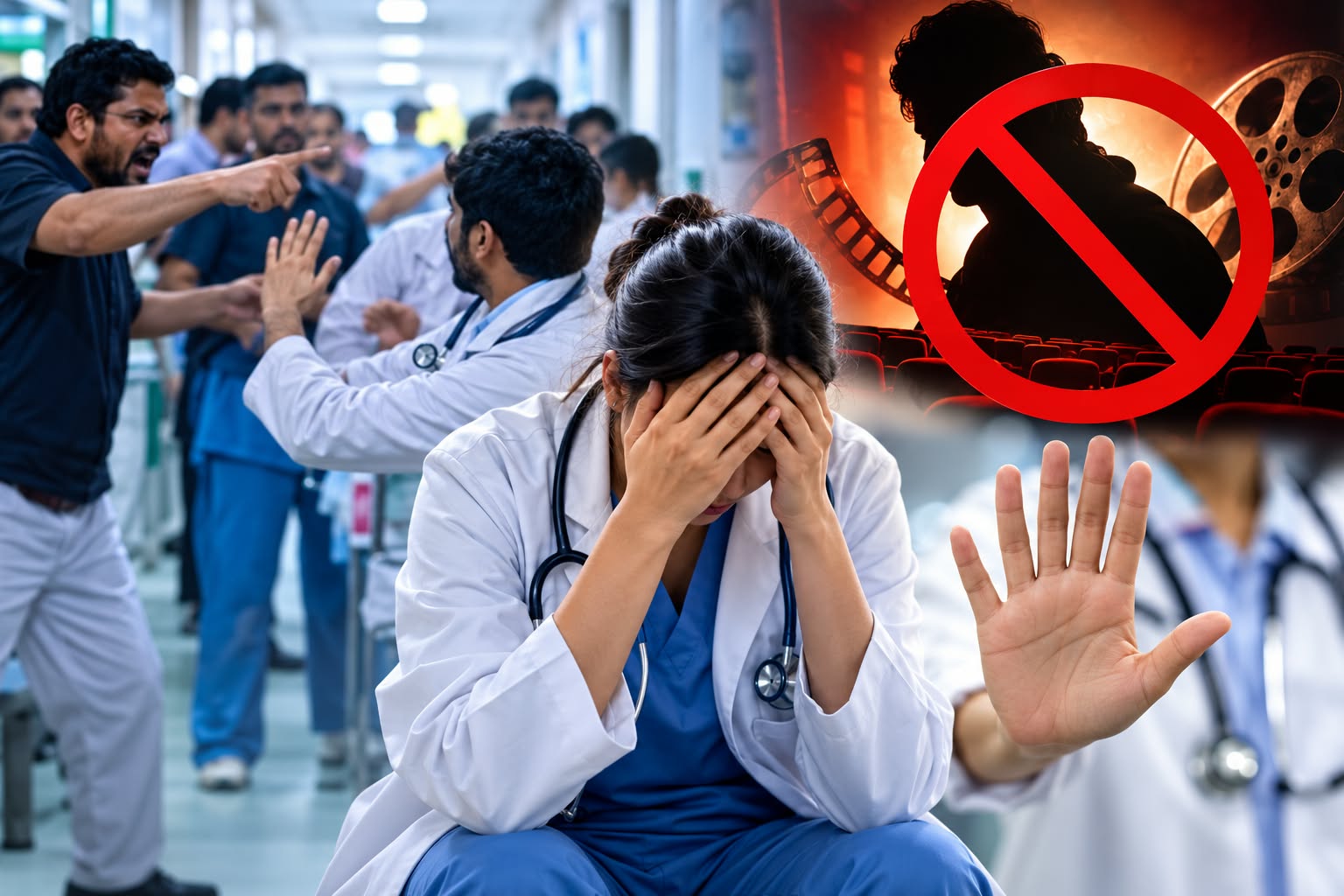
Growing concerns over violence against doctors and healthcare professionals have prompted renewed calls for stronger legal protection, improved hospital security and greater public awareness. Medical representatives have also raised objections to the portrayal of doctors in the upcoming film Suryaa, demanding a ban on the movie and indicating plans for a protest against what they consider a threat to the dignity and public perception of the medical profession.
Doctors and representatives associated with the Doctors of Corporate Society (DOCS), the Federation of Resident Doctors’ Association (FORDA) and other medical organisations have highlighted the multiple factors contributing to attacks on healthcare workers, including overcrowded hospitals, long waiting periods, inadequate facilities, insufficient security and the absence of an effective referral system.
Their concerns underline a broader challenge for India’s healthcare system: ensuring that doctors can provide treatment in a safe environment while patients and their families receive timely, accessible and respectful care.
DOCS Raises Concerns Over Doctors’ Safety and ‘Suryaa’
Dr. Ashish Tomar, General Secretary of the Doctors of Corporate Society (DOCS), described violence against healthcare professionals as a serious concern, stressing that doctors need dignity, security and a safe working environment.
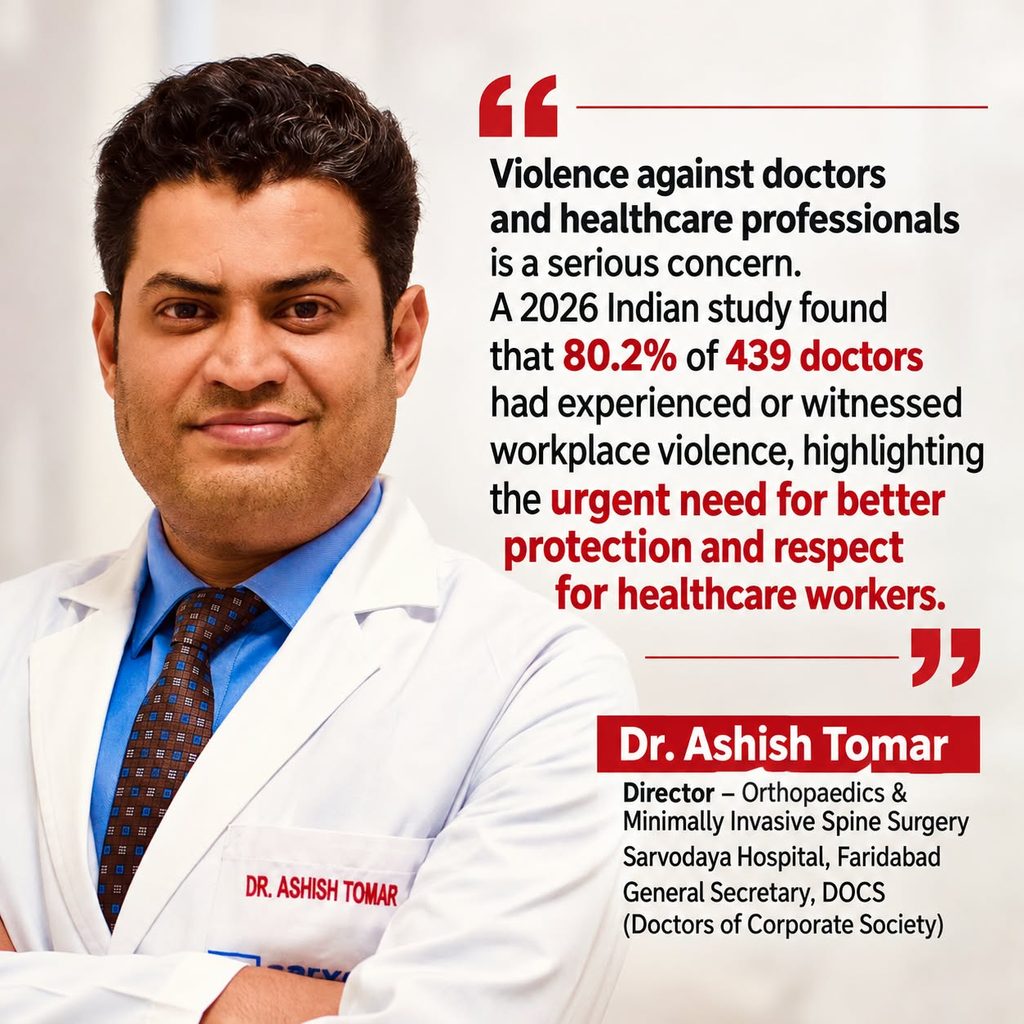
Referring to a reported 2026 Indian study in which 80.2% of 439 surveyed doctors had experienced or witnessed workplace violence, Dr. Tomar emphasised the urgency of protecting healthcare workers. The study details should be independently verified before publication.
He also expressed concern about the portrayal of doctors in the upcoming film Suryaa, arguing that representations of the medical profession should not undermine public trust or damage the dignity of healthcare workers.
Dr. Tomar called for a ban on the film, stating that the medical fraternity is already under considerable professional and emotional pressure. He stressed that doctors must be able to serve society without fear of abuse, intimidation or physical violence.
FORDA Representative Highlights Vulnerability of Junior Doctors
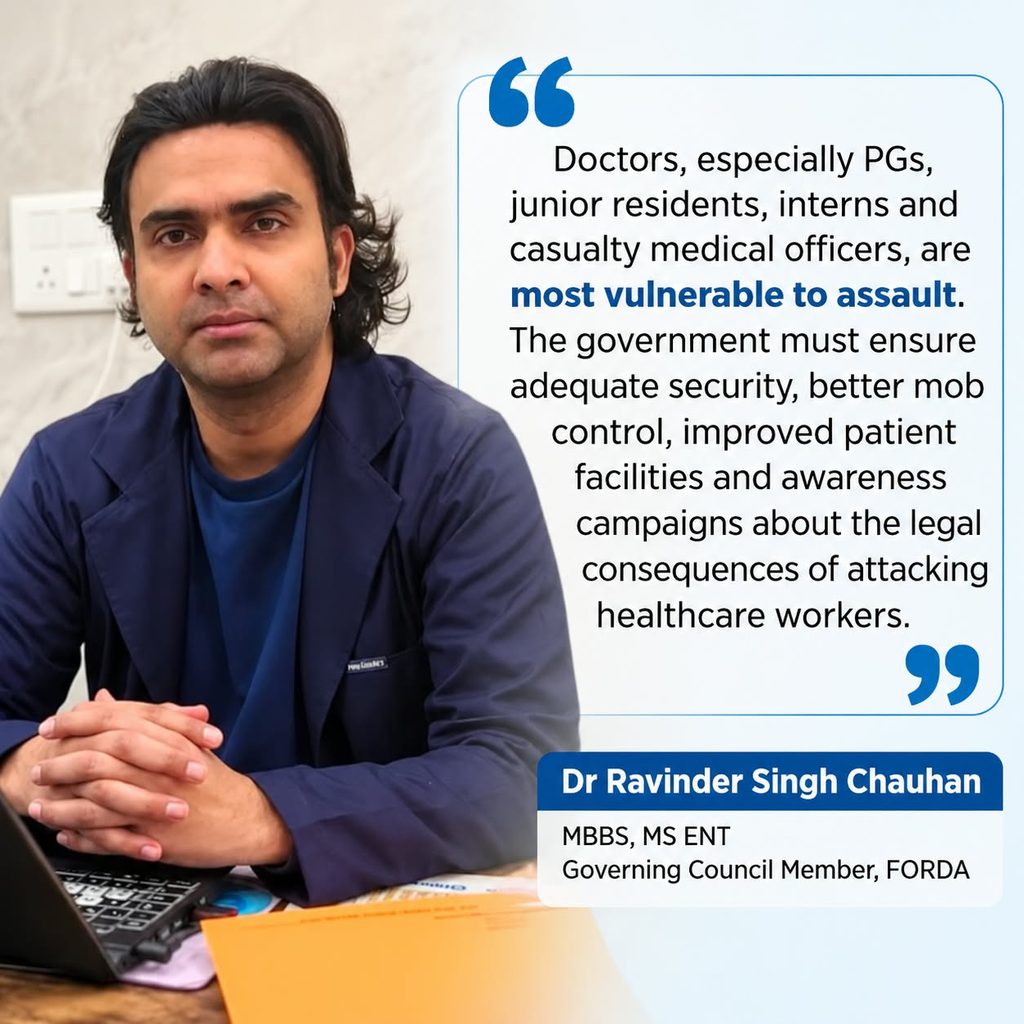
Dr. Ravinder Singh Chauhan, Governing Council Member of FORDA, highlighted the vulnerability of postgraduate doctors, junior residents, interns and casualty medical officers, who frequently work under intense pressure in government hospitals.
According to Dr. Chauhan, inadequate security arrangements and ineffective crowd-control measures leave resident doctors particularly exposed to assaults. Heavy patient loads, shortages of equipment and insufficient patient facilities can also increase frustration among patients and their attendants, sometimes escalating into confrontations with medical staff.
He called on the government to strengthen hospital security, introduce effective crowd-management systems and improve facilities for patients and their families.
Dr. Chauhan also stressed the need for dedicated counsellors who can communicate with patients and attendants, explain treatment-related concerns and help defuse tense situations before they escalate.
In addition, he advocated public-awareness campaigns through news media and social media platforms to educate people about the legal consequences of assaulting healthcare workers and disrupting healthcare facilities.
Dr. Pankaj Dharamveer Solanki Calls for a Structured Referral System
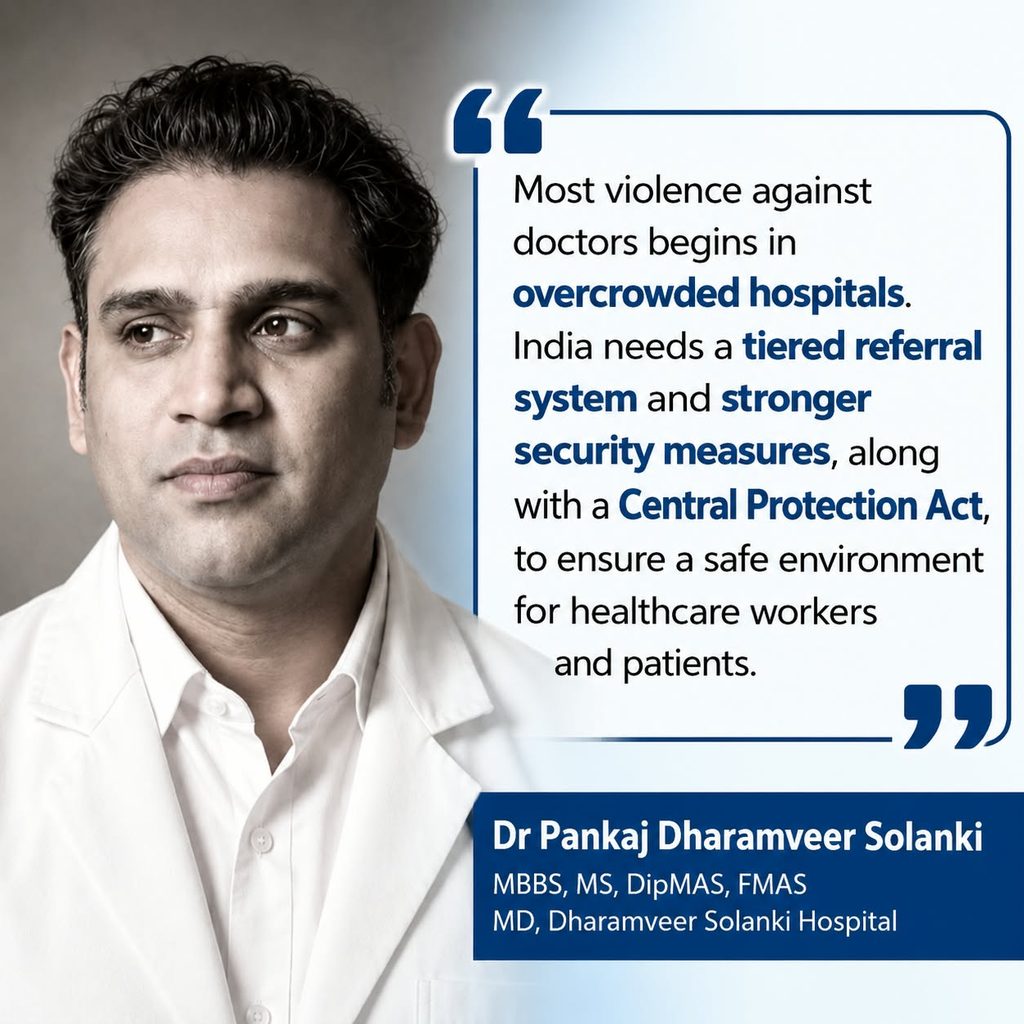
Dr. Pankaj Dharamveer Solanki, Former Elected Member of the Delhi Medical Council (DMC) and Past President of FORDA, linked violence in hospitals to overcrowding, prolonged waiting times and gaps in the organisation of healthcare services.
He observed that anxious patients and exhausted healthcare workers often come into conflict in overcrowded hospitals. In his view, one underlying problem is that patients frequently approach tertiary-care hospitals directly for conditions that could be managed at the primary-care level.
Dr. Solanki advocated a structured, tiered referral system similar to those used in several European healthcare systems. Under this approach, patients would ordinarily begin treatment at their nearest dispensary or Primary Health Centre (PHC). Those requiring more specialised care would then be referred to secondary or tertiary hospitals.
Medical emergencies would continue to receive immediate hospital care without unnecessary referral barriers.
He argued that such a system could help reduce overcrowding, shorten waiting times and improve communication between patients and doctors. A functioning referral network would also require adequately staffed primary-care facilities, essential diagnostic services and digital links between healthcare centres.
Dr. Solanki emphasised that systemic reforms must go hand in hand with a strong Central Protection Act and appropriate security arrangements across healthcare facilities.
He concluded with the message: “Protecting doctors is protecting patients. Tu Akela Nahi Hai.”
Dr. Harjit Singh Bhatti Calls Violence an Assault on Humanity
Dr. Harjit Singh Bhatti, Consultant in Geriatric Medicine at SBISR, described violence against doctors as more than a law-and-order problem, calling it an assault on humanity.
He maintained that grief, anger or dissatisfaction cannot justify threatening, abusing or physically attacking healthcare professionals. Where medical negligence is suspected, he said, allegations should be investigated transparently and resolved through due process rather than mob violence.
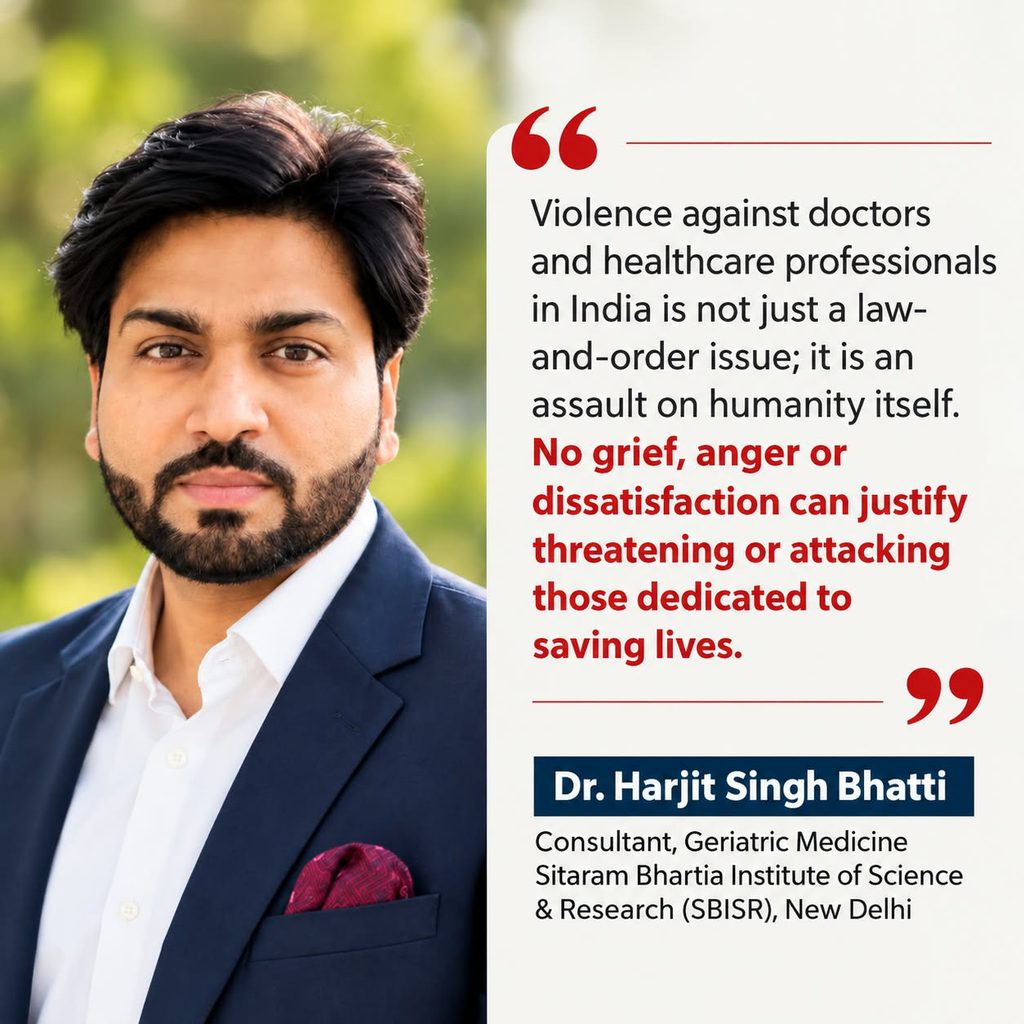
Dr. Bhatti warned that the normalisation of attacks on doctors threatens the trust on which effective healthcare depends. He called for stronger laws, swift prosecution in accordance with the law, better hospital security and institutional accountability.
Protest Planning and Demand for Action
The statements from medical representatives have brought two connected issues into focus: the need to address violence against healthcare professionals and the demand for action against the film Suryaa over its portrayal of doctors.
Medical representatives are calling for stronger protection measures and have indicated plans for a protest linked to their concerns. Specific details, including the protest date, venue, participating organisations and programme, have not yet been provided.
The protest-related demands reflect the growing emphasis on making healthcare facilities safer for both patients and medical professionals.
Protecting Doctors Is Essential to Protecting Patients
The concerns raised by these medical representatives point to a need for action on several fronts. Stronger laws alone may not eliminate violence unless they are supported by adequate staffing, accessible primary care, effective hospital security, transparent grievance-redressal mechanisms and better communication with patients.
At the same time, allegations of medical negligence must be investigated fairly, and public concerns about the portrayal of healthcare professionals should be addressed through lawful and transparent channels.
A safe healthcare environment benefits everyone. Protecting doctors from violence is essential to maintaining morale among medical staff, ensuring continuity of treatment and preserving public confidence in the healthcare system.