

By Ekta Purohit
New Delhi : October 23, 2026
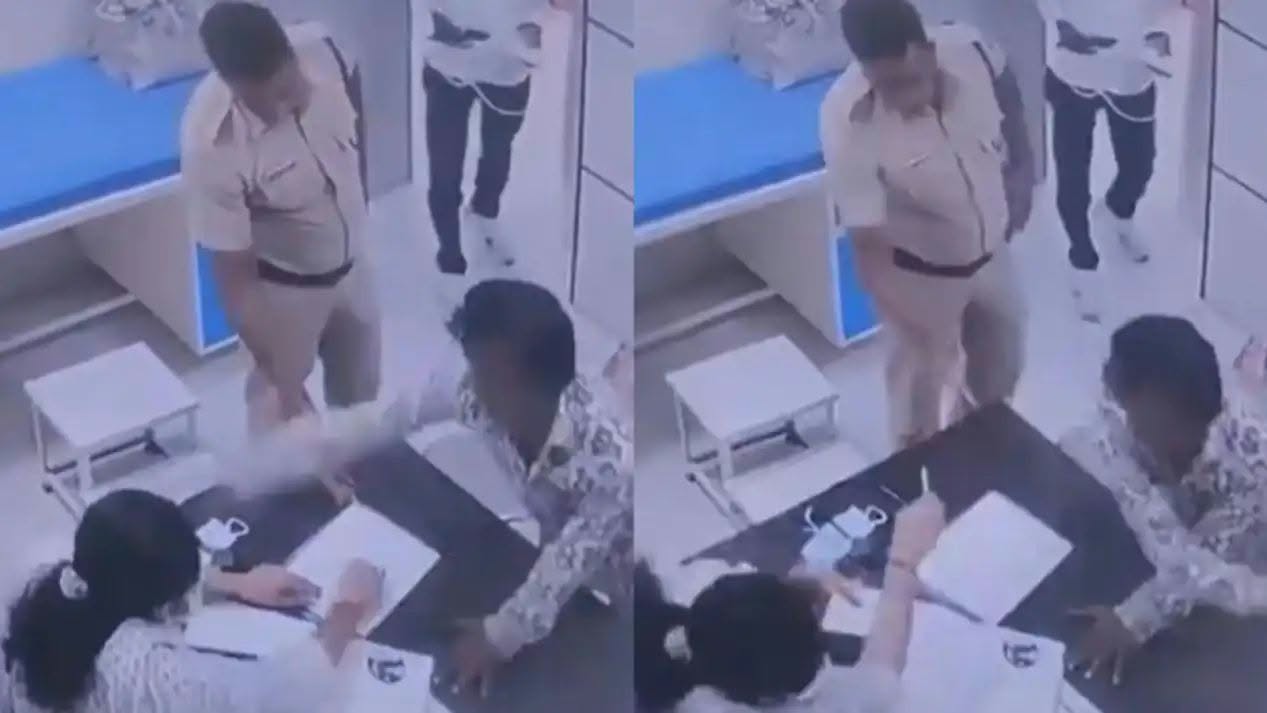
A woman medical officer, Dr Shraddha Bhumre, was allegedly slapped by a man brought to a primary health centre for a medical examination in Maharashtra’s Wardha district, triggering fresh outrage among government doctors and renewing concerns about the safety of healthcare professionals on duty.
The incident reportedly took place at a primary health centre in Talegaon Shyamji Pant village in Ashti tehsil. According to media reports, the accused, identified as Qadir Ali Razzaq Ali, had been brought to the facility by police for a medical examination before being produced in court.
After the examination, police personnel reportedly asked him to sign the necessary documents. He allegedly slapped Dr Bhumre after signing them. The police personnel subsequently restrained him.
The incident has drawn criticism from medical professionals, particularly over the circumstances in which the assault allegedly took place despite the presence of police personnel.
Members of the Gazetted Medical Officers’ Association reportedly submitted a memorandum to Wardha District Collector Vanmathi C, demanding strict action against the accused and accountability for any security lapses. The association also warned of suspending outpatient department (OPD) services until action was taken.
The incident has once again highlighted the vulnerability of doctors and other healthcare workers, who can face aggression even while carrying out routine medical and medico-legal duties.
A disturbing pattern of attacks on healthcare professionals
The Wardha incident comes amid several other reported cases of violence against doctors and hospital staff across India in recent months. From assaults inside government hospitals to alleged attacks involving political functionaries and groups of attendants, these incidents have intensified demands for stronger workplace security and effective enforcement of laws protecting medical personnel.
Thane: Doctors allegedly assaulted at a municipal hospital
On July 6, 2026, three doctors, including a woman doctor, were allegedly assaulted at Shastri Nagar Municipal Hospital in Dombivli, in Maharashtra’s Thane district. Media reports identified Shiv Sena corporator Ramesh Mhatre and his associates in connection with the incident, which reportedly followed a dispute over the availability of neonatal intensive care unit (NICU) beds for a newborn.
The incident triggered protests and widespread concern among medical professionals. Police registered a case, and Mhatre was arrested. The matter subsequently went through court proceedings, with the Supreme Court cancelling bail granted to Mhatre and other accused in October, according to a PTI report published by ThePrint.
The case became a prominent example of the challenges doctors face when clinical decisions and the availability of hospital resources become the subject of confrontation. Medical professionals have repeatedly stressed that disagreements over treatment or facilities must be resolved through lawful procedures rather than intimidation or physical violence.
Palghar: Hospital staff allegedly attacked over a medical bill
In September 2026, doctors and other employees at Relief Hospital in Palghar, Maharashtra, were allegedly assaulted and threatened during a dispute over medical bills involving participants injured at a Dahi Handi event.
According to media reports, the dispute concerned a bill of approximately ₹19,866. A group allegedly entered the hospital, abused staff and assaulted a receptionist. Hospital employees also alleged that members of the group entered the intensive care unit and forcibly removed an injured patient.
Police registered a case under relevant provisions of the Bharatiya Nyaya Sanhita and Maharashtra’s law protecting medical service personnel and institutions. The case reportedly involved several Shiv Sena functionaries, and party action was taken against Palghar city chief Rahul Gharat.
The incident raised concerns not only about the physical safety of hospital staff but also about the disruption of critical care areas, where confrontations can put other patients at risk.
Beed: Doctor and hospital staff allegedly held hostage for six hours
Another serious incident was reported in Maharashtra’s Beed district in October. According to a PTI report published on October 7, a case was registered against 11 people following an alleged assault on a doctor and his staff at a hospital in Majalgaon.
The incident reportedly occurred on October 3 after a patient, Bhagwan Salve, died during treatment at the hospital run by Dr Radhakisan Dake. The doctor alleged that relatives and associates of the deceased assaulted him, threatened to kill him and held hospital personnel hostage for nearly six hours.
The group was also accused of interfering with the hospital’s CCTV recording system. Police registered a case under the relevant state law protecting medical service personnel and provisions of the Bharatiya Nyaya Sanhita. The report said the accused were absconding at the time of publication.
The case illustrates how allegations of medical negligence can escalate into serious confrontations, potentially endangering doctors, staff and other patients.
Hyderabad: Resident doctors report threats and assault at NIMS
In September, the Resident Doctors’ Association at Hyderabad’s Nizam’s Institute of Medical Sciences (NIMS) sought an inquiry into an alleged incident of verbal abuse, threats and physical assault involving personnel in the emergency department.
According to a report published by The New Indian Express on September 1, the association alleged that an attendant became aggressive after a patient was brought to the emergency department without signs of life. The association said doctors had attended to the patient appropriately and that a security staff member was physically assaulted and injured.
The doctors’ body sought a review of CCTV footage, an inquiry into the alleged security lapse and stronger arrangements to protect medical and security personnel.
The incident underscored the need for clear emergency protocols and prompt intervention when tensions rise in high-pressure clinical settings.
Telangana: Doctor and staff allegedly assaulted inside a health centre
On October 2, NDTV reported another incident in Telangana in which a man was allegedly seen slapping a doctor twice before attacking another staff member at a health centre.
The incident added to concerns about violence against frontline healthcare workers, particularly those serving in facilities where security arrangements may be limited.
Taken together, these reports indicate that assaults on healthcare workers are not confined to one hospital, one state or one type of dispute. The circumstances vary, but the recurring concern is whether medical professionals can perform their duties without fear of intimidation or physical harm.
Why doctor safety is a public health concern
Violence against healthcare professionals has consequences beyond the immediate injuries or trauma suffered by the victims. Such incidents can undermine staff morale, create fear among medical personnel and disrupt access to essential healthcare services.
When doctors face threats or physical attacks, routine consultations may be interrupted, emergency departments may become unsafe, and patients who have no connection with the dispute may also be affected.
Medical organisations have therefore called for stronger security arrangements, adequate staffing, functional CCTV surveillance, rapid police assistance and effective action against those accused of assaulting healthcare personnel.
Hospitals and health authorities also need clear procedures for managing aggressive attendants, communicating difficult clinical outcomes and escalating disputes without exposing staff to danger.
Disagreement over treatment cannot justify violence
Disputes concerning treatment, hospital facilities, bills or alleged medical negligence must be investigated fairly. Patients and families have the right to seek explanations, submit complaints and pursue legal remedies when they believe that care has been inadequate.
However, allegations must be examined through established procedures, and physical violence cannot be accepted as a means of seeking accountability.
The Wardha incident, in which a doctor was allegedly assaulted during a medico-legal examination, raises particular questions about the safeguards available when police bring an accused person to a healthcare facility.
Medical organisations’ demands for accountability reflect a broader principle: doctors, nurses, paramedics and other healthcare workers must be protected while providing care, regardless of the circumstances that bring a patient to a hospital.
Ensuring that protection requires more than condemnation after an incident. It requires preventive security measures, timely investigation, fair legal proceedings and institutional accountability wherever lapses are established.
As reports of assaults continue to emerge from different parts of the country, the challenge for health authorities and law enforcement agencies is to ensure that hospitals and clinics remain safe spaces for both patients and the professionals responsible for treating them.