

New Delhi: October 30, 2026
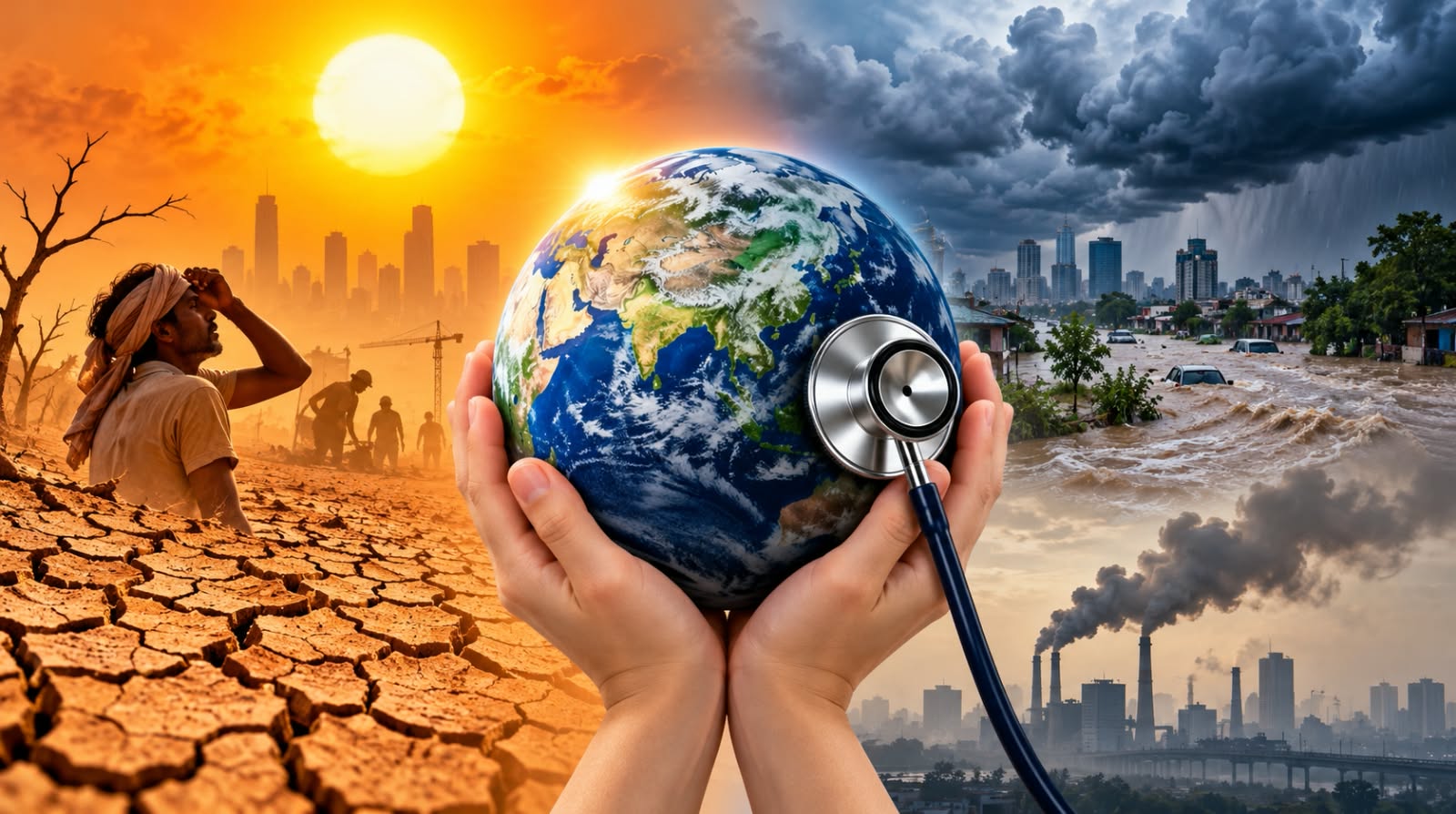
Climate change is increasingly threatening human health worldwide, with rising temperatures, heat-related deaths, worsening droughts and extreme weather events creating mounting pressure on public health systems. The 2026 Lancet Countdown report, highlighted by the World Health Organization (WHO), warns that the health consequences of climate change are accelerating faster than global efforts to address them.
The report, released ahead of the upcoming COP31 climate conference, examines 54 indicators connecting climate change with human health. It draws on the work of researchers from multiple countries and calls for climate change to be formally recognised and addressed as a global health emergency.
For India, the findings are particularly concerning. Extreme heat, air pollution and climate-sensitive working conditions pose significant risks to public health, livelihoods and economic productivity. The report underscores the need to strengthen healthcare preparedness, expand early-warning systems and integrate health protection into climate policies.
Heat-Related Deaths Rise as Global Temperatures Increase
According to the WHO’s summary of the 2026 Lancet Countdown findings, average annual heat-related deaths increased by nearly 36% in the years following the Paris Agreement compared with the preceding decade.
In 2023, heat was associated with approximately 710,000 deaths globally, with more than 70% of this burden attributed to human-caused climate change, according to the report.
Prolonged exposure to high temperatures can cause heat exhaustion, heatstroke, dehydration and cardiovascular complications. Older adults, children, outdoor workers and people with existing health conditions face particularly serious risks.
The report also highlights the growing impact of droughts, extreme weather and heat-related economic losses, demonstrating that climate change is no longer solely an environmental concern but an increasingly urgent public health challenge.
India Faces a Growing Burden from Extreme Heat
India is especially vulnerable to rising temperatures because of its large population, dependence on outdoor and agricultural work, and exposure to increasingly intense heatwaves.
India-specific figures in country data sheet, highlight the scale of the challenge:
- Economic losses: Heat-related reductions in potential worker earnings were estimated at US$174 billion in 2025, equivalent to approximately 4.2% of India’s GDP.
- Lost working hours: Heat exposure accounted for an estimated 193 billion potential working hours lost annually on average during 2016–2025, around 75% higher than in the 1990s.
- Heatwave exposure: People in India experienced an average of 10.6 heatwave days annually during 2016–2025, of which approximately 5.3 days were attributed to climate change.
- Older people at risk: The estimated economic value of heat-related life-years lost among people aged over 65 reached US$33.8 billion annually during 2021–2025.
These figures illustrate how extreme heat can affect not only physical health but also household incomes, agricultural productivity and the wider economy. The financial estimates represent different measures of economic and health losses and should not be interpreted as direct government expenditure.
Air Pollution Adds to India’s Climate and Health Challenges
Air pollution remains another major public health concern in India. Burning coal, oil and other fossil fuels contributes to climate change while also releasing pollutants that damage human health.
The 2026 report’s India data, estimates that fine particulate matter (PM2.5) from human activities was associated with more than 2.2 million deaths in India in 2023. Fossil-fuel use accounted for a substantial share of these deaths.
The report also estimated the economic value of life-years lost because of air pollution at approximately US$517 billion in 2023, equivalent to 13.5% of India’s GDP. This is a valuation of health losses, not a measure of money directly spent treating pollution-related illnesses.
The combined effects of heat and air pollution are especially concerning for densely populated cities, including Delhi, where high temperatures and polluted air can place additional stress on the respiratory and cardiovascular systems.
Reducing fossil-fuel pollution, improving air quality monitoring and promoting cleaner energy could therefore deliver important benefits for both climate mitigation and public health.
Who Is Most Vulnerable to Climate-Related Health Risks?
Climate-related health risks do not affect all communities equally. People with fewer resources to protect themselves from extreme weather often face greater exposure and have less access to timely healthcare.
In India, vulnerable groups include:
- Outdoor workers exposed to prolonged heat, including construction workers, street vendors and agricultural labourers.
- Older adults and people living with chronic illnesses.
- Children, who are particularly vulnerable to extreme temperatures and environmental hazards.
- Low-income households with limited access to cooling, safe drinking water and adequate healthcare.
- Communities affected by droughts, floods and other extreme weather events.
Public health experts emphasise the importance of heat action plans, timely weather alerts, accessible drinking water, shaded work areas and stronger emergency healthcare preparedness.
WHO Calls for Health-Centred Climate Action
The Lancet Countdown report urges governments to place human health at the centre of climate-related decisions. Its recommendations include accelerating greenhouse gas emission reductions, improving climate adaptation financing and strengthening health systems against climate-related emergencies.
The WHO has also highlighted the importance of climate-informed early-warning systems, health surveillance, emergency preparedness and national adaptation planning.
The report notes that climate action can produce immediate health benefits. Global investment in clean energy reached a record US$2.1 trillion in 2025, while reductions in fossil-fuel-related air pollution have helped protect people from premature deaths in countries making progress towards cleaner energy.
However, the report warns that these gains remain insufficient to offset the growing health burden of climate change.
What India Needs to Prioritise
The latest findings reinforce the need for India to strengthen its climate-resilient public health infrastructure and improve coordination between health, environment, labour and disaster-management authorities.
Key priorities include:
- Strengthening heat action plans: Expand local heat-warning systems and ensure that hospitals and emergency services are prepared for heat-related illnesses.
- Protecting outdoor workers: Promote heat-safe working hours, rest breaks, drinking water and workplace protections during extreme temperatures.
- Improving air quality: Accelerate the transition to cleaner energy and strengthen pollution monitoring and enforcement.
- Building climate-resilient hospitals: Improve the capacity of healthcare facilities to function during heatwaves, floods and other extreme events.
- Expanding public awareness: Educate communities about heatstroke symptoms, hydration, pollution exposure and the importance of seeking timely medical assistance.
- Strengthening climate and health research: Improve surveillance and research to identify vulnerable populations and guide evidence-based public health interventions.
These measures could help reduce preventable illness, protect livelihoods and improve India’s preparedness for increasingly severe climate-related events.
The 2026 Lancet Countdown report delivers a clear warning: climate change is already affecting human health, and the consequences are intensifying. India’s experience with extreme heat, air pollution and heat-related productivity losses demonstrates the importance of treating climate action as a public health priority.
As countries prepare for COP31, stronger climate policies, cleaner energy, resilient healthcare systems and effective early-warning mechanisms will be essential to protect vulnerable populations and reduce avoidable deaths.