

New Delhi: HL October 26, 2026
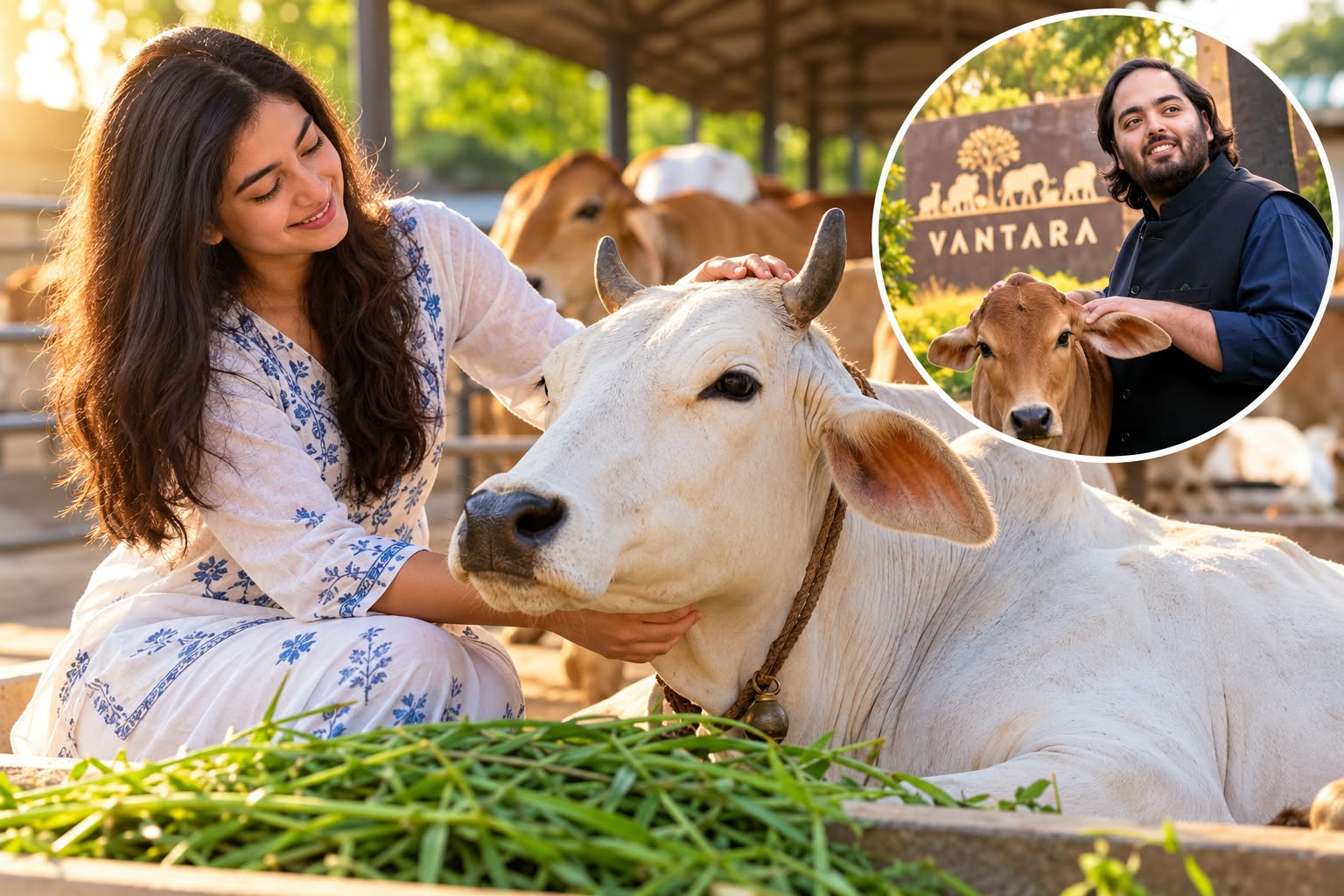
Anant Ambani, Executive Director of Reliance Industries Limited, has spoken about his personal bond with cows, sharing that his family has six cows at home and that he personally massages them every morning before leaving home and feeds them the same food that his family eats.
Caring for cows has deep cultural and traditional significance in India. Beyond these traditions, human-animal interaction has become an area of scientific interest, with researchers examining how spending time with animals may influence psychological well-being, anxiety and stress-related responses.
Activities such as gently touching animals, grooming them and attending to their daily needs may provide a sense of calm.
Meanwhile, scientific research is continuously exploring whether positive interactions with cows and other animals may help reduce anxiety and support emotional well-being.
Scientific Study Finds a Reduction in Anxiety During Cow Interaction
A study published in Frontiers in Psychology in 2023, titled Oxytocin Levels and Self-Reported Anxiety During Interactions Between Humans and Cows, examined interactions between 18 healthy female nursing students and cows.
During the study, participants spent 15 minutes petting and brushing the animals. Researchers observed a statistically significant reduction in self-reported anxiety. However, the study did not find a significant change in average oxytocin levels.
The findings suggest that positive interactions with cows may help reduce anxiety in certain settings. Nevertheless, the study involved a small group of participants, and larger studies are needed to determine whether similar benefits occur across different populations.
Scientific reference: “Frontiers in Psychology — 2023 study” (https://www.frontiersin.org/journals/psychology/articles/10.3389/fpsyg.2023.1252463/full)
What Other Animal-Assisted Research Reveals
Research involving animals other than cows has also examined the relationship between human-animal interactions and stress.
A systematic review published in Animals in 2022 investigated stress-related biomarkers during canine-assisted interventions. Researchers examined indicators such as cortisol and oxytocin, alongside physiological measures including heart rate and blood pressure.
Some studies reported favourable changes in stress-related indicators, although results varied across studies. Since this research primarily involved dogs, the findings cannot be directly interpreted as evidence of the health benefits of cow care.
Scientific reference: “Animals — Review of stress biomarkers in canine-assisted interventions” (https://pubmed.ncbi.nlm.nih.gov/35268219/)
A separate systematic review published in the Journal of Clinical Psychology in 2017 examined the effects of human-animal interactions on psychological distress. The findings contributed to the growing body of research investigating whether animal interactions may support emotional well-being.
Scientific reference: “PubMed — Human-animal interactions and psychological distress” (https://pubmed.ncbi.nlm.nih.gov/27809353/)
Together, these studies provide a scientific basis for further investigation into the potential psychological benefits of interacting with animals, while highlighting the need for more cow-specific research.
Animal-Assisted Therapy in India: Growing Potential
Animal-Assisted Therapy (AAT) is an emerging complementary therapeutic approach that involves trained animals as part of structured interventions designed to support people’s physical, emotional, social and psychological well-being. In India, the field is gradually gaining attention, particularly in areas such as child development, special education, rehabilitation and mental health. However, its adoption remains limited compared with many Western countries.
Some Indian studies have reported encouraging findings. Research involving children with autism and intellectual disabilities has suggested potential improvements in communication, social interaction and functional skills. Studies in paediatric dental settings have also reported reduced anxiety among children exposed to animal-assisted interventions. Research involving patients receiving palliative care has further explored the relationship between interactions with therapy animals and emotional distress.
In her research review, “A Reflection on the Current Status of Animal-Assisted Therapy in India,” Hemangi Narayan Narvekar highlighted its potential benefits while identifying challenges such as limited scientific research, a shortage of trained professionals and low public awareness. India’s early initiatives date back to 1996, when Blue Cross of India collaborated with the Saraswathi Kendra Learning Centre in Chennai to introduce an animal-assisted therapy programme for children with special needs.
source: [PubMed Central – Research Review](https://pmc.ncbi.nlm.nih.gov/articles/PMC8446160/?utm)
Four Potential Ways Cow Care May Support Well-Being
- Emotional Well-Being: Spending quiet time with animals may provide comfort and offer a break from everyday pressures.
- Stress Management: Gentle interactions with animals may help some individuals feel calmer.
- Physical Activity: Feeding cows, providing water and maintaining their living spaces can involve physical movement, depending on the tasks performed.
- Compassion and Responsibility: Caring for animals requires patience, consistency and attention to their needs. These activities may encourage a sense of responsibility and emotional connection.
Caring for cows combines India’s cultural traditions with the broader principles of compassion and animal welfare. Scientific research suggests that positive interactions with cows may help reduce anxiety in certain circumstances, while studies involving other animals indicate potential benefits for stress management and emotional well-being.