
New Delhi: HL November 09, 2026
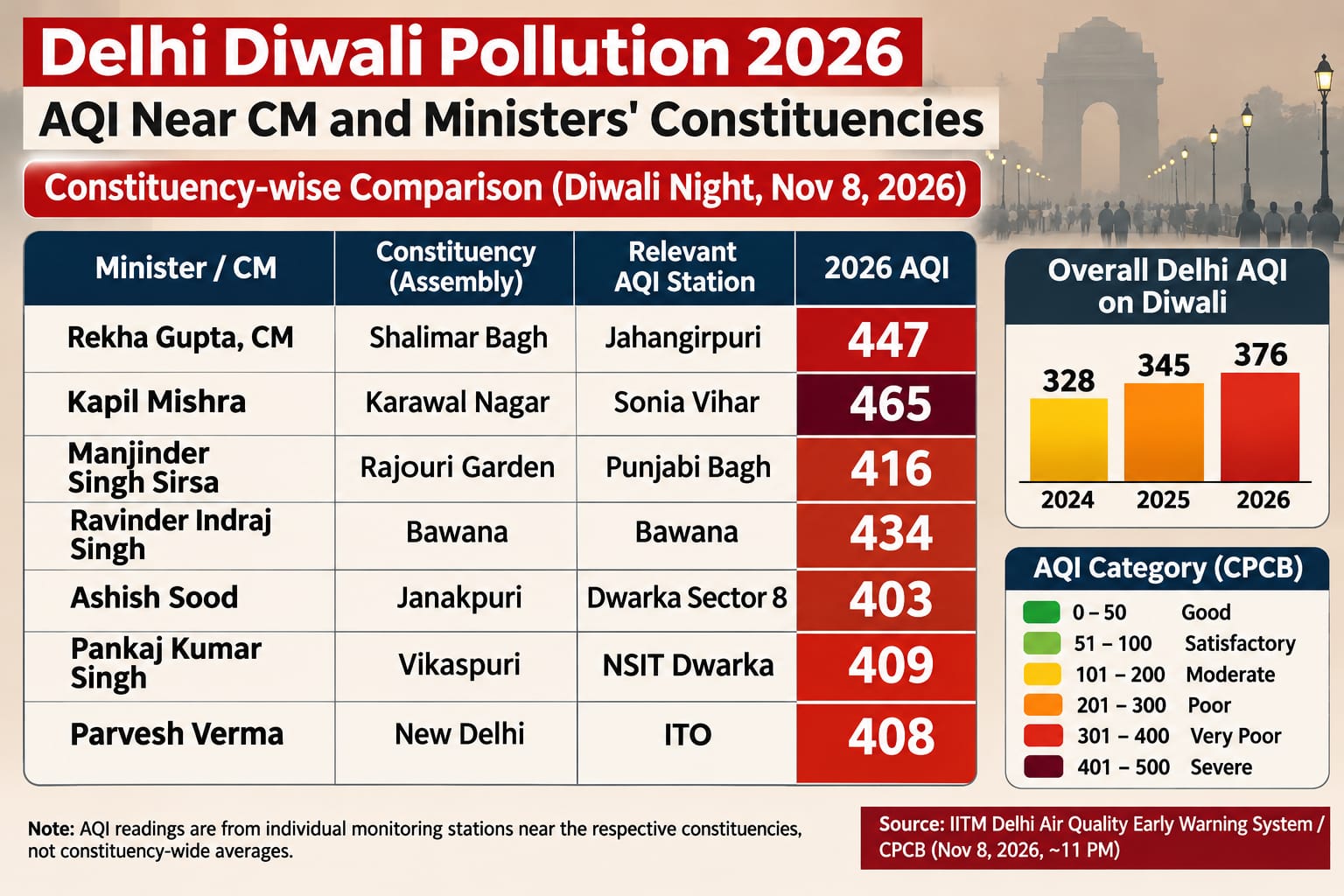
Delhi’s air pollution remained a major public-health concern during Diwali 2026, with several monitoring stations recording air quality in the severe category. Data from the Central Pollution Control Board (CPCB) showed that the capital’s average Diwali-day AQI reached 376, compared with 345 in 2025 and 328 in 2024.
The 2026 figure represents a 9% increase over 2025 and approximately 14.6% over 2024, indicating a deterioration in Delhi’s Diwali-day air quality over the three-year period.
Pollution around CM and Cabinet Ministers’ constituencies
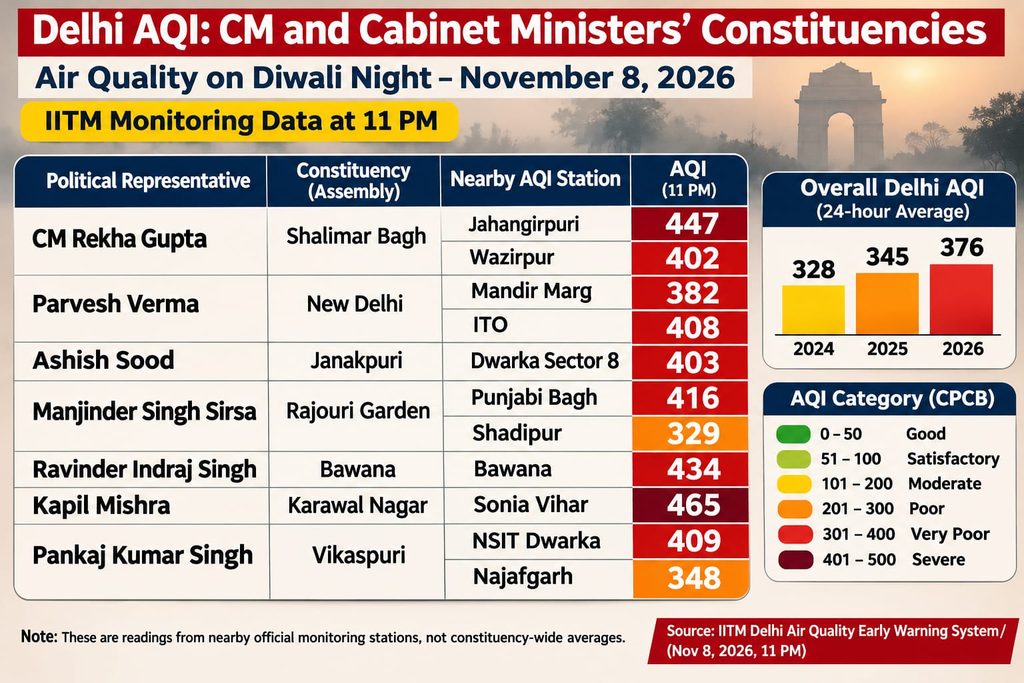
Station-level readings also highlighted high pollution in several areas associated with the constituencies of Delhi’s Chief Minister and Cabinet Ministers.
According to CPCB Sameer data, the following readings were recorded at approximately 10 PM on November 8:
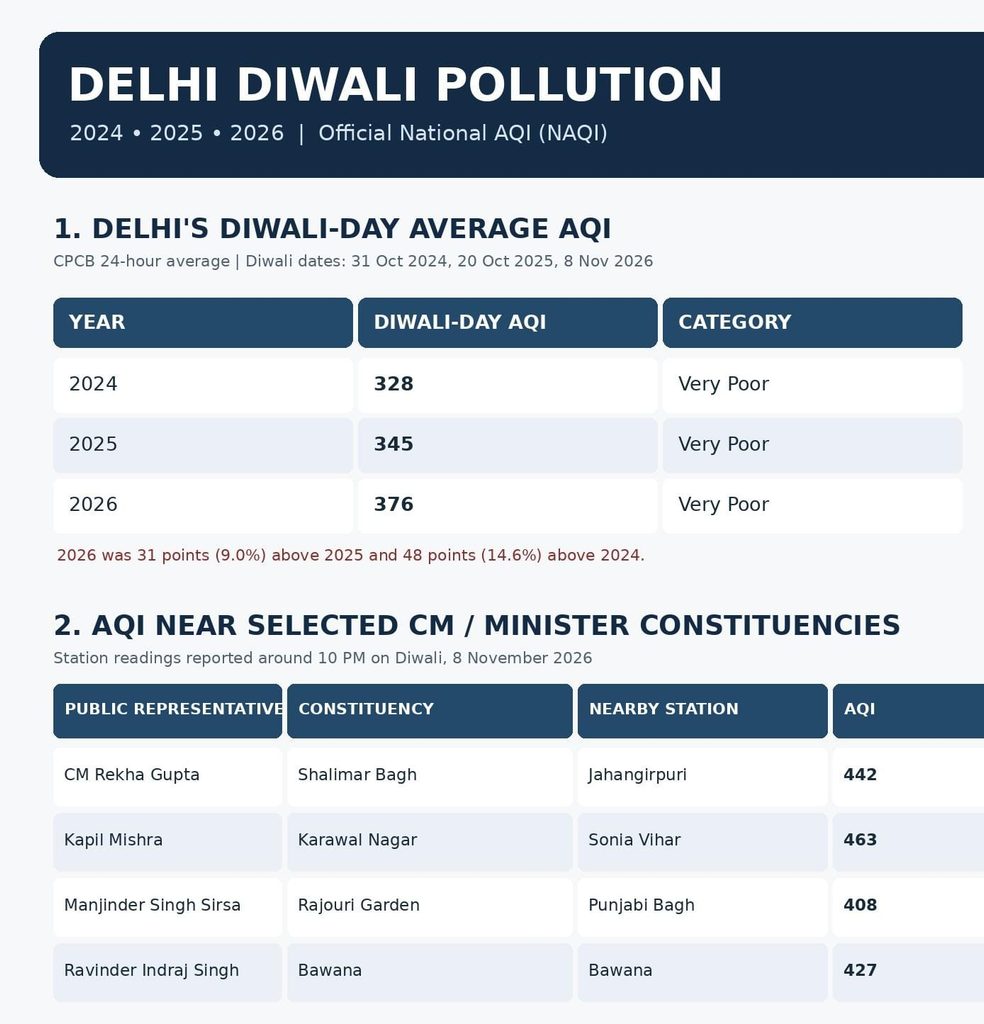
These are nearby monitoring-station readings, not constituency-wide averages.
20 monitoring stations in severe category
On Diwali night, 59 monitoring stations reported air-quality data. Of these, 20 recorded severe AQI, 33 reported very poor air quality and six were in the poor category.
Sonia Vihar recorded 463, followed by Jahangirpuri at 450 in the reported 10 PM observations.
Multiple sources contributing to pollution
Firecracker emissions added to Delhi’s existing pollution burden. However, transport emissions, construction dust, industrial pollution, stubble burning and unfavourable weather conditions also contribute.
The Delhi Decision Support System estimated transport’s contribution at 19% on Diwali, while stubble burning was projected at 3.5%.
The worsening air quality raises concerns about respiratory health, particularly among children, senior citizens and people with asthma or other lung conditions.
Diwali pollution

Delhi Diwali AQI: Constituencies Nearby AQI Station
Air pollution poses a serious health threat to children, senior citizens and patients, particularly those with asthma, respiratory disorders and heart diseases. Continuous exposure to fine particulate matter (PM2.5) and toxic gases can damage lung function, trigger asthma attacks, increase respiratory infections and worsen existing cardiac conditions. In children, prolonged exposure can impair lung development and affect long-term health. Protecting children and vulnerable patients from polluted air must be treated as an urgent public-health priority.