
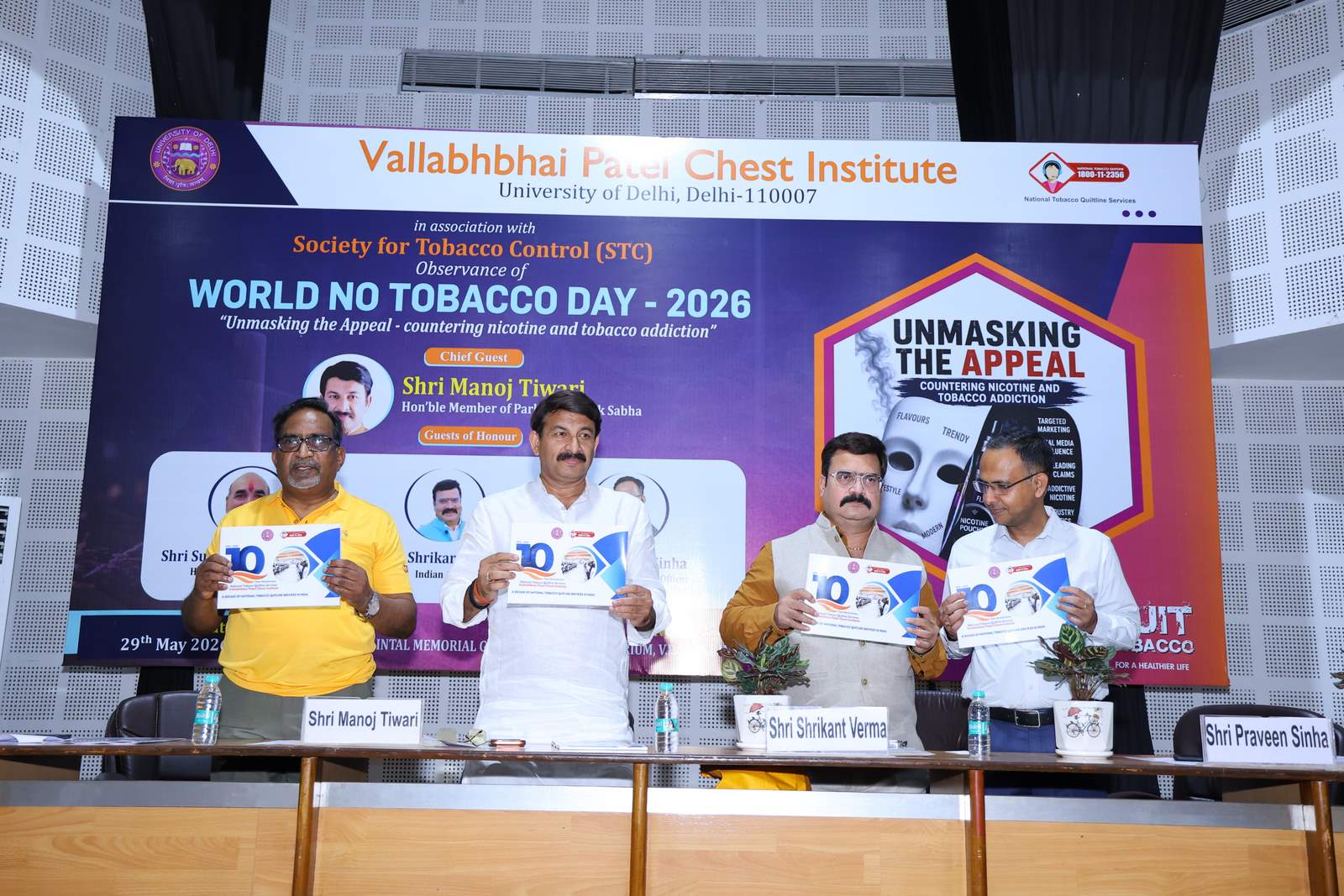

New Delhi l HL May 29, 2026: India’s National Tobacco Quitline Services (NTQLS) has received nearly one crore calls, registered over 6.75 lakh tobacco users, and helped 2,32,870 Indians successfully quit tobacco over the past decade, establishing itself as one of the country’s most impactful public health interventions.
Launched on May 30, 2016, by the Ministry of Health and Family Welfare, Government of India, the toll-free helpline 1800-11-2356 operates from the Vallabhbhai Patel Chest Institute (VPCI), University of Delhi. Over ten years, the service has delivered more than 37 lakh counselling sessions to tobacco users across every state and Union Territory, achieving a quit rate of 34.46 percent among registered users.
The milestone coincides with World No Tobacco Day 2026, observed globally under the World Health Organization (WHO) theme “Unmasking the Appeal: Countering Nicotine and Tobacco Addiction.”
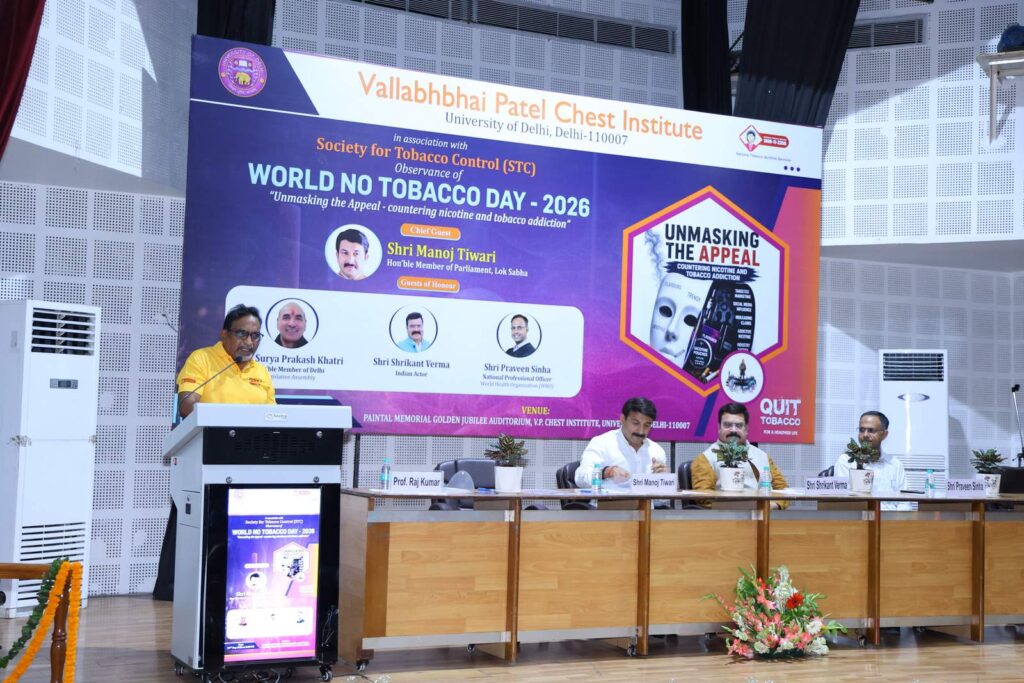
“Ten years ago, we started with a small team and a single phone number. Today, nearly one crore calls later, we have demonstrated that accessible, professional counselling can help hundreds of thousands of Indians overcome tobacco addiction,” said Dr. Raj Kumar, Director, VPCI, and Coordinator of the National Tobacco Quitline Services.
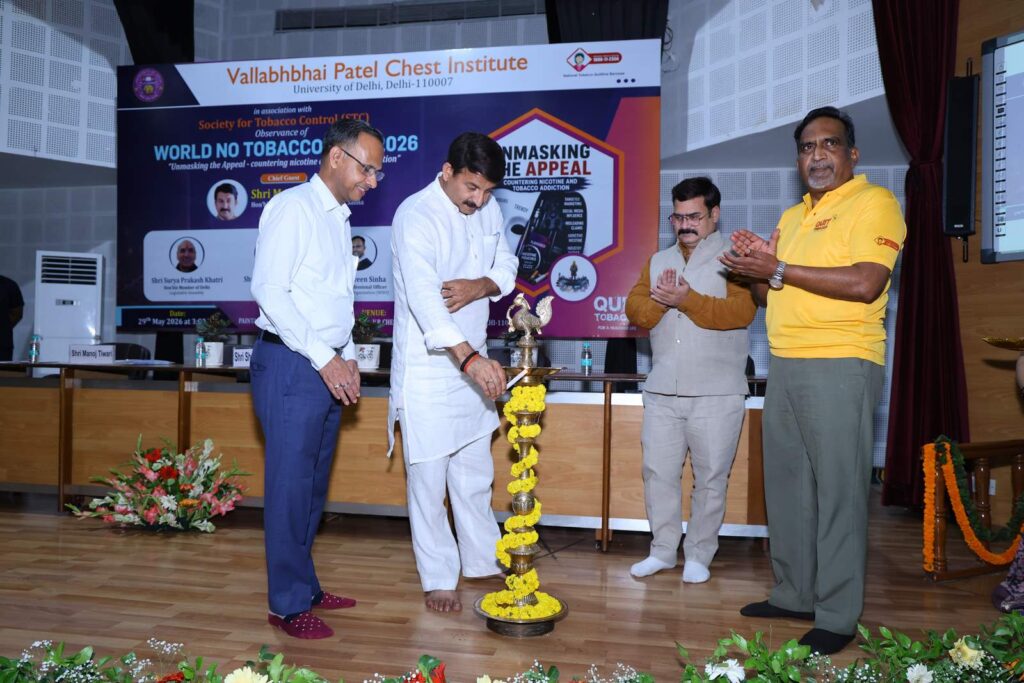
Emphasising the critical role of public awareness and community participation in tobacco control, Shri Manoj Tiwari, Hon’ble Member of Parliament, Lok Sabha, North East Delhi, said, “India’s fight against tobacco cannot be won through laws and regulations alone. Real change happens when awareness reaches every home, school, and community. Tobacco addiction silently devastates not only individuals but also families and society as a whole. The National Tobacco Quitline Services has demonstrated how timely counselling and accessible support can empower people to quit tobacco and reclaim healthier lives. Safeguarding our youth from nicotine addiction is a shared national responsibility, and initiatives like NTQLS are making a significant contribution towards building a healthier, more informed, and tobacco-free India.”
“India has the world’s second-largest population of tobacco users. For years, there was no free, structured support system available to help people quit. The Quitline changed that by ensuring that every tobacco user, regardless of geography, language, or income, could access expert cessation support with a simple phone call,” he added.
A Decade of Measurable Impact
Between May 2016 and April 2026, NTQLS recorded:
99.31 lakh IVR calls
19.92 lakh inbound calls handled
46.88 lakh outbound follow-up calls
6,75,758 registered tobacco users
37,01,794 counselling sessions
2,32,870 successful quitters
34.46% quit success rate
The service has expanded steadily over the years. From just 50,933 IVR calls in its launch year, annual call volumes crossed 18 lakh in 2019 and have remained between 8–13 lakh annually in the post-pandemic period.
The Quitline has achieved nationwide reach, with Uttar Pradesh recording the highest number of registrations (2,09,964) and successful quitters (69,683). Young adults aged 18–24 years emerged as the largest group of successful quitters, accounting for 91,933 individuals.
Experts Call NTQLS a Public Health Success Story
According to Dr. Digambar Behera, Padma Shri awardee and President of the National Academy of Medical Sciences (NAMS), the programme represents one of India’s strongest examples of evidence-based public health implementation.
“What Dr. Raj Kumar and his team have built is the only nationally accessible, professionally staffed, free tobacco cessation support infrastructure in India. Achieving a quit rate of over 34 percent across nearly seven lakh registrations compares favourably with leading international Quitline programmes,” he said.
India continues to face a massive tobacco burden, with tobacco use responsible for more than 1.35 million deaths annually and contributing to over one-third of all cancer deaths in the country.
Dr. A.K. Janmeja, former Professor of Pulmonary Medicine at Government Medical College and Hospital, Chandigarh, said the telephone Quitline model remains among the most cost-effective public health interventions available.
“The NTQLS experience demonstrates that a professionally managed and accessible Quitline can reach populations that traditional clinic-based services often cannot. It offers an important model for other low- and middle-income countries seeking to strengthen tobacco cessation support,” he noted.
Need for Expansion
Marking the programme’s tenth anniversary, Dr. Raj Kumar called for a major expansion of tobacco cessation infrastructure in India, including: Dedicated state-level Quitlines linked to the national service;Mandatory tobacco cessation training in medical and nursing institutions; Integration of NTQLS within the Ayushman Bharat framework to reach millions more beneficiaries.“The evidence is now clear. The question is no longer whether a national Quitline works. The question is whether India is prepared to scale a proven intervention that has already helped more than two lakh people quit tobacco and improve their health,” Dr. Kumar said.
About NTQLS
The National Tobacco Quitline Services (1800-11-2356) is India’s only free, nationwide telephone-based tobacco cessation counselling service. Established by the Ministry of Health and Family Welfare and anchored at the Vallabhbhai Patel Chest Institute, University of Delhi, the service provides multilingual counselling, behavioural support, and follow-up assistance to tobacco users seeking to quit.