
New Delhi : HL September 15, 2026
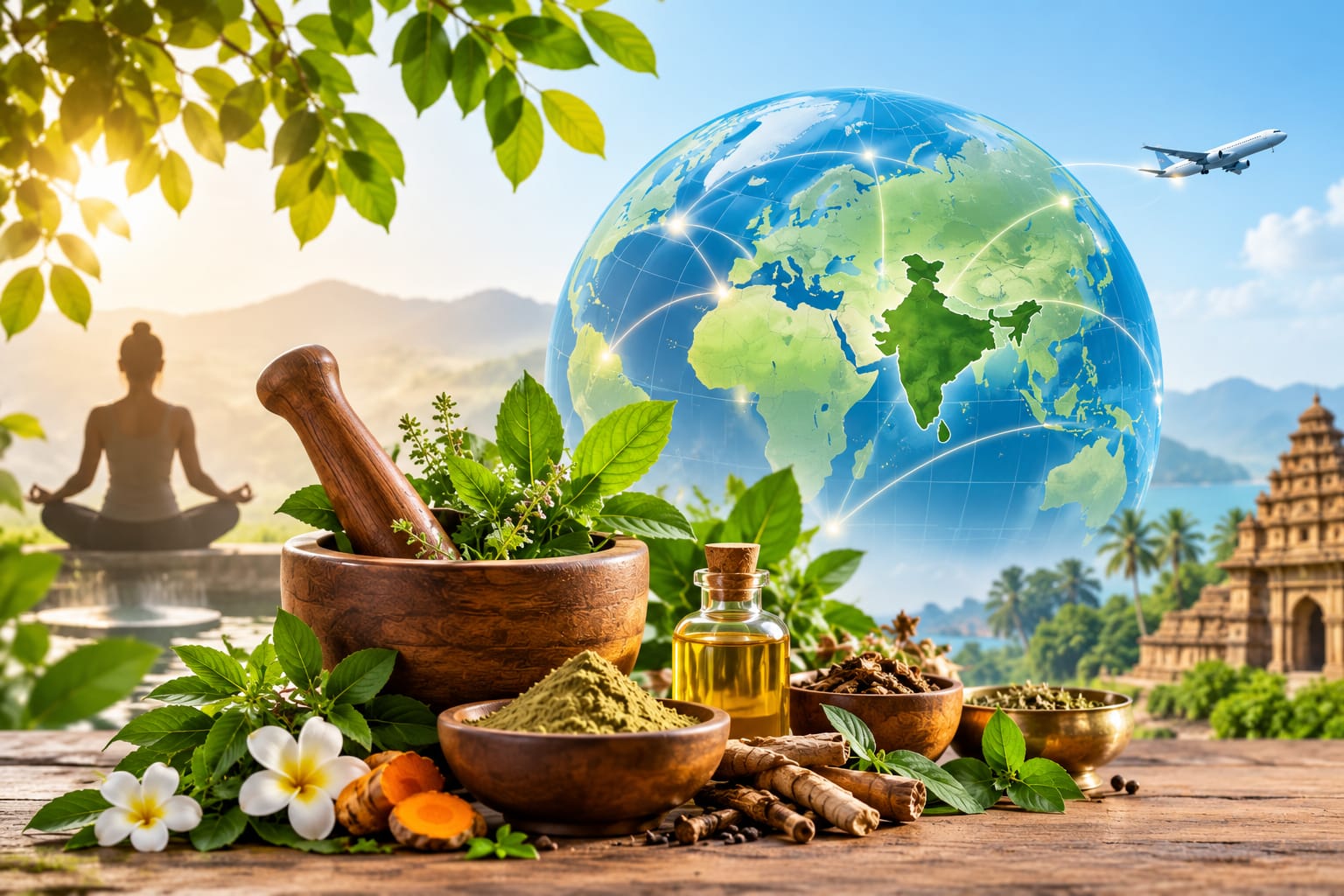
Ayurveda is entering a new phase of global recognition, with India increasingly seeking to connect its traditional knowledge system with modern research, quality standards, international regulation and evolving global healthcare frameworks.
As India prepares to observe the 11th Ayurveda Day on September 23, 2026, under the theme “Ayurveda for a Healthier Tomorrow,” the focus is shifting from simply promoting Ayurveda internationally to creating the scientific, institutional and regulatory foundations required for its responsible global growth.
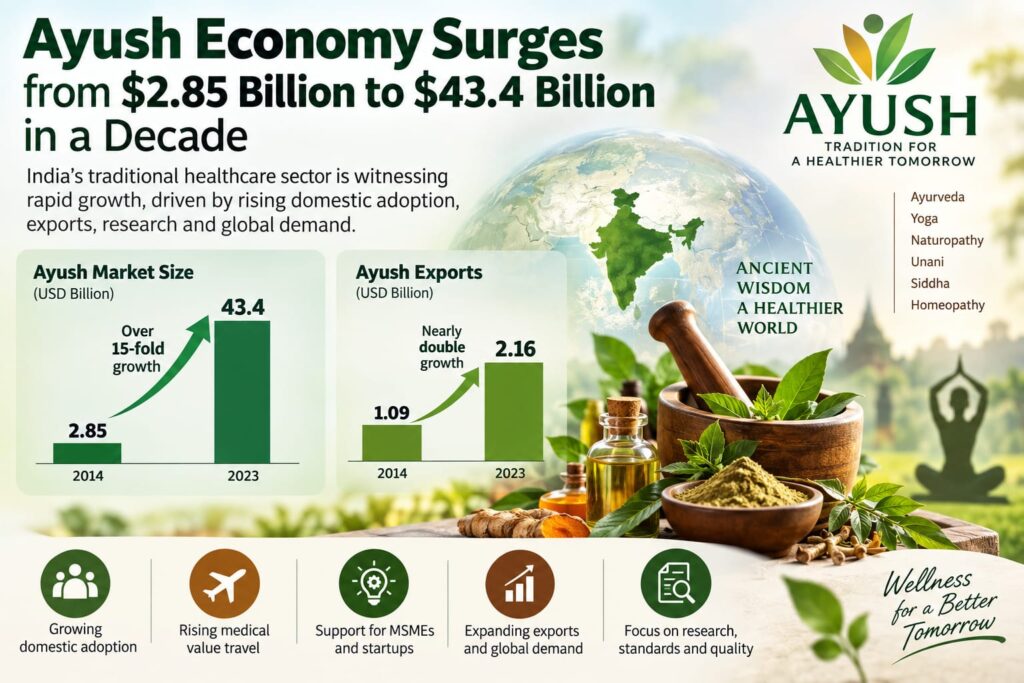
The expansion of the Ayush sector has provided a strong economic foundation for this transition. According to government data, the Ayush market increased from USD 2.85 billion in 2014 to USD 43.4 billion in 2023. During the same period, Ayush exports rose from USD 1.09 billion to USD 2.16 billion. Government efforts to strengthen MSMEs and startups have also contributed to an ecosystem that encourages entrepreneurship, innovation and investment.
Ayurveda gains strong domestic acceptance
India’s growing domestic use of traditional healthcare systems is another important factor behind Ayurveda’s expansion.
The first exclusive All-India Survey on Ayush, conducted by the National Sample Survey Office between July 2022 and June 2023, covered more than 1.81 lakh households across rural and urban India.
The survey found Ayush awareness at 94.8 per cent among rural residents and 96 per cent among urban residents. It also reported that 46.3 per cent of rural residents and 52.9 per cent of urban residents had used Ayush for treatment or prevention during the preceding year.
Among the different Ayush systems, Ayurveda was the most commonly used system for treatment, highlighting its established position among Indian users and its potential role in preventive healthcare and wellness.
Medical value travel opens another avenue
India is also looking at Ayurveda as part of its growing medical value travel and wellness economy.
The Government introduced a dedicated Ayush Visa on July 27, 2023, allowing foreign nationals to seek treatment under Ayush systems in India. Efforts have also been made to develop tourism circuits combining Ayurveda, wellness and traditional healthcare with tourism.
With the global medical value travel market estimated at USD 115.6 billion in 2022 and projected to reach around USD 286.1 billion by 2030, Ayurveda could become an important component of India’s healthcare and wellness tourism offering.
NITI Aayog roadmap focuses on global expansion
A major policy step came with the release of NITI Aayog’s “Strategic Roadmap for Making Ayurveda Global” in July 2026.
The roadmap looks towards 2047 and identifies several areas critical to Ayurveda’s international growth, including regulation, quality standards, research, education, international partnerships, exports, branding and medical value travel.
The emphasis is on building internationally understandable and credible standards, strengthening research infrastructure, developing skilled professionals and ensuring consistency in Ayurveda products and services.
WHO framework strengthens global traditional medicine dialogue
India’s Ayurveda strategy is also taking place against the backdrop of a wider global discussion on traditional, complementary and integrative medicine.
The WHO Global Traditional Medicine Strategy 2025–2034, adopted by the World Health Assembly in 2025, provides a framework for strengthening evidence, safety, regulation and integration of traditional medicine into health systems.
India has played a prominent role in this process. The WHO Global Traditional Medicine Centre in Jamnagar, Gujarat, established in 2022, is supported by India as the lead investor. The Centre focuses on evidence and learning, data and analytics, sustainability and equity, and innovation and technology.
India also hosted the first WHO Global Summit on Traditional Medicine in Gandhinagar in 2023 and the second summit in New Delhi in December 2025. Discussions at these meetings covered evidence generation, regulation, health-system integration, biodiversity, indigenous knowledge, intellectual property and innovation.
Ayurveda enters international classification framework
Another significant development has been the inclusion of Ayurveda, Siddha and Unani in the WHO’s ICD-11 Traditional Medicine Module.
Launched in January 2024, the module provides morbidity codes that allow conditions associated with these systems to be documented and reported through an internationally comparable framework.
However, WHO has made clear that inclusion in the classification system does not constitute an endorsement of the scientific validity or efficacy of individual traditional medicine practices. Work is also continuing on intervention codes for Ayurveda, Siddha and Unani.
Research remains central to Ayurveda’s future
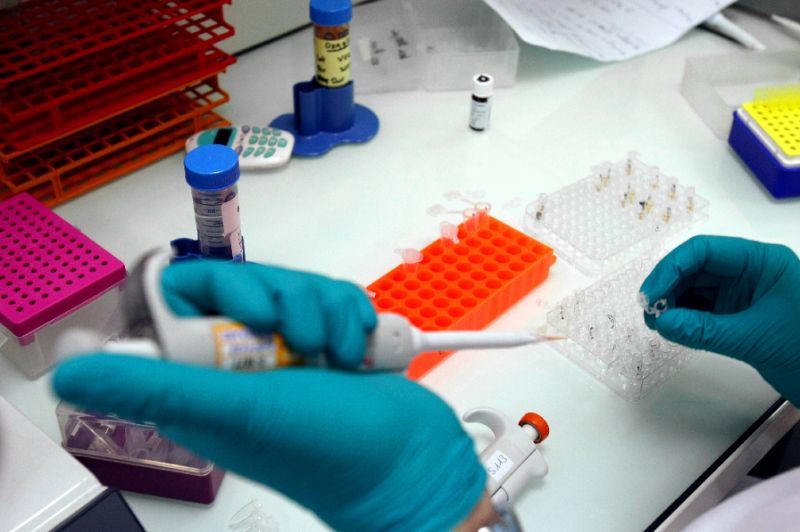
Scientific research is likely to remain one of the most important pillars of Ayurveda’s international development.
The Ministry of Ayush’s Ayush Research Portal serves as a government repository of research relating to Ayush systems and currently contains more than 43,000 research entries.
For Ayurveda to expand responsibly across international markets, continued research will be important for establishing evidence, improving quality standards, strengthening safety protocols and building confidence among healthcare professionals and consumers.
At the same time, globalisation presents the challenge of preserving Ayurveda’s distinctive principles and traditional knowledge while adapting its delivery, documentation and standards to contemporary healthcare requirements.
The road ahead
The emerging landscape suggests that Ayurveda is moving beyond its traditional sphere into a broader global conversation about preventive healthcare, wellbeing, healthy lifestyles and sustainable living.
India’s expanding Ayush economy, strong domestic adoption, medical value travel opportunities, international partnerships, research infrastructure and emerging regulatory frameworks are collectively creating new possibilities for Ayurveda.
The 11th Ayurveda Day therefore comes at an important moment. The theme “Ayurveda for a Healthier Tomorrow” reflects both the traditional roots of the system and the growing need to connect those traditions with evidence, innovation, quality and responsible globalisation.
The next phase of Ayurveda’s international journey may ultimately depend not only on how widely it is promoted, but on how effectively credible evidence, quality assurance, skilled professionals and internationally compatible standards are developed around it.