
Dhaka : HL September 14, 2026
Bangladesh is facing a major measles outbreak despite an emergency vaccination drive that has already reached nearly 20 million children. The continuing spread highlights how gaps in routine immunisation, delayed vaccination campaigns and weaknesses in healthcare delivery can allow a highly preventable disease to return with devastating consequences.
Measles outbreak puts Bangladesh under severe pressure
Bangladesh is battling one of the world’s most serious measles outbreaks in 2026. Since the outbreak intensified in March, the country has reported more than 170,000 suspected cases and more than 20,000 laboratory-confirmed infections, while the combined number of confirmed and suspected measles-related deaths has crossed 1,000, according to recent health ministry data.
The crisis has placed enormous pressure on hospitals, particularly paediatric facilities. Doctors are treating children with complications such as pneumonia, severe diarrhoea and encephalitis, while hospitals are simultaneously dealing with dengue cases.
Nearly 20 million children vaccinated
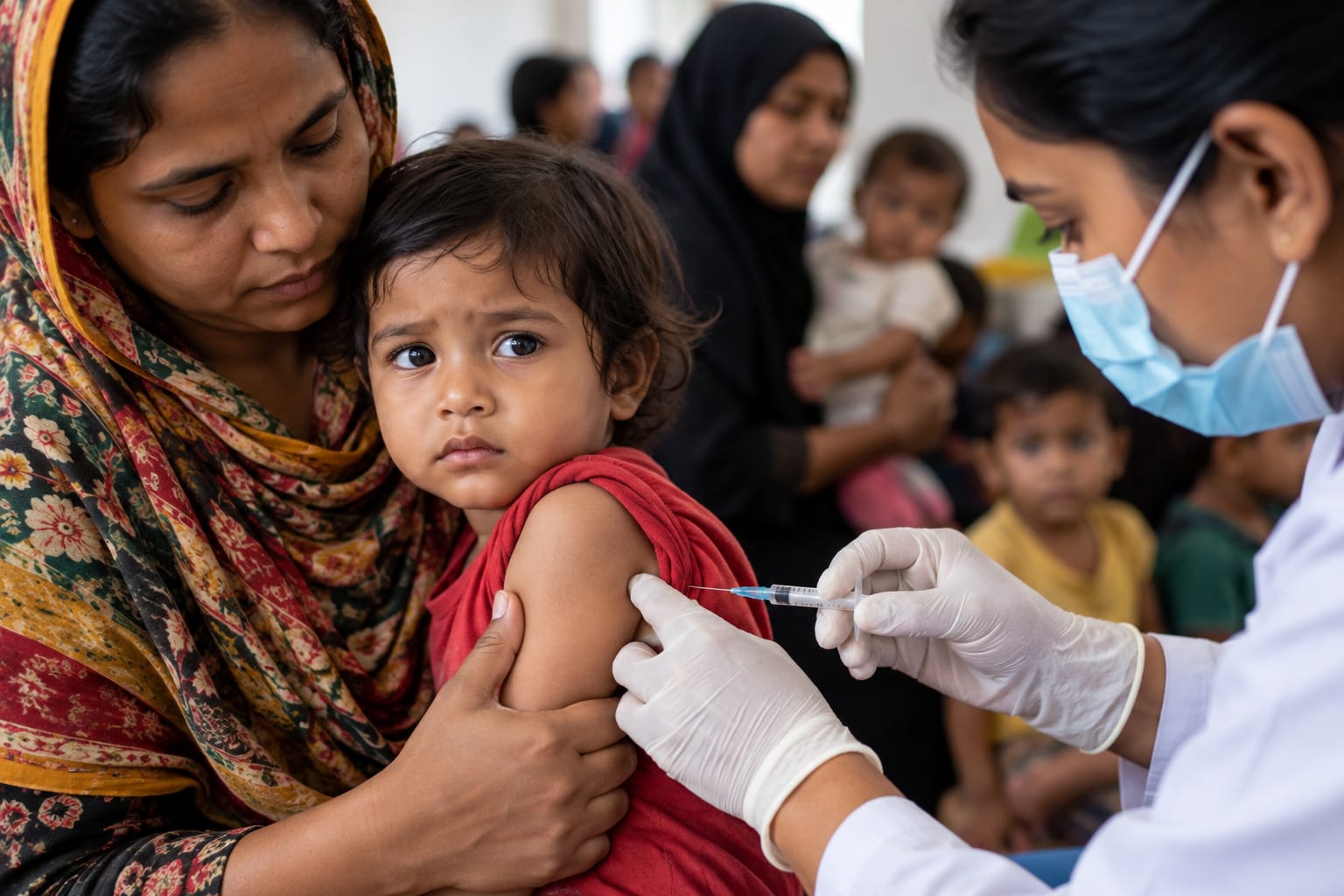
Bangladesh launched an emergency measles-rubella vaccination programme in April after the outbreak began spreading rapidly. By September 13, officials said 19.77 million children had received measles vaccines, exceeding the initial target of about 18 million.
However, vaccination on such a large scale does not immediately eliminate an outbreak. Measles is extremely contagious, and transmission can continue when immunity gaps remain within communities.
Health authorities are therefore preparing another nationwide vaccination campaign beginning September 26, with the objective of reaching children who may still be unprotected.
How did the vaccination gap develop?
Bangladesh had previously made substantial progress in controlling measles. But routine immunisation was disrupted during the COVID-19 pandemic and later affected by political upheaval and interruptions in vaccination campaigns.
WHO and UNICEF estimates indicate that the share of children receiving the recommended second measles vaccine dose fell from around 93% in 2024 to 86% in 2025. That decline is particularly significant because measles requires very high population immunity to prevent sustained transmission.
Experts have also pointed to vaccine supply problems and missed vaccination opportunities, leaving groups of children vulnerable to infection.
Why infants are especially vulnerable
One of the biggest challenges is protecting babies who are too young for routine measles vaccination.
When measles spreads widely, infants under nine months can become exposed even though they may not yet be eligible for routine vaccination. This makes high community-level immunity essential: when most eligible children are vaccinated, transmission is reduced and younger or medically vulnerable people receive indirect protection.
Vaccination numbers alone are not enough
The Bangladesh outbreak demonstrates an important lesson in public health: an emergency vaccination campaign cannot completely compensate for prolonged gaps in routine immunisation.
Experts say Bangladesh needs to restore consistently high routine vaccination coverage, identify children who missed earlier doses, strengthen vaccine supply chains and improve disease surveillance.
The country’s response also faces a healthcare-capacity challenge. Hospitals are dealing with measles alongside dengue, creating additional pressure on beds, medicines, medical staff and paediatric services.
What happens next?
The immediate priority is to close remaining immunity gaps and prevent new infections. The upcoming September 26 vaccination campaign is expected to be an important part of that effort.
But controlling the outbreak will require more than a single campaign. Bangladesh will need sustained routine immunisation, reliable vaccine supplies, rapid identification of outbreaks and strong public awareness to ensure children receive all recommended doses.
The current crisis is a reminder that measles can return quickly when vaccination coverage falls—even in countries that have previously made major progress against the disease.