
Divyanshi Yadav’s Death: Union urges UP Government to establish medical-leave framework, strengthen student welfare mechanisms and fix accountability if negligence is established
New Delhi,|HL 25 September 2026:
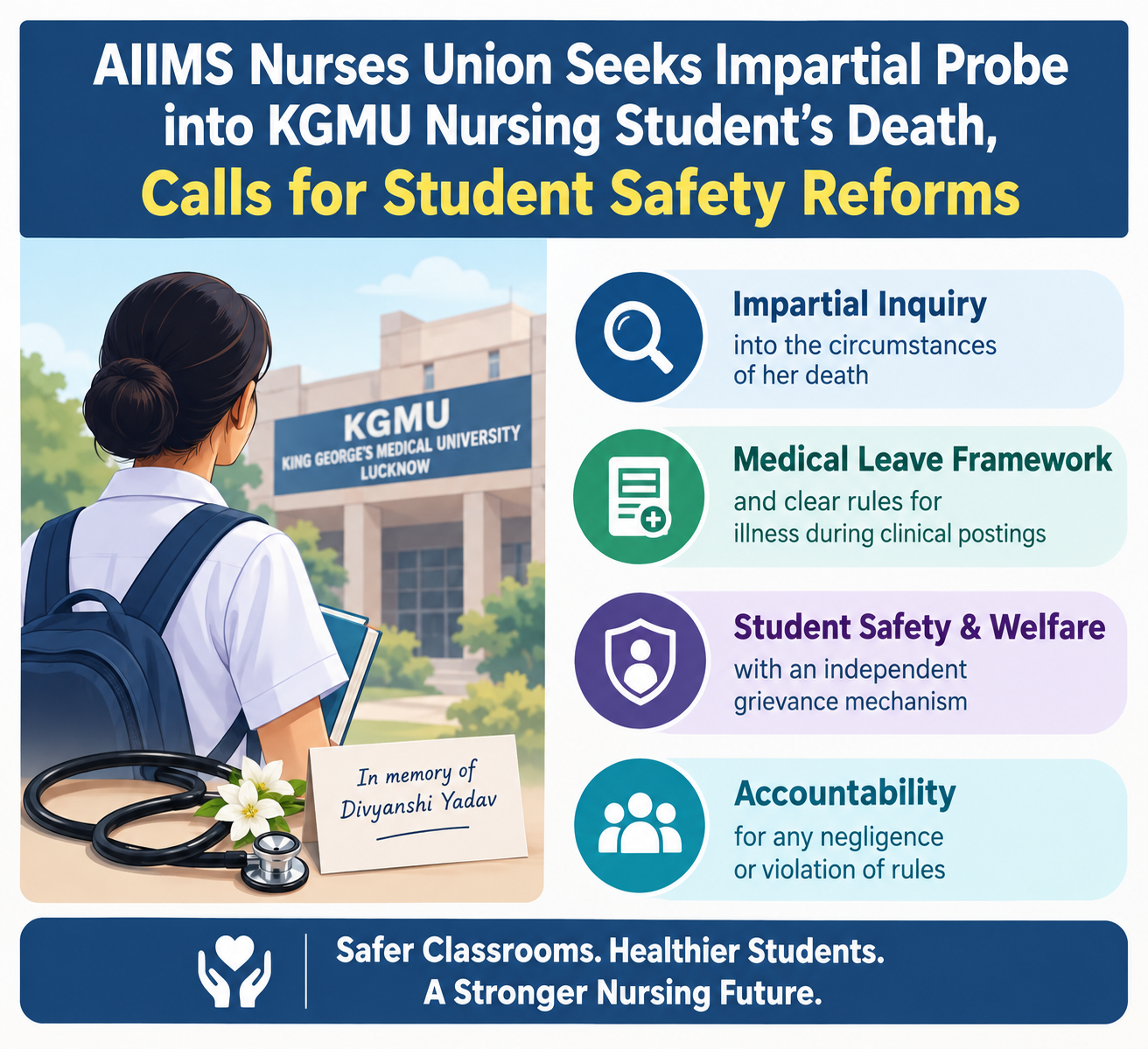
The AIIMS Nurses Union, New Delhi, has written to Uttar Pradesh Deputy Chief Minister and Minister of Medical Education, Shri Brajesh Pathak, seeking an impartial, comprehensive and time-bound inquiry into the tragic death of Ms. Divyanshi Yadav, a second-year B.Sc. Nursing student at King George’s Medical University (KGMU), Lucknow, following complications arising from dengue infection.
In its letter, the Union expressed deep concern over the circumstances surrounding the student’s death and urged the state government to take immediate steps to ensure the safety, dignity and welfare of nursing students across educational institutions.
According to the information cited in the letter, Ms. Yadav had reportedly been unwell since September 11, 2026, but continued attending classes and clinical duties. She reportedly collapsed on September 16 and was admitted to the KGMU Trauma Centre on September 17. She was diagnosed with dengue on September 18. Following further deterioration in her condition, she was reportedly shifted to Varanasi for advanced treatment, where she tragically passed away on September 19, 2026.
The Union has raised concerns over reports from fellow students alleging that nursing students face restrictions on medical leave during clinical postings and may face academic consequences, including the possibility of failing, if they are unable to maintain 100 per cent attendance, even during illness.
The letter states that these allegations require independent verification through a fair and comprehensive inquiry. The Union has also acknowledged that KGMU has constituted a five-member inquiry committee to examine the circumstances surrounding the incident.
Calls for accountability and student welfare reforms
The AIIMS Nurses Union has urged the state government to ensure that the inquiry examines all administrative, clinical, supervisory and institutional aspects of the case. These include medical-leave provisions, attendance requirements, clinical duties during illness, timely access to medical care and decisions taken during the course of the student’s illness.
The Union has requested that appropriate action be taken against any person found responsible for negligence, dereliction of duty or violation of applicable rules, following due inquiry and in accordance with law.
Emphasising the need for systemic reforms, the Union has called for a structured medical-leave framework for nursing students in accordance with applicable Indian Nursing Council, State Nursing Council and other relevant regulatory provisions.
It has further sought clear safeguards for students who fall ill during clinical postings, including immediate medical assessment, necessary rest and timely referral or treatment.
Demand for independent grievance mechanism
Highlighting the importance of a safe and supportive learning environment, the Union has also urged the government to establish a democratic and independent Student Welfare and Grievance Mechanism.
The letter calls for strengthening institutional systems for the early identification, medical assessment and timely treatment of serious illnesses among students.
The Union stated that the safety, dignity and welfare of nursing students must be given due priority and that institutional policies should ensure students can seek medical attention when unwell without fear of academic repercussions.
In its appeal to the Deputy Chief Minister, the AIIMS Nurses Union requested prompt government intervention to ensure a thorough examination of the circumstances surrounding Ms. Yadav’s death, accountability wherever responsibility is established, and effective safeguards to prevent similar tragedies in the future.
The Union reiterated that a comprehensive and impartial inquiry, alongside appropriate institutional reforms, is essential to protect nursing students and strengthen their welfare and safety in educational and clinical settings.