
New Delhi: HL September 25, 2026
A study by researchers from the Department of Botany, University of Delhi, has raised concerns about the potential cancer risk associated with long-term exposure to heavy metals through vegetables grown along the Yamuna floodplains. The research detected elevated concentrations of several metals in vegetables cultivated in the area and assessed their potential health risks.
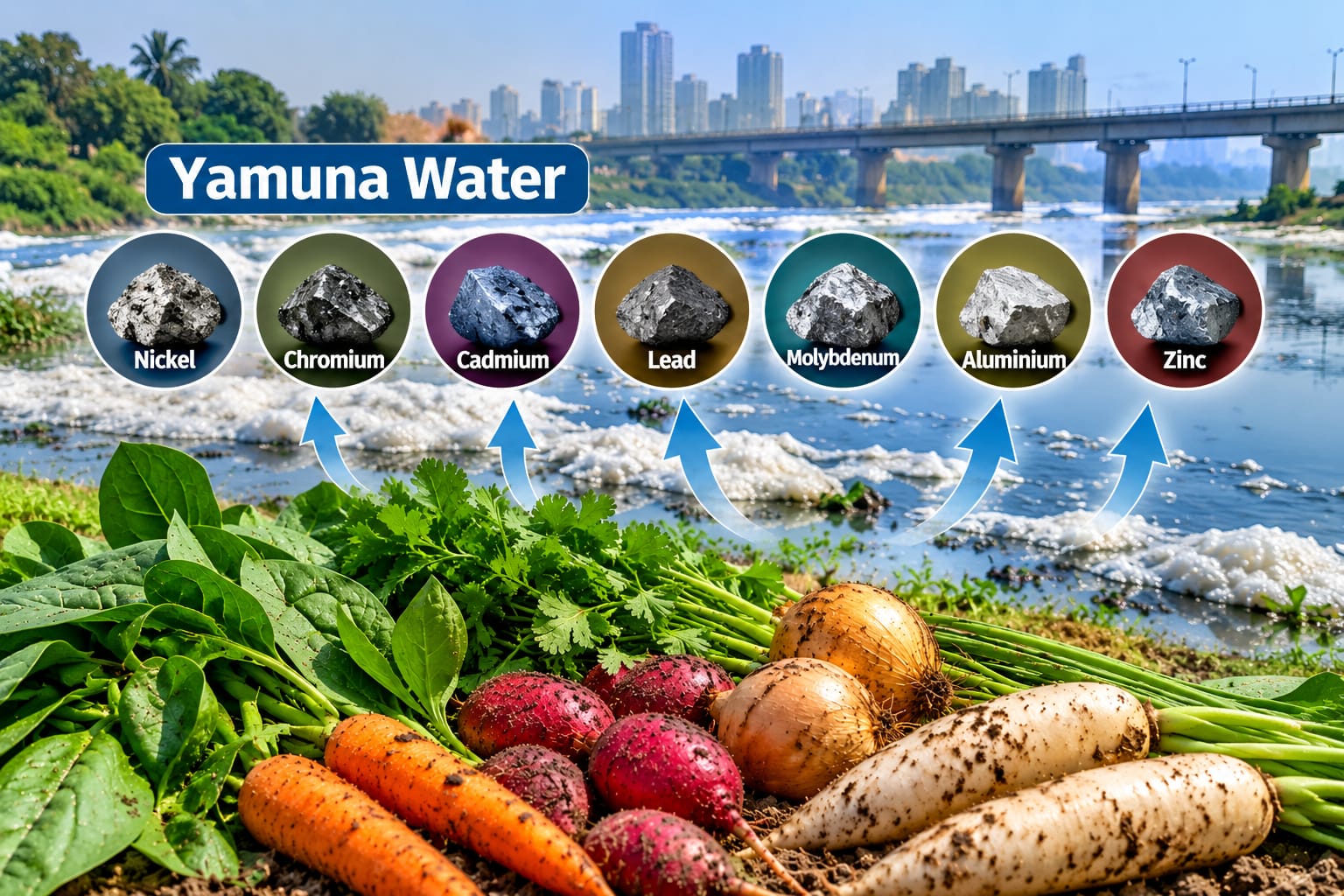
The study examined metals including nickel, chromium, cadmium, lead, molybdenum, aluminium and zinc in vegetables grown near the Yamuna. The researchers assessed both non-carcinogenic and carcinogenic risks associated with dietary exposure.
The findings indicate that nickel and chromium were among the major contributors to the estimated cancer risk in several vegetables. The researchers have therefore highlighted the importance of monitoring contaminated irrigation water, agricultural soil and vegetables entering the food chain.
The study was led by Professor Dinabandhu Sahoo of the Department of Botany, University of Delhi, along with researchers Dharmendra Kumar, Sanjukta Sahoo and Shivankar Agrawal. The findings were published in the journal Energy Nexus.
Heavy Metals Detected in Vegetables
Researchers examined vegetables cultivated along the Yamuna and reported contamination involving metals such as molybdenum, aluminium, zinc, nickel, chromium, cadmium and lead.
The study found particularly high levels of some metals in vegetables including spinach, onion, radish, mustard, fenugreek and coriander. According to the reported findings, nickel was recorded at levels up to 97 times the relevant permissible limit in spinach and 65 times in onions, while chromium was up to 22 times higher in mustard and 12 times higher in spinach.
Red radish showed molybdenum concentrations of up to 340.06 mg/kg, while chromium reached 36.58 mg/kg. Fenugreek recorded zinc levels of up to 177.72 mg/kg.
Potential Health Risks From Long-Term Exposure
The researchers also assessed potential non-carcinogenic and carcinogenic risks associated with dietary exposure to the metals.
The analysis indicated that molybdenum made a significant contribution to the estimated non-cancer health risk across several vegetables. The researchers also identified nickel and chromium as major contributors to the estimated cancer risk in several vegetables.
These findings represent risk assessments based on estimated dietary exposure, rather than evidence that eating a particular vegetable will directly cause cancer.
Polluted Irrigation Water a Major Concern
The study highlights the potential movement of contaminants from polluted river or wastewater used for irrigation into agricultural soil and ultimately into edible plant tissues.
The researchers have emphasised the importance of treating wastewater, monitoring irrigation water and agricultural soil, and regularly testing vegetables sold in markets. They have also suggested considering crops that accumulate lower quantities of heavy metals in contaminated areas.
Need for Regular Food-Safety Monitoring
The findings underline the importance of coordinated monitoring of the Yamuna, agricultural soil, irrigation water and vegetables cultivated along its floodplains.
Regular testing could help identify contaminated produce and provide scientific evidence for safer agricultural practices in pollution-affected areas.