
New Delhi: HL September 25, 2026
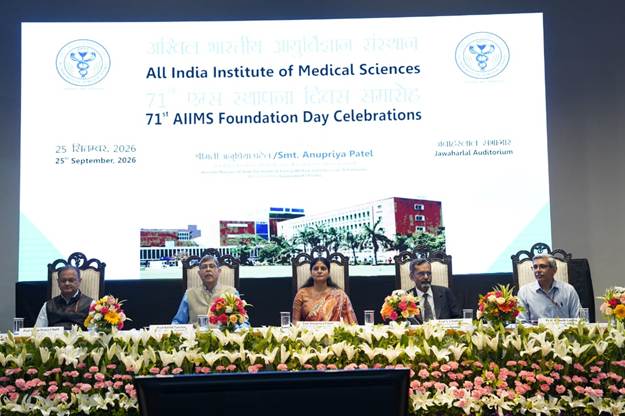
All India Institute of Medical Sciences (AIIMS), New Delhi, celebrated its 71st Foundation Day on Friday, marking more than seven decades of contributions to medical education, patient care, research and healthcare innovation.
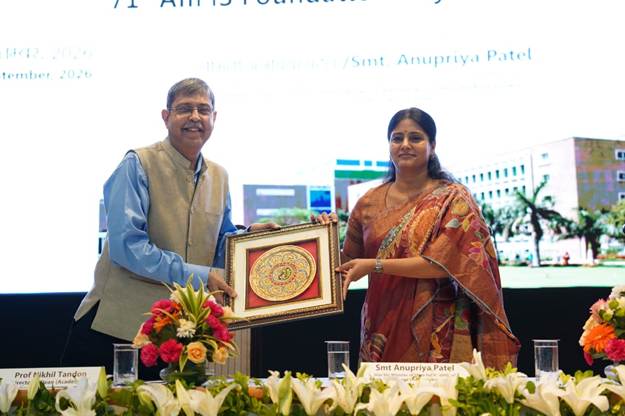
Union Minister of State for Health and Family Welfare and Chemicals & Fertilizers, Smt. Anupriya Patel, attended the celebrations as the Chief Guest and called upon AIIMS New Delhi to strengthen its role as a national centre of excellence, clinical innovation and capacity building.
Medical colleges rise to over 800
Addressing the gathering, Anupriya Patel highlighted the expansion of India’s medical education infrastructure. She said the number of medical colleges has increased from 387 in 2014 to more than 800, while undergraduate medical seats have grown from around 51,000 to nearly 1.3 lakh.
She also highlighted the expansion of the AIIMS network to 23 institutions, along with plans to add another 75,000 medical seats.
According to the Minister, the expansion should not be viewed merely in terms of numbers. She stressed that increased capacity must translate into better access to quality medical education, advanced healthcare and trained healthcare professionals across different regions of the country.
AIIMS New Delhi has a national mentoring responsibility
Patel described AIIMS New Delhi as an institution with a distinctive responsibility because of its position as an apex medical institution and mentor for the broader AIIMS network.
She urged the institute to continue leading in advanced clinical care while nurturing doctors, nurses, scientists and allied healthcare professionals capable of addressing India’s changing health needs.
She also said that the impact of AIIMS should extend beyond the patients treated on its campus by helping build healthcare capacity across the country through training, research, digital health and knowledge sharing.
Technology should complement human healthcare
The Minister highlighted the increasing role of Artificial Intelligence, robotic surgery, organ transplantation and advanced diagnostic technologies in modern medicine.
At the same time, she emphasised that technology should support rather than replace human clinical judgement and patient interaction.
She stressed the continuing importance of doctors’ clinical judgement, surgeons’ expertise and the human presence of nurses, particularly when patients and their families are going through difficult medical situations.
Patel also called for greater attention to patient safety, empathy, communication, dignity and ease of navigation within large healthcare institutions.
Focus on quality along with healthcare expansion
The Minister said expansion of healthcare infrastructure must be accompanied by adequate human resources and high standards of care.
She noted that additional hospital wards require sufficient nursing staff, specialised services require appropriately trained professionals, and digital systems should make healthcare processes easier rather than create additional difficulties for patients.
She called upon AIIMS New Delhi to demonstrate that expansion in scale can go hand in hand with quality and patient-centred healthcare.
Greater focus on preventive healthcare
Patel also highlighted India’s increasing emphasis on prevention, early detection and timely treatment, particularly in relation to non-communicable and lifestyle-related diseases.
Referring to the National Health Policy, 2017, she emphasised the importance of preventive and promotive healthcare and called upon AIIMS to use its research and intellectual resources to contribute to public health policy, lifestyle management and preventive medicine.
She also highlighted the role of Ayushman Bharat and Pradhan Mantri Jan Arogya Yojana (AB PM-JAY) in improving healthcare access and reducing the financial burden of treatment on vulnerable families. She noted that AB PM-JAY has completed eight years and covers more than 62 crore beneficiaries.
AIIMS urged to promote indigenous medical technology
The Minister stressed the importance of developing and implementing indigenous medical technologies suited to India’s healthcare requirements.
She called for closer collaboration among academic institutions, hospitals and Indian industry so that India can increasingly develop advanced healthcare solutions domestically instead of relying heavily on imported technologies.
Patel said AIIMS can play an important role in creating an ecosystem where advanced medical research moves from laboratories into clinical applications and ultimately benefits patients.
Healthcare workers’ well-being also important
The Minister also drew attention to the health and well-being of healthcare professionals themselves.
She said doctors, nurses and other healthcare workers play a critical role in building a healthy nation and called for a culture that supports their physical and overall well-being.
She urged healthcare institutions to encourage healthy habits and create an environment where healthcare professionals can maintain their own health while serving patients.
AIIMS records more than 50 lakh OPD visits
AIIMS New Delhi Director Dr. (Prof.) Nikhil Tandon highlighted the enormous scale of healthcare services delivered by the institution.
During the past year, AIIMS New Delhi recorded more than 50 lakh outpatient visits, admitted over 3.5 lakh patients and performed nearly 3 lakh surgeries.
Dr. Tandon said these figures reflected the considerable trust placed in AIIMS by patients from across the country.
He also highlighted major advances in clinical services, including more than 1,000 robotic surgeries and the successful performance of India’s first reported robot-assisted kidney transplant in a public-sector institution.
The institute also doubled its dialysis capacity and carried out more than 300 highly complex super-microsurgical procedures, he said.
Expansion in education, research and digital health
Dr. Tandon further highlighted AIIMS New Delhi’s role in medical education, research, digital healthcare and national capacity building.
The institute welcomed around 1,000 new students and recruited more than 300 faculty members during the year.
He emphasised the need to take AIIMS expertise beyond its physical campus through telemedicine, digital health and capacity-building programmes, enabling healthcare institutions in other parts of the country to benefit from its experience.
‘AIIMS: Seven Decades of Healthcare Innovation’ exhibition inaugurated
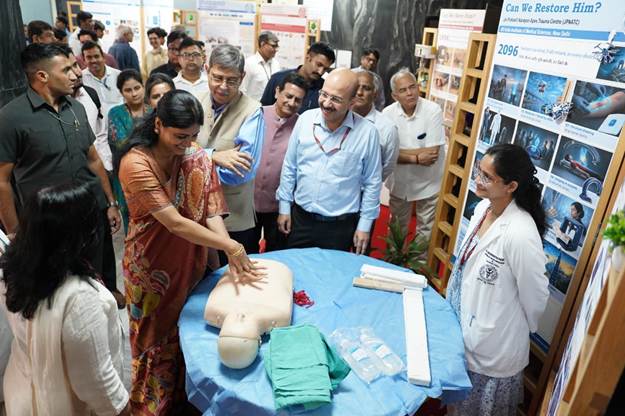
As part of the Foundation Day celebrations, Anupriya Patel inaugurated the exhibition titled “AIIMS: Seven Decades of Healthcare Innovation.”
The exhibition documents the institution’s journey and highlights its major milestones, achievements, initiatives and developments through 95 posters.
The exhibition also has a strong focus on health education and community outreach.
More than 1,500 school students are scheduled to participate in interactive learning activities covering BMI assessment, nutrition and healthy lifestyles, blood sugar testing, common eye conditions, oral and dental hygiene, organ donation and CPR.
The exhibition will remain open from September 25 to September 27, 2026.
Awards presented to outstanding performers
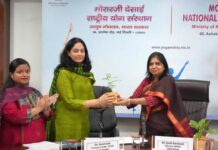
During the Foundation Day programme, Anupriya Patel also presented awards to outstanding performers in different fields, recognising their contributions to the institution.
Former AIIMS Professor and Head of the Department of Cardiology Dr. Shyam Sunder Kothari, along with faculty members, students and staff of AIIMS New Delhi, attended the event.
The Foundation Day celebrations underscored AIIMS New Delhi’s continuing role in advanced patient care, medical education, research and innovation, while highlighting the institution’s responsibility to contribute to the development of India’s wider healthcare ecosystem.