
NOIDA: HL October 16, 2026
Spine-related problems are increasingly becoming a concern among young people, including teenagers, college students and working professionals. Improper weightlifting techniques, prolonged sitting, poor posture and inadequate physical conditioning may contribute to back and neck pain, highlighting the importance of spinal health awareness, preventive measures and timely medical evaluation.
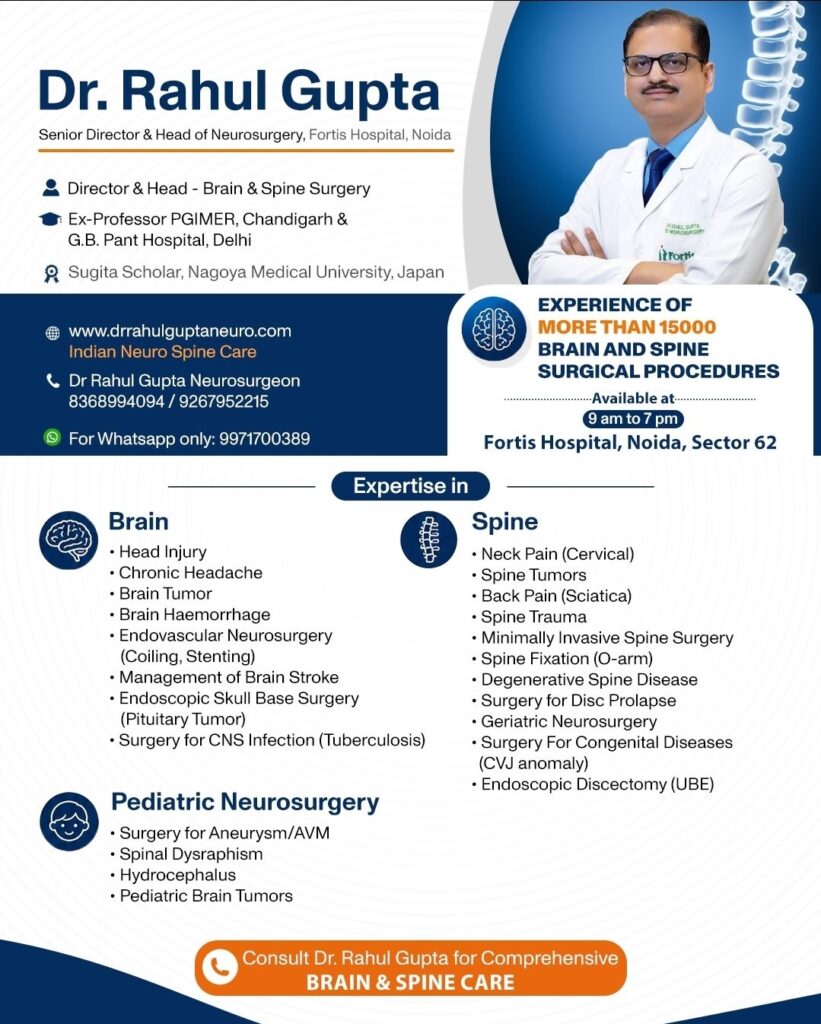
Dr. Rahul Gupta, Senior Director and Head of Neurosurgery at Fortis Hospital, Noida, has highlighted the importance of safe exercise practices and appropriate posture while discussing cases of young patients presenting with persistent back pain. According to the neurosurgeon, spinal problems are not restricted to older adults, and younger people may also develop disc-related conditions and other spinal disorders.
Dr. Rahul Gupta, who has performed more than 16,000 surgeries over his 23-year career, said that every month, 8–10 patients undergoing surgery are below 40 years of age. He explained that treatment begins with identifying the exact cause of the pain, followed by a treatment plan tailored to the patient’s condition. Surgery is recommended only when medically necessary. Modern techniques have made surgical procedures easier, safer, and faster, enabling patients to return to their routine activities and work in a relatively short period.
A 16-Year-Old Develops Persistent Back Pain After Deadlifting
Sharing a case from his clinical practice, Dr. Gupta described a 16-year-old patient who had been experiencing lower back pain for nearly a year after performing deadlifts at a gym.
Despite consulting doctors and physiotherapists and taking medication, the teenager continued to experience recurring pain. The discomfort reportedly returned when he attempted physical activities such as running, jumping and weightlifting.
According to Dr. Gupta, the patient’s MRI report indicated a disc bulge, prompting further clinical assessment. The case highlights the importance of evaluating persistent back pain rather than repeatedly treating symptoms without identifying the underlying cause.
The doctor emphasised that physical exercise is important for young people, but strenuous activities should be performed with appropriate technique, adequate preparation and gradual increases in workload. Attempting heavy lifts without sufficient conditioning or proper guidance may increase the risk of musculoskeletal injuries.
However, not every episode of back pain after exercise indicates a serious spinal injury, and a disc bulge on MRI does not automatically mean that surgery is required. Treatment should be based on the patient’s symptoms, clinical examination and imaging findings.
Unsupervised Weightlifting May Increase Injury Risk
Strength training can improve muscle strength and physical fitness when performed appropriately. However, sudden increases in the amount of weight lifted, incorrect lifting techniques and inadequate preparation may place excessive stress on the back and surrounding muscles.
Dr. Gupta highlighted concerns about young gym-goers undertaking strenuous activities without adequate supervision. In some cases, spinal disc problems may develop and require specialist assessment.
To reduce the risk of injury, young people should learn correct lifting techniques, warm up appropriately, increase loads gradually and allow adequate recovery between demanding workouts. Anyone experiencing persistent or recurring pain after weightlifting should seek medical advice before resuming strenuous exercise.
Prolonged Sitting and Poor Posture Among IT Professionals
The neurosurgeon also highlighted prolonged sitting and improper posture as potential contributors to back and neck discomfort, particularly among IT professionals and people working from home.
Spending long hours at a computer, working while lying on a bed, bending the neck over a mobile phone and using poorly arranged workstations may contribute to musculoskeletal strain.
According to Dr. Gupta, many patients experiencing work-related discomfort have postural problems, activity-related strain or muscle spasms rather than major structural abnormalities of the spine. Nevertheless, persistent symptoms require appropriate evaluation to establish the underlying cause.
He also highlighted the importance of balancing sedentary work with regular movement and suitable physical activity.
Excessive Mobile Phone Use and Neck Strain
Prolonged mobile phone and tablet use, particularly when the head remains bent forward for extended periods, can contribute to neck discomfort.
Students preparing for competitive examinations and professionals working for 12–13 hours a day may spend long periods in static positions, increasing the likelihood of muscular fatigue and discomfort.
Dr. Gupta emphasised the importance of ergonomics, which involves arranging workstations and daily activities to support comfortable body positioning.
Practical measures include:
- Maintaining an appropriate chair and desk height.
- Positioning computer screens at a comfortable viewing level.
- Keeping the neck and shoulders relaxed while working.
- Supporting the arms and elbows appropriately.
- Taking regular movement breaks instead of remaining seated for hours.
- Incorporating suitable exercise and stretching into daily routines.
An ergonomically designed chair alone cannot compensate for consistently poor sitting habits. Physiotherapists can help individuals identify suitable postures, movement patterns and exercises based on their needs.
Sports Injuries and Accidents Can Cause Serious Spinal Damage
Apart from exercise-related strain and postural problems, falls, sports injuries and road traffic accidents can also cause significant spinal injuries.
Depending on the force involved, trauma may result in muscle tears, vertebral fractures, disc injuries or damage to the spinal cord.
Dr. Gupta recalled treating a patient who sustained a neck fracture and spinal cord compression after a vehicle plunged into a gorge in a mountainous area. The patient underwent surgery at the hospital.
Such injuries can have life-changing consequences, including weakness, loss of mobility or paralysis, depending on the severity and location of spinal cord damage.
Suspected spinal injuries following major accidents require urgent medical assessment. If a serious neck or back injury is suspected, unnecessary movement should be avoided while emergency medical assistance is arranged.
MRI Plays an Important Role in Diagnosing Spinal Disorders
Magnetic resonance imaging (MRI) is an important investigation for evaluating spinal conditions when clinically indicated. It can provide detailed images of intervertebral discs, ligaments, nerves and the spinal cord.
Dr. Gupta emphasised that MRI findings must be correlated with the patient’s symptoms and clinical examination before treatment decisions are made.
Several conditions can cause back or neck pain, including:
- Disc bulges and herniated discs.
- Congenital spinal abnormalities.
- Spinal fractures.
- Tuberculosis affecting the spine.
- Spinal tumours.
- Nerve compression and other structural abnormalities.
Not every abnormality detected on MRI requires surgery. Many uncomplicated disc-related problems can initially be managed through non-surgical treatment, depending on the clinical assessment.
Surgery may be considered when symptoms remain severe or persistent despite appropriate treatment, significant nerve compression is present, neurological function is deteriorating or another serious spinal condition requires intervention.
Minimally Invasive Spine Surgery: Microdiscectomy and Endoscopic Techniques
Advances in spinal surgery have expanded treatment options for selected patients with disc herniation.
Microdiscectomy involves removing the portion of a disc compressing a nerve using magnification and specialised surgical instruments. Endoscopic discectomy uses an endoscope and instruments introduced through a relatively small incision.
Dr. Gupta explained that both microscopic and endoscopic approaches can be suitable for selected patients. Endoscopic procedures may involve a smaller skin incision, although the extent of tissue handling and bone removal depends on the technique and the patient’s anatomy.
More complex spinal conditions may require a larger surgical exposure, screw fixation or other stabilisation procedures. Tumours may require surgical removal, while certain spinal infections and structural abnormalities may need additional treatment.
The choice of procedure depends on the diagnosis, the severity and location of the problem, the patient’s condition and the surgeon’s assessment.
O-arm Navigation and Advanced Surgical Technology
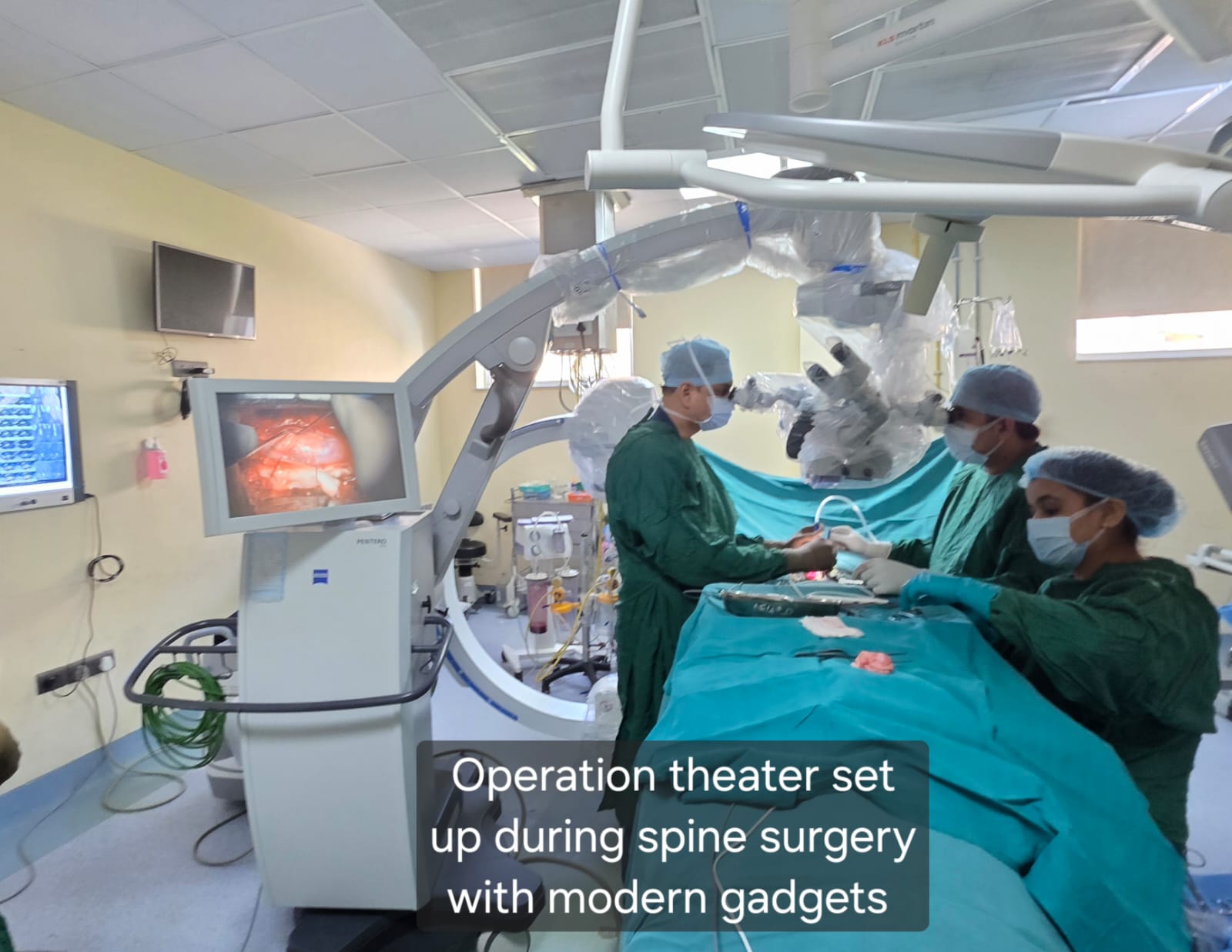
Dr. Gupta highlighted the role of advanced equipment in spinal procedures, including surgical microscopes, endoscopes, O-arm imaging and navigation systems.
The O-arm is an intraoperative imaging system that can provide three-dimensional images of spinal anatomy. When used with surgical navigation, it can help surgeons guide screw placement during spinal fixation and selected minimally invasive procedures.
These technologies can support surgical visualisation and planning. Their benefits depend on the procedure, the equipment used and the clinical circumstances.
The neurosurgeon also described the use of intraoperative neuromonitoring during selected tumour surgeries. This technique allows the surgical team to monitor neural activity during an operation and assess the functional integrity of relevant nerve pathways.
3-Tesla MRI for Detailed Spinal Assessment
According to Dr. Gupta, the hospital has a 3-Tesla MRI system equipped with advanced software.
A 3-Tesla MRI system can provide high-resolution images for many clinical applications and help doctors evaluate spinal structures, including discs, ligaments, nerves and the spinal cord.
The information obtained can assist diagnosis and treatment planning. The appropriate imaging method, however, depends on the patient’s symptoms and the condition being investigated.
Neuro-Cath Lab for Spinal Angiography and Embolisation
The hospital also has a neuro-catheterisation laboratory for specialised neurovascular procedures, according to the doctor.
Spinal angiography, including digital subtraction angiography (DSA), can help identify abnormal blood vessels and certain vascular malformations affecting the spinal region.
In selected cases, embolisation may be performed to block or reduce blood flow through abnormal vessels. The procedure requires careful planning based on the location of the abnormality and its relationship with the spinal cord’s blood supply.
Sleep, Nutrition and Healthy Lifestyle Habits
Dr. Gupta also highlighted the importance of adequate sleep, balanced nutrition and healthy lifestyle practices in supporting overall health and recovery.
Regular physical activity, appropriate strength training, good workstation habits and avoiding prolonged periods of inactivity can support musculoskeletal health. Avoiding smoking and limiting alcohol consumption are also important aspects of maintaining overall health.
Young people should seek medical advice when back or neck pain persists, repeatedly returns during exercise or is accompanied by numbness or weakness.
Severe or progressive weakness, difficulty walking, loss of bladder or bowel control, or numbness around the groin and saddle region requires urgent medical evaluation.
Early Diagnosis and Appropriate Treatment Are Essential
The growing attention to spinal health among young people highlights the importance of safe exercise practices, proper ergonomics and timely medical assessment.
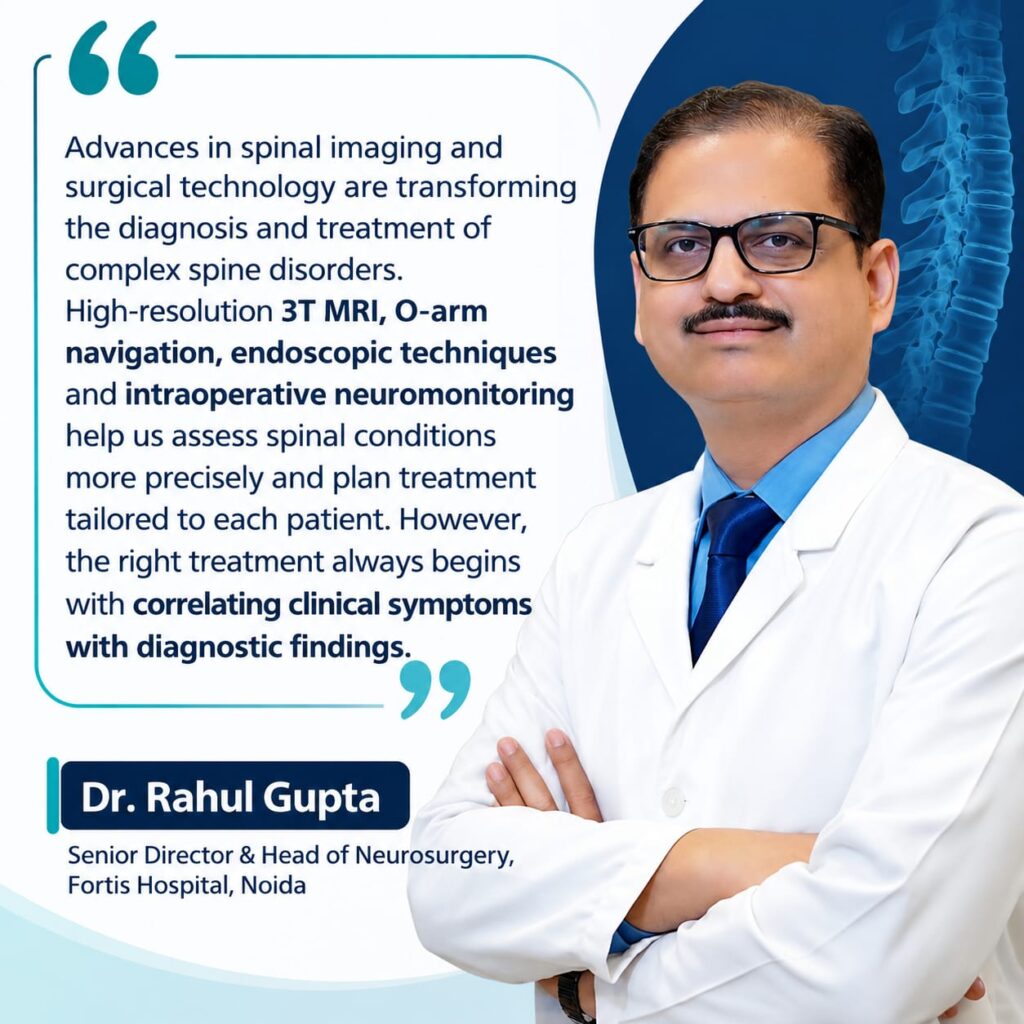
Advances in MRI, surgical microscopy, endoscopy, navigation-assisted procedures and neuromonitoring have expanded the options available for treating complex spinal conditions. However, not every patient requires surgery, and treatment must be tailored to the underlying diagnosis and clinical findings.
Dr. Rahul Gupta emphasises the importance of responsible exercise, proper posture and timely medical evaluation when back or neck pain persists. Awareness of risk factors and early assessment can help identify spinal problems and guide appropriate treatment.
Profile: