
NEW DELHI: HL October 16, 2026
Doctors at the All India Institute of Medical Sciences (AIIMS), New Delhi, have successfully performed a laparoscopic hysterectomy on a 44-year-old woman measuring just 98 cm in height and weighing 22 kg. The complex procedure highlights the role of advanced minimally invasive surgery, meticulous pre-operative planning and multidisciplinary collaboration in treating patients with rare and high-risk medical conditions.
The patient, who has severe short stature and osteoporosis, had been experiencing extremely painful menstrual periods for nearly a year. The pain significantly affected her daily life and frequently forced her to depend on painkillers. Her medical history also included hypertension, for which she had been receiving medication for approximately one year.
Medical investigations revealed deep pelvic endometriosis and adenomyosis, conditions that can cause severe pelvic pain and painful menstruation. Endometriosis occurs when tissue similar to the uterine lining grows outside the uterus, while adenomyosis involves similar tissue within the muscular wall of the uterus.
Given the severity of her symptoms, underlying medical conditions and limitations associated with hormonal treatment, the medical team decided to proceed with hysterectomy, a surgical procedure to remove the uterus.
Multidisciplinary Team Planned the Complex Procedure
The case was evaluated by specialists from the departments of Obstetrics and Gynaecology, Endocrinology and Anaesthesiology to determine whether the procedure could safely be performed using a minimally invasive laparoscopic approach.
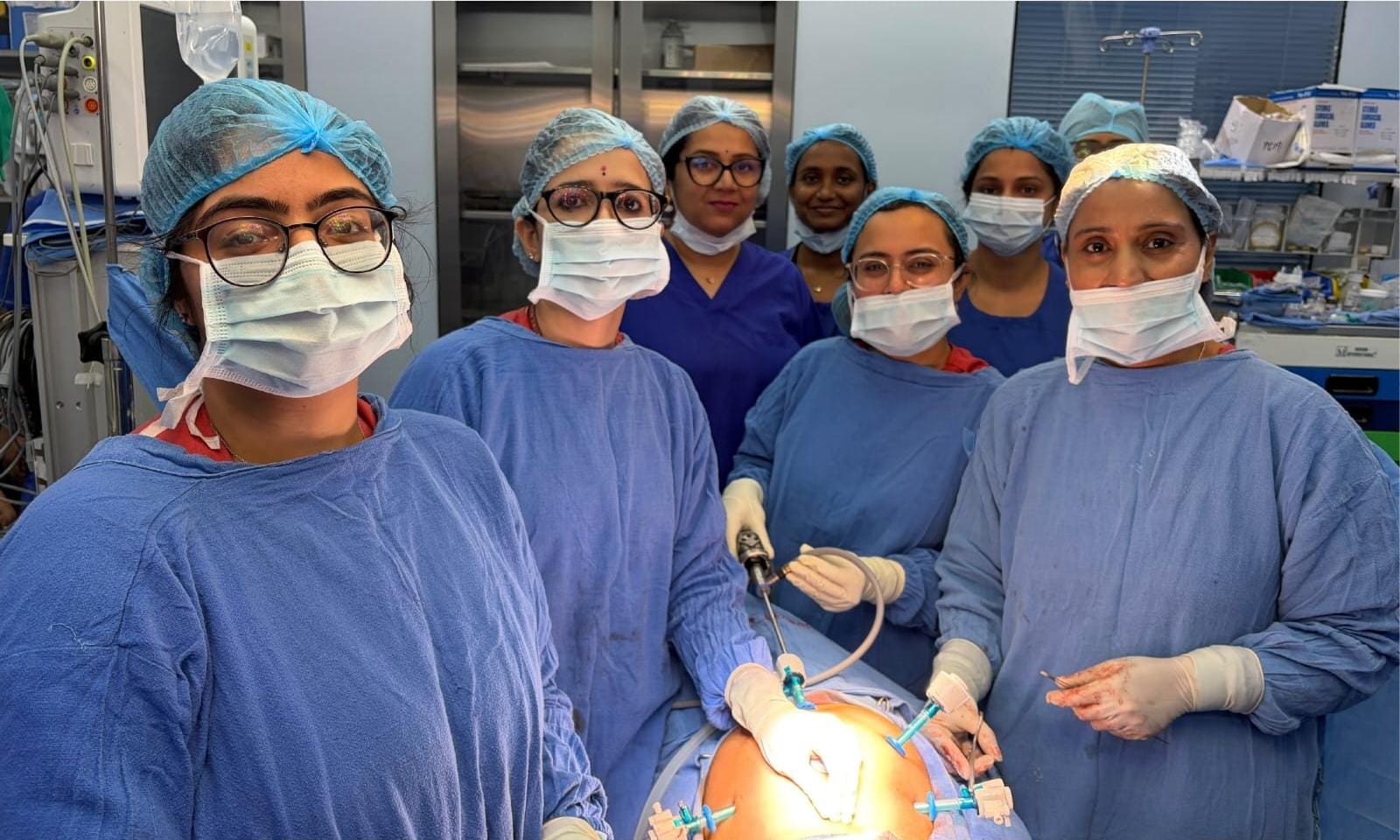
The team included Prof. Reeta Mahey and Dr. Swati Tomar from Gynaecology, Prof. Rajesh Khadgawat from Endocrinology, and Dr. Parin Lalwani, Dr. Choro Athiphro Kayina and colleagues from Anaesthesiology.
Prof. K Aparna Sharma highlighted the unusual challenges associated with operating on an adult patient of such short stature with severe bone weakness and hypertension.
Although laparoscopic hysterectomy is routinely performed in many patients, the combination of the patient’s small body size, fragile bones and other medical conditions required exceptional precautions.
Fragile Bones Made Surgical Positioning Critical
One of the major challenges was positioning the patient safely during surgery. Standard positioning for hysterectomy can place pressure on the lower back, hips and thighs, potentially increasing the risk of fractures in patients with severe osteoporosis.
According to Prof. Khadgawat, the team took particular care to ensure appropriate positioning and cushioning throughout the procedure. Considering the patient’s and family’s preference for keyhole surgery, the team planned to perform the operation with the patient lying flat on her back rather than using the conventional lithotomy position.
The surgical procedure was further complicated by an enlarged uterus caused by adenomyosis. The uterus and ovaries were adherent to the adjacent intestines, while the available working space inside the abdomen was extremely limited.
Despite these difficulties, the surgical team successfully completed the hysterectomy through the laparoscopic route in approximately 90 minutes. Prof. Reeta Mahey performed the surgery.
Advanced Anaesthesia Management Reduced Risks
Anaesthesia management presented another set of challenges. The patient’s fragile bones increased the risk of fractures during positioning, intravenous cannulation and other procedures. Her short neck also made the placement of the breathing tube difficult.
The anaesthesia team carefully calculated medication doses and permissible blood loss according to her body weight. Blood was arranged in advance as a precaution.
To manage post-operative pain while avoiding additional procedural risks, the team did not use an epidural catheter. Instead, doctors administered an ultrasound-guided abdominal nerve block.
Dr. Parin Lalwani of the Department of Anaesthesiology explained that the team adopted these measures to minimise risks throughout the procedure.
Patient Discharged Three Days After Surgery
The patient recovered well following the operation and was discharged on the third day after surgery.
Prof. Neena Malhotra, Head of the Department of Obstetrics and Gynaecology, said the case demonstrates that carefully selected patients with complex medical conditions can benefit from minimally invasive surgery when supported by detailed planning and coordinated specialist care.
Laparoscopic hysterectomy generally involves smaller incisions than traditional open surgery. Depending on the patient’s condition, it can offer benefits such as reduced surgical trauma, less post-operative pain and faster recovery.
However, the suitability of this approach depends on individual clinical assessment, the complexity of the disease and the patient’s overall health.
Significance for Advanced Minimally Invasive Surgery
The successful operation underscores the importance of personalised surgical planning for patients with rare anatomical characteristics and significant underlying medical conditions.
In this case, the combination of severe osteoporosis, hypertension, short stature, an enlarged uterus, intestinal adhesions and limited abdominal space made both surgery and anaesthesia particularly challenging.
The outcome demonstrates how collaboration between surgical, endocrine and anaesthesia specialists can help teams evaluate risks and adapt established procedures to individual patient needs.
The case also highlights the importance of considering a patient’s quality of life when managing severe gynaecological symptoms. For patients experiencing persistent or debilitating menstrual pain, timely evaluation can help identify underlying conditions and guide appropriate treatment.