
By Ekta Purohit / New Delhi: November 04, 2026
The reported suicide of 18-year-old NEET aspirant Ritu Sharma in Prayagraj has once again brought the mental health challenges faced by students preparing for highly competitive examinations into focus. Reports published on November 3 stated that a note recovered from her room reportedly referred to Obsessive-Compulsive Disorder (OCD), unwanted thoughts and psychological distress. Reports also indicated that she had been allotted an MBBS seat posthumously.
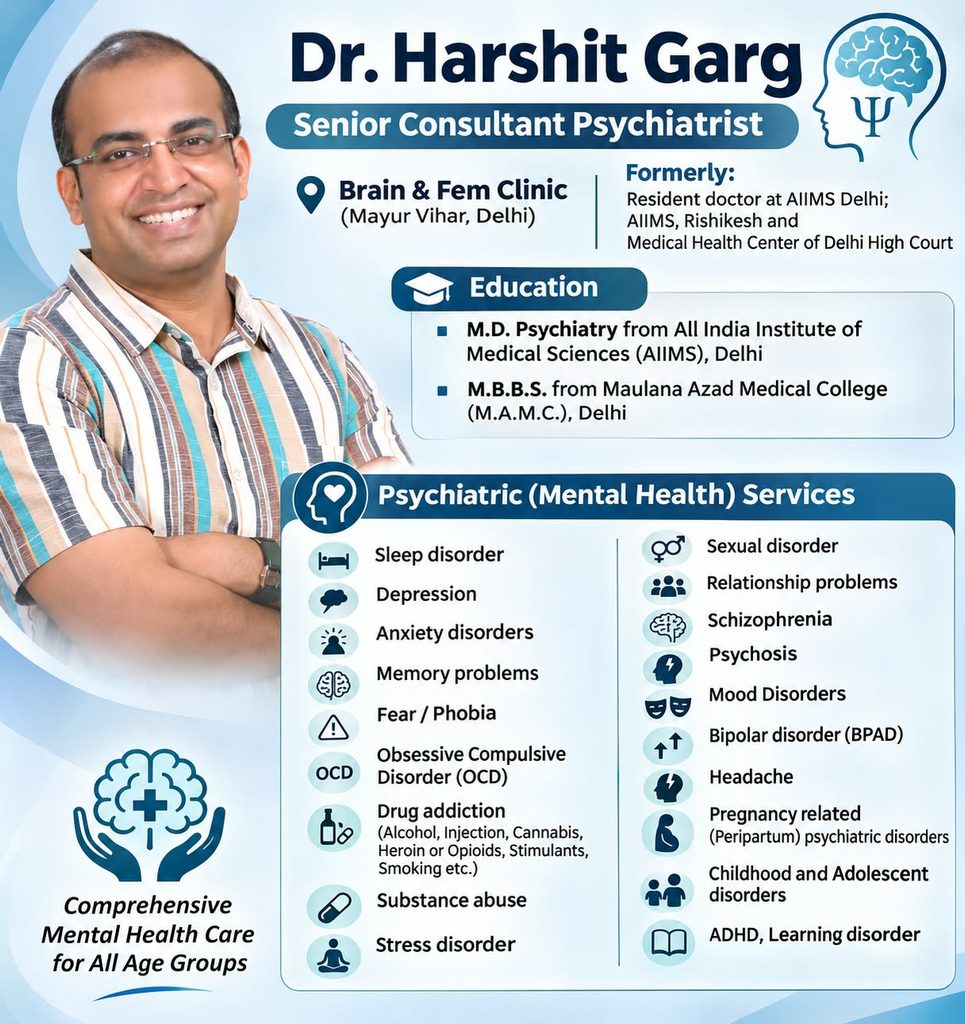
Senior Mental health expert Dr. Harshit Garg emphasise that academic performance should never become the only measure of a child’s abilities or worth. Conditions such as OCD, anxiety and depression can affect students’ concentration, behaviour, relationships and academic lives. Recognising the warning signs and seeking professional help at the right time can make a significant difference.
What Is OCD and How Does It Affect Children and Students?
Obsessive-Compulsive Disorder (OCD) is a mental health condition characterised by recurring, unwanted and intrusive thoughts, images or urges, known as obsessions. These thoughts may lead individuals to perform repetitive behaviours or mental rituals, called compulsions, in an attempt to reduce anxiety or distress.
OCD is not simply about cleanliness, perfectionism or repeatedly checking things. It can involve different types of unwanted thoughts and repetitive behaviours, and in some individuals, the symptoms may remain hidden for a long time.
Students experiencing OCD may find it difficult to concentrate on studies, complete assignments, maintain routines or participate comfortably in social activities. Repeated thoughts and compulsive behaviours can consume considerable time and interfere with their everyday functioning.
The condition may also affect confidence, emotional well-being and relationships with family members and friends.
Warning Signs of OCD and Psychological Distress Parents Should Recognise
According to Dr. Harshit Garg, Senior Consultant Psychiatry at Brain & Fem Clinic, Mayur Vihar, Delhi, psychological difficulties in children and adolescents may sometimes go unnoticed because parents and teachers interpret behavioural changes as ordinary teenage behaviour, academic disinterest or a lack of discipline.
Some behavioural changes that deserve attention include:
- Becoming unusually quiet or socially withdrawn.
- Avoiding school, college or other social activities.
- A sudden decline in academic performance.
- Losing interest in studies or activities previously enjoyed.
- Difficulty concentrating or completing everyday tasks.
- Repeated unwanted thoughts that cause distress.
- Excessive checking, repeating or other repetitive behaviours.
- Persistent anxiety, confusion or emotional distress.
However, these signs are not exclusive to OCD and do not independently establish a diagnosis. A qualified mental health professional must assess the child to identify the underlying problem.
Dr Harshit Garg Explains Why Early Diagnosis and Treatment Matter
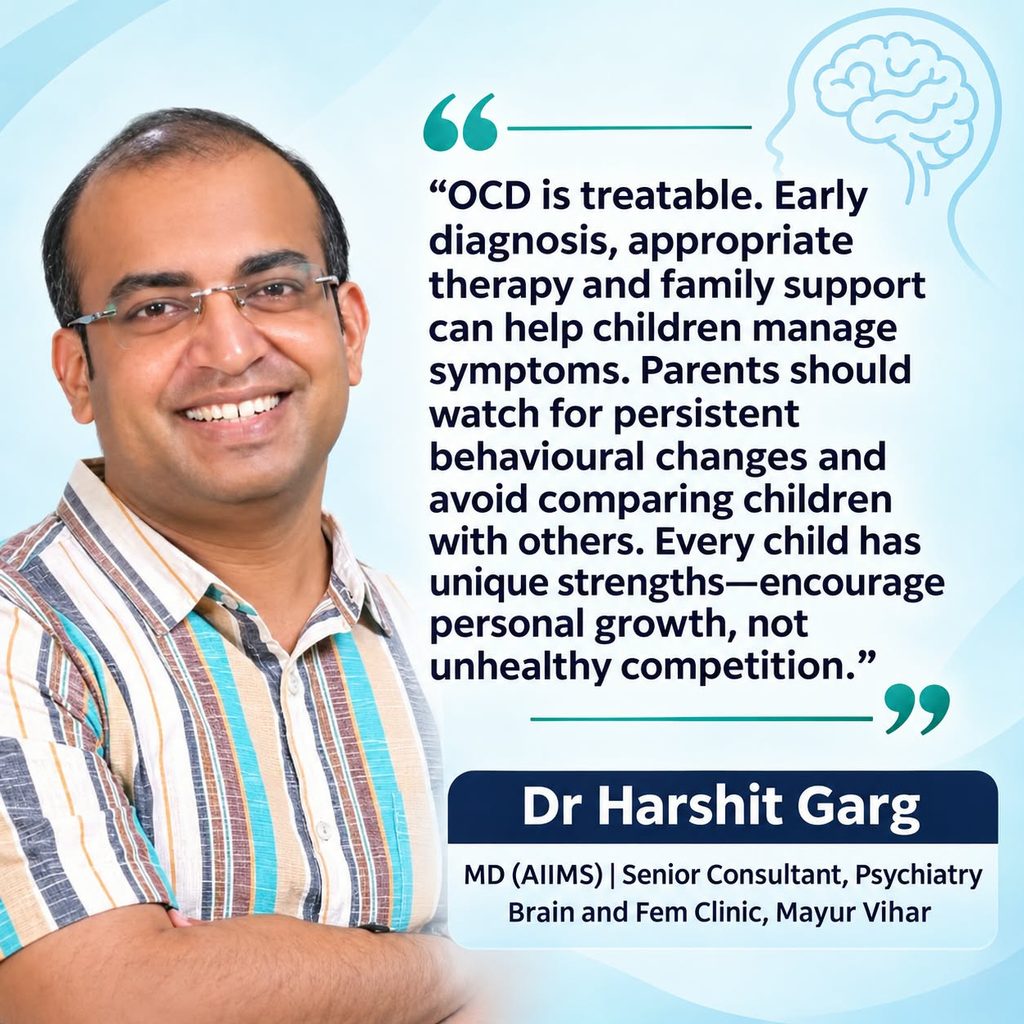
Speaking about OCD and mental health challenges among children and adolescents, Dr Garg said:
“OCD is a serious mental health condition in which individuals experience recurring, intrusive thoughts that can affect their concentration, attention and ability to think clearly. Children with OCD may gradually withdraw socially and struggle with their daily activities. In many cases, the condition goes unnoticed for a long time. However, timely diagnosis and appropriate treatment, including specialised therapy, can help manage the condition effectively.
Academic Competition and Peer Pressure: Why Children Need Emotional Support
Dr Garg also highlighted the importance of changing how children perceive competition and success.
“Competition is a part of life, and challenges are inevitable. Children should learn to compete with themselves rather than constantly compare themselves with others. They should take inspiration from the achievements of others instead of feeling pressured by them.
“Every child is unique and has different strengths and abilities. Everyone has the potential to succeed in life in their own way. Therefore, children should not become fixated on achieving success in just one particular area.
“Most importantly, timely intervention and appropriate treatment can make a significant difference in addressing mental health challenges.”
The psychiatrist’s message highlights an important concern: constant comparisons with classmates, friends, siblings or peers can create unnecessary emotional pressure. Parents should encourage children to recognise their individual strengths rather than measure their abilities against someone else’s achievements.
A student who does not secure admission to a preferred college or clear a competitive examination should never be made to feel that their future has ended.
How Can Parents Identify Mental Health Problems in Children?
Parents play an important role in identifying early behavioural and emotional changes. Children may not always have the confidence or vocabulary to explain what they are experiencing. Therefore, parents should pay attention to changes in their children’s behaviour rather than focusing exclusively on examination results.
Experts recommend the following steps for parents:
- Maintain open communication: Talk to children regularly and create an environment where they can discuss their fears, failures and emotional difficulties without being judged.
- Avoid constant comparisons: Do not compare children with siblings, relatives, classmates or neighbours. Every child has a different learning ability and pace of development.
- Recognise behavioural changes: Sudden social withdrawal, persistent anxiety, sleep disturbances, loss of interest and declining academic performance deserve attention.
- Avoid excessive academic pressure: Encourage realistic goals and ensure children have sufficient time for recreation, sleep, physical activity and social interaction.
- Seek professional guidance: If emotional distress or repetitive thoughts persist and interfere with daily life, consult a qualified psychiatrist or clinical psychologist.
- Never dismiss emotional difficulties: Avoid telling children that they are overthinking, weak or simply seeking attention.
How Can Students Deal With Peer Pressure and Examination Stress?
Students must understand that competitive examinations are only one part of life. Academic achievements can create opportunities, but they do not determine a person’s entire future.
Children should be encouraged to:
- Set personal goals instead of blindly following their peers.
- Focus on their own progress and improvement.
- Take inspiration from successful people without comparing their lives.
- Discuss emotional difficulties with parents, teachers or trusted adults.
- Maintain a healthy routine with adequate sleep, recreation and physical activity.
- Seek professional help when unwanted thoughts, anxiety or emotional distress become difficult to manage.
Failure in an examination, a lower score or not securing admission to a preferred institution should never be treated as the end of one’s journey.
OCD Is Treatable: When Should Professional Help Be Sought?
OCD is a treatable mental health condition. Evidence-based treatments include Cognitive Behavioural Therapy (CBT), particularly Exposure and Response Prevention (ERP), and medication when recommended by a psychiatrist.
Treatment depends on the individual’s symptoms, age and clinical assessment. Early intervention can help reduce distress, improve daily functioning and support students in returning to their normal routines.
If a child expresses hopelessness, talks about self-harm or suicide, or appears to be in immediate danger, parents and caregivers should take it seriously, stay with the child and seek urgent professional or emergency assistance.
Mental Health Is More Important Than Academic Rankings
Schools and coaching institutes should create supportive environments where students can access counselling, discuss emotional difficulties and seek help without fear of stigma.
The larger message is simple: children need encouragement, not constant comparison; understanding, not judgement; and timely mental health support, not pressure to achieve at any cost.
A child’s life, happiness and mental well-being are far more valuable than any examination result or college admission.