
By Aanchal / Ghaziabad: November 04, 2026
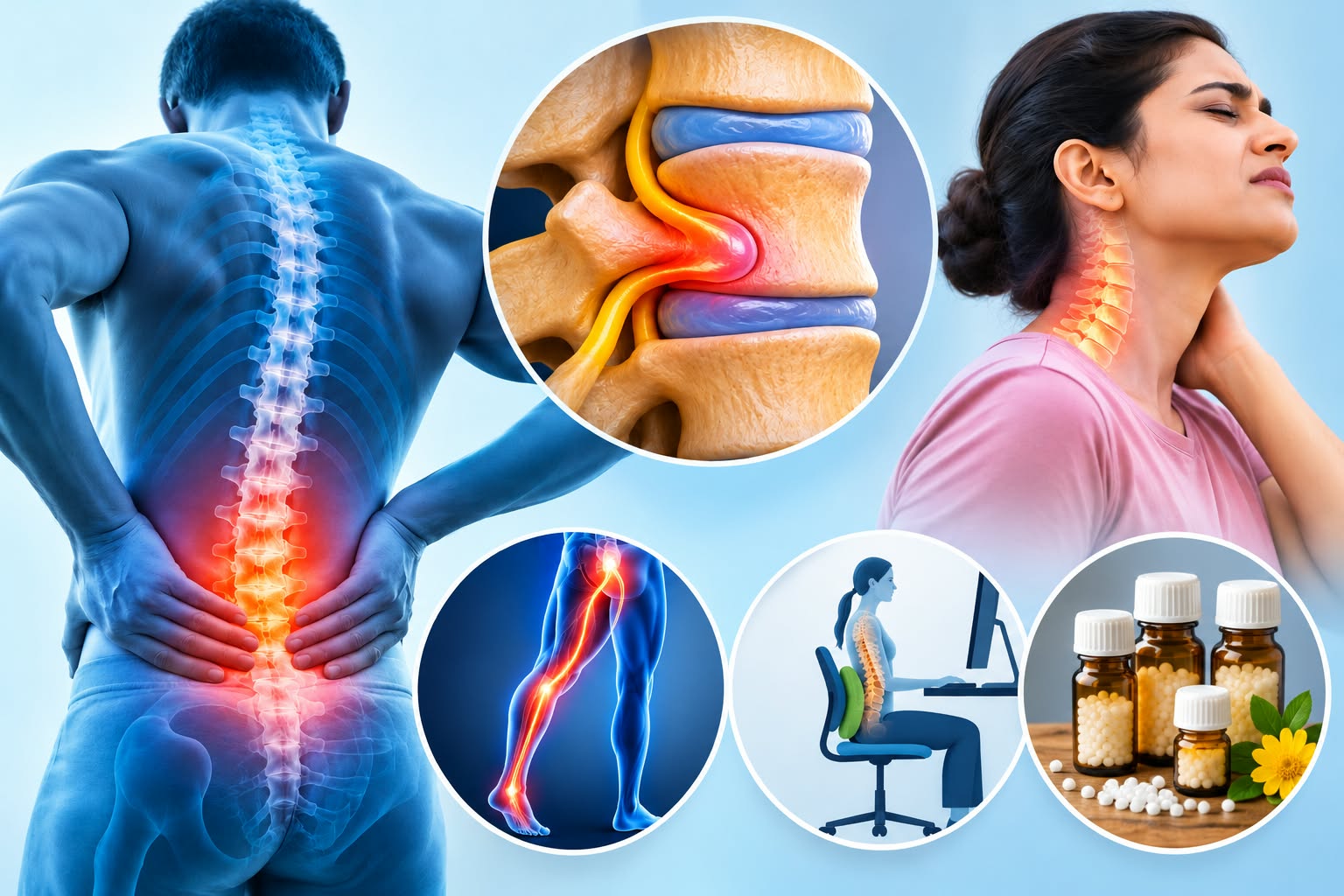
Persistent back pain, tingling sensations, numbness and weakness in the arms or legs can sometimes indicate an underlying spinal problem, including a slipped disc or nerve compression. Understanding the structure of spinal discs, recognising early warning signs and seeking timely medical evaluation are important for preventing complications.
Dr Yogendra Rai, Director at Dr. Rai Homoeopathy Care & Research Centre in Vasundhara, Ghaziabad, explains the structure of spinal discs, the causes of sciatica, common symptoms and available treatment approaches.
Understanding the Structure of Spinal Discs
The spinal disc consists of two main components. Its inner portion, known as the nucleus pulposus, contains a soft, jelly-like substance, while the outer covering, called the annulus fibrosus, is made up of strong fibrous tissues.
These discs act as shock absorbers between the vertebrae, providing flexibility and allowing the spine to bend, twist and move. They also prevent direct friction between adjacent vertebrae.
The neck (cervical spine) and lower back (lumbar spine) experience considerable movement and mechanical stress. Consequently, degenerative changes and disc-related problems are commonly observed in these regions, particularly with increasing age.
How Does a Slipped Disc Affect the Nerves?
When a spinal disc bulges or herniates, it may put pressure on nearby nerves. Depending on the location and severity of compression, patients can experience pain, tingling, numbness and muscle weakness.
In cervical disc problems, pain may spread from the neck to the shoulders, arms and fingers. In some cases, symptoms may also extend towards the chest.
More serious warning signs include reduced grip strength, weakness in the legs and difficulty controlling bladder or bowel movements. Such symptoms require urgent medical assessment.
Sciatica: More Than Just Lower Back Pain
Sciatica is not a disease in itself but a group of symptoms caused by irritation or compression of the sciatic nerve or its nerve roots.
The pain generally begins in the lower back or buttock and travels through the hip and thigh towards the leg and sometimes the foot or toes. Patients may also experience numbness, tingling or weakness.
Possible causes include disc herniation, degenerative changes in the spine, spinal canal narrowing and, less commonly, tumours or other conditions affecting the nerves.
Excess body weight and pregnancy-related mechanical pressure may also contribute to lower back discomfort. Vitamin B12 deficiency can cause nerve-related symptoms and should be considered when clinically appropriate. Vitamin D and calcium deficiencies may also affect musculoskeletal health, although they are not established direct causes of sciatica.
Does Every Slip Disc Require Surgery?
Not every patient with a slipped disc needs surgery. Many cases improve with conservative treatment, depending on the severity of symptoms and clinical findings.
Treatment may include prescribed medication, physiotherapy, activity modification and appropriate rehabilitation.
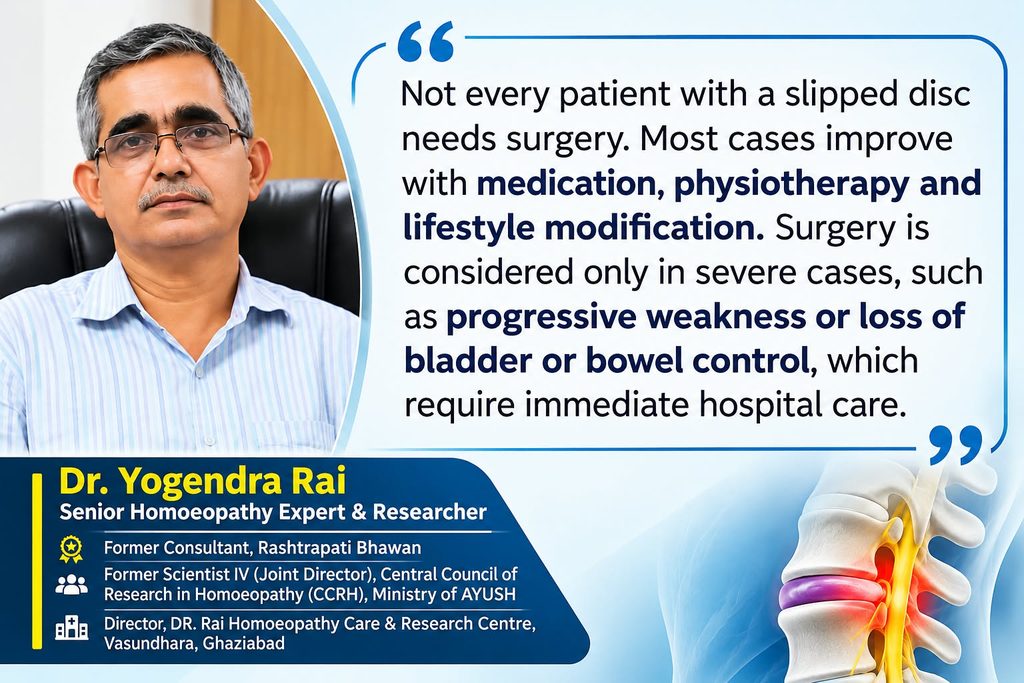
Surgery may be considered when patients develop progressive neurological weakness, persistent disabling symptoms despite appropriate treatment or serious nerve compression.
Loss of bladder or bowel control, particularly when accompanied by numbness around the groin or progressive leg weakness, can indicate a medical emergency and requires immediate hospital evaluation.
MRI Helps Identify Spinal Problems
MRI is particularly useful for examining spinal discs, nerve roots and soft tissues. It can help identify disc bulges, herniation and nerve compression.
X-rays provide information about bone alignment and structural changes but cannot adequately demonstrate disc herniation or nerve compression. The choice of investigation depends on the patient’s symptoms and clinical examination.
Precautions to Protect Spinal Health
People experiencing back pain or disc-related symptoms should take appropriate precautions:
Avoid heavy lifting and activities that aggravate the pain.
Maintain correct posture while sitting and working.
Use appropriate lumbar support when required.
Avoid prolonged sitting and take regular movement breaks.
Exercise caution while riding two-wheelers over potholes and speed breakers.
Use ice or heat packs according to comfort and professional advice.
Consider physiotherapy and guided exercises after medical assessment.
Homoeopathic Approach: Medicines Discussed According to Symptoms
Dr Yogendra Rai also discussed certain medicines used in homeopathic practice, selected according to individual symptom patterns:
Bryonia Alba: Traditionally associated in homoeopathic practice with pain that worsens with movement, coughing or sneezing and improves with rest.
Rhus Toxicodendron: Traditionally considered when stiffness and pain are worse after rest or in the morning but improve with gentle movement.
Gnaphalium: Traditionally associated with pain accompanied by prominent numbness.
Colocynthis: Traditionally considered when firm pressure on the affected area provides relief.
Magnesia Phosphorica: Traditionally associated with pain that improves with warmth or hot applications.
These are traditional homoeopathic indications.
Early Diagnosis and Appropriate Treatment Are Important
Spinal problems can affect mobility, daily activities and quality of life. Recognising symptoms early, obtaining an accurate diagnosis and following an appropriate treatment plan can help patients manage their condition and avoid unnecessary complications.