


New Delhi: HL October 26, 2026
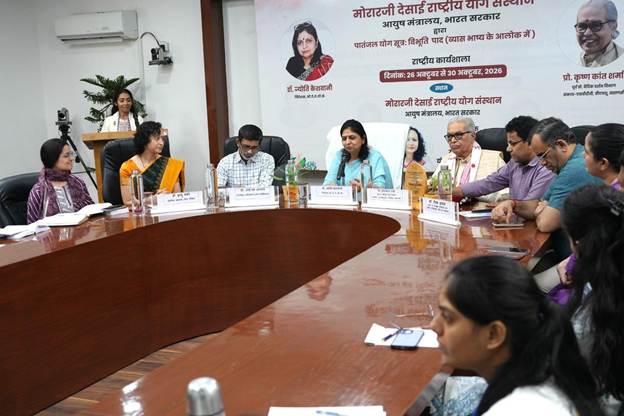
The Morarji Desai National Institute of Yoga (MDNIY), under the Ministry of Ayush, has inaugurated a five-day national workshop dedicated to the philosophical and practical dimensions of the Patanjala Yoga Sutra. The workshop, titled “Patanjala Yoga Sutra: Vibhuti Pada (In the Light of Vyasa Bhashya),” is being held from October 26 to 30, 2026.
The academic programme aims to develop a deeper understanding of Vibhuti Pada, the third chapter of the Patanjala Yoga Sutra, through a structured examination of its teachings and the traditional commentary known as Vyasa Bhashya.
The workshop brings together experts and scholars to discuss the relevance of classical Yoga philosophy in contemporary life, particularly in understanding the human mind, strengthening self-discipline and developing greater awareness.
Experts Emphasise Practical Application of Classical Yoga Wisdom
Prof. Krishna Kant Sharma, former Professor in the Department of Vedic Philosophy at the Faculty of Sanskrit Vidya Dharma Vigyan, Banaras Hindu University, Varanasi, participated as the subject expert. He highlighted the importance of combining practical learning with a deeper understanding of traditional Yoga literature.
According to Prof. Sharma, the teachings of Maharishi Patanjali offer valuable perspectives on understanding and addressing human suffering through Yoga. He emphasised MDNIY’s commitment to promoting practical knowledge alongside the philosophical study of classical texts.
Dr. Jyoti Keswani, Director of MDNIY, highlighted the contribution of the Patanjala Yoga Sutra to personal development, discipline and self-awareness.
She explained that the text encourages individuals to understand and regulate Asmita, or the sense of ego. She also noted that Vibhuti Pada presents complex philosophical ideas concerning Siddhis, or yogic attainments, which warrant careful interpretation and systematic scientific inquiry.
Dr. Keswani stressed the importance of approaching traditional knowledge with an open mind while encouraging research into its significance and potential applications.
Understanding Vibhuti Pada and the Concept of Samyama
Vibhuti Pada is the third chapter of the Patanjala Yoga Sutra and examines advanced aspects of yogic practice. It discusses Dharana (concentration), Dhyana (meditation) and Samadhi (a state of deep meditative absorption), which together constitute Samyama.
The chapter also explores Siddhis, traditionally described as yogic attainments, and highlights the need for discernment in understanding their place within the broader pursuit of spiritual development.
Through the study of the Sutras alongside Vyasa Bhashya, participants are expected to gain a more structured understanding of these concepts and their philosophical foundations.
The workshop also provides an academic platform to examine the relationship between yogic discipline, consciousness and the development of mental awareness.
Yoga Philosophy and Its Relevance in Modern Life
Dr. I. N. Acharya, Programme Officer at MDNIY, highlighted the contemporary relevance of the Patanjala Yoga Sutra, particularly in a world characterised by growing information access and increasingly complex lifestyles.
He observed that the text offers guidance for understanding and regulating the mind while encouraging mindfulness and awareness.
Md. Taiyab Alam, Communication and Documentation Officer and Deputy Director (In-charge) at MDNIY, emphasised that the value of Yoga extends beyond memorising classical teachings. Its principles, he noted, become meaningful when integrated into everyday life.
He expressed confidence that the workshop would encourage scholarly discussion, facilitate learning and support the wider dissemination of India’s classical Yoga heritage.
Dr. Indu Sharma, Assistant Professor of Yoga Education at MDNIY, is coordinating the workshop.
Strengthening India’s Classical Yoga Heritage
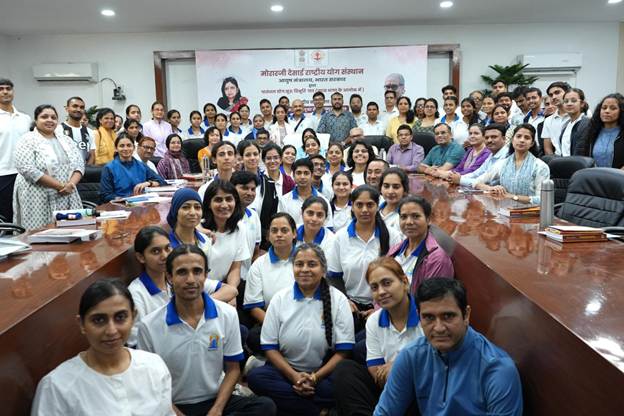
The five-day programme reflects MDNIY’s efforts to promote the systematic study of traditional Yoga literature and encourage informed discussion of its philosophical foundations.
By bringing classical interpretations into an academic setting, the initiative seeks to deepen understanding of yogic practices and their significance in personal development, self-discipline and awareness.
The workshop also highlights the importance of continued scholarly engagement with India’s traditional knowledge systems, combining respect for their philosophical heritage with rigorous examination of their concepts and contemporary relevance.