
New Delhi: HL August 1, 2026
A new analysis highlights that Delhi-NCR, home to only 5% of India's population, accounts for nearly 23% of child asthma cases linked to vehicle emissions. The International council on clean transportation report also points to thousands of premature deaths associated with transport-related air pollution.
High Child Asthma Cases Linked to Traffic Pollution
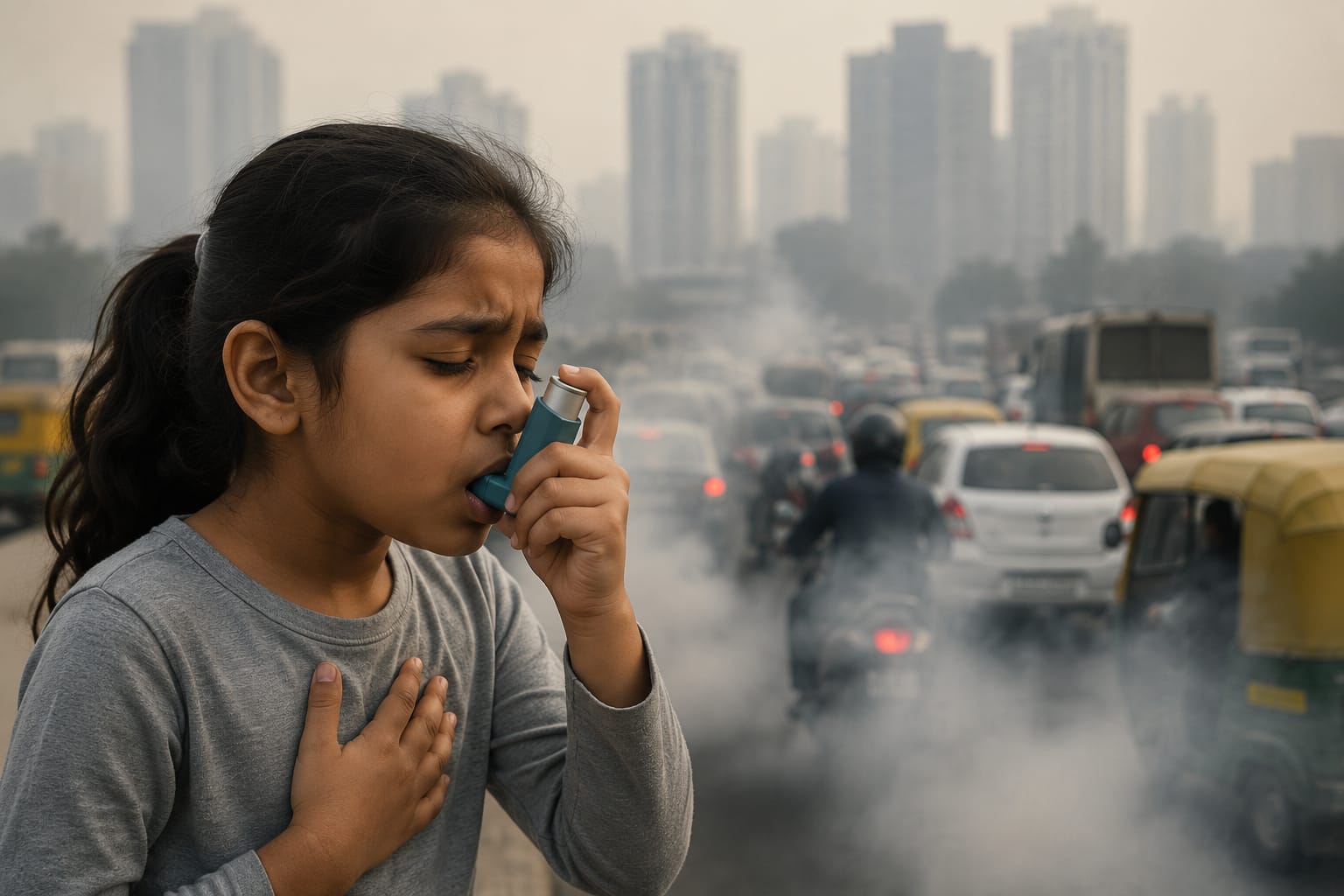
Delhi-NCR has emerged as one of India's biggest hotspots for transport-related air pollution, with a recent analysis indicating that the region contributes a significantly higher share of childhood asthma cases than its population size would suggest.
According to the report, Delhi-NCR is home to nearly 5% of India's population but accounts for around 23% of child asthma cases associated with vehicle emissions, translating to approximately 3,500 new cases annually. The findings underline the growing public health impact of traffic-related pollution in densely populated urban areas.
The report also estimates that around 8,100 premature deaths in Delhi-NCR during 2024 were linked to vehicle emissions. In Delhi alone, approximately 2,800 premature deaths were associated with traffic-related pollution over the same period.
Researchers note that pollutants such as nitrogen dioxide (NO₂) and fine particulate matter (PM2.5) remain among the primary health concerns. Heavy-duty vehicles, including trucks and buses, contribute disproportionately to these emissions despite representing a smaller share of the total vehicle fleet.
The analysis suggests that pollution exposure is especially harmful for children, whose lungs are still developing. Frequent exposure to polluted air during daily activities, including commuting to school, increases the risk of respiratory illnesses such as asthma.
Experts cited in the report recommend accelerating the transition to cleaner transportation, expanding public transport, promoting electric vehicles, and implementing stricter emission-control measures. They also emphasize improving urban planning and reducing dependence on fossil-fuel-powered vehicles to protect public health.
Talking with HealthLive Dr.Prabudh Goel, Professor, Pediatric Surgery at AiIMS Delhi sharded that children are particularly vulnerable to air pollution because their lungs are still developing, they breathe more air relative to their body weight than adults and they often spend considerable time outdoors. Traffic-related pollutants, especially fine particulate matter and nitrogen oxides can irritate and inflame the airways. In susceptible children, repeated exposure can worsen asthma, increase coughing and wheezing, trigger more frequent attacks and respiratory infections and adversely affect lung development over time.
He said we also need to recognise that vehicular pollution is not simply about how many vehicles are on our roads, but how efficiently they are moving. A journey that takes 18 minutes in freely moving traffic may take an hour or more in congestion. During that additional time, thousands of engines remain running in the same densely populated corridors, with repeated idling, braking and acceleration. Traffic congestion therefore does not merely waste time and fuel—it can magnify both emissions and people’s exposure to them. When a densely populated urban region like Delhi NCR carries such a disproportionate burden of childhood asthma associated with vehicle emissions, air pollution can no longer be viewed merely as an environmental problem; it is a child-health issue and a public-health priority. Parents cannot completely shield children from the air they breathe, so the larger solution has to come from reducing pollution at its source. However, exposure can be reduced. On days when air quality is poor, particularly when PM2.5 levels are high, strenuous outdoor exercise and prolonged outdoor activity should be limited. Children with asthma should follow their prescribed preventive treatment consistently and keep their reliever medication readily available as advised by their doctor.At home, keeping doors and windows closed during periods of severe outdoor pollution and avoiding additional indoor pollutants such as tobacco smoke, incense, mosquito coils and other sources of smoke can help. A well-fitted mask can reduce particulate exposure in older children when outdoor exposure is unavoidable, although masks are often difficult to use effectively in very young children.
Parents should also watch for persistent cough, wheezing, breathlessness, reduced exercise tolerance or night-time symptoms. A child who repeatedly develops such symptoms should be medically evaluated rather than simply having each episode attributed to ‘seasonal cough’ or infection Dr.Prabudh adds

Most importantly, we should not place the entire responsibility on parents. Families can reduce exposure, but they cannot solve ambient air pollution. Cleaner vehicles, effective emission enforcement, better public transport, improving the flow of traffic and urban policies that reduce children's exposure to traffic pollution are ultimately the more sustainable form of prevention.
The findings reinforce concerns that transport emissions remain a major environmental and health challenge for the National Capital Region, highlighting the need for coordinated action to improve air quality and reduce disease burden.