

New Delhi: HL September 30, 2026
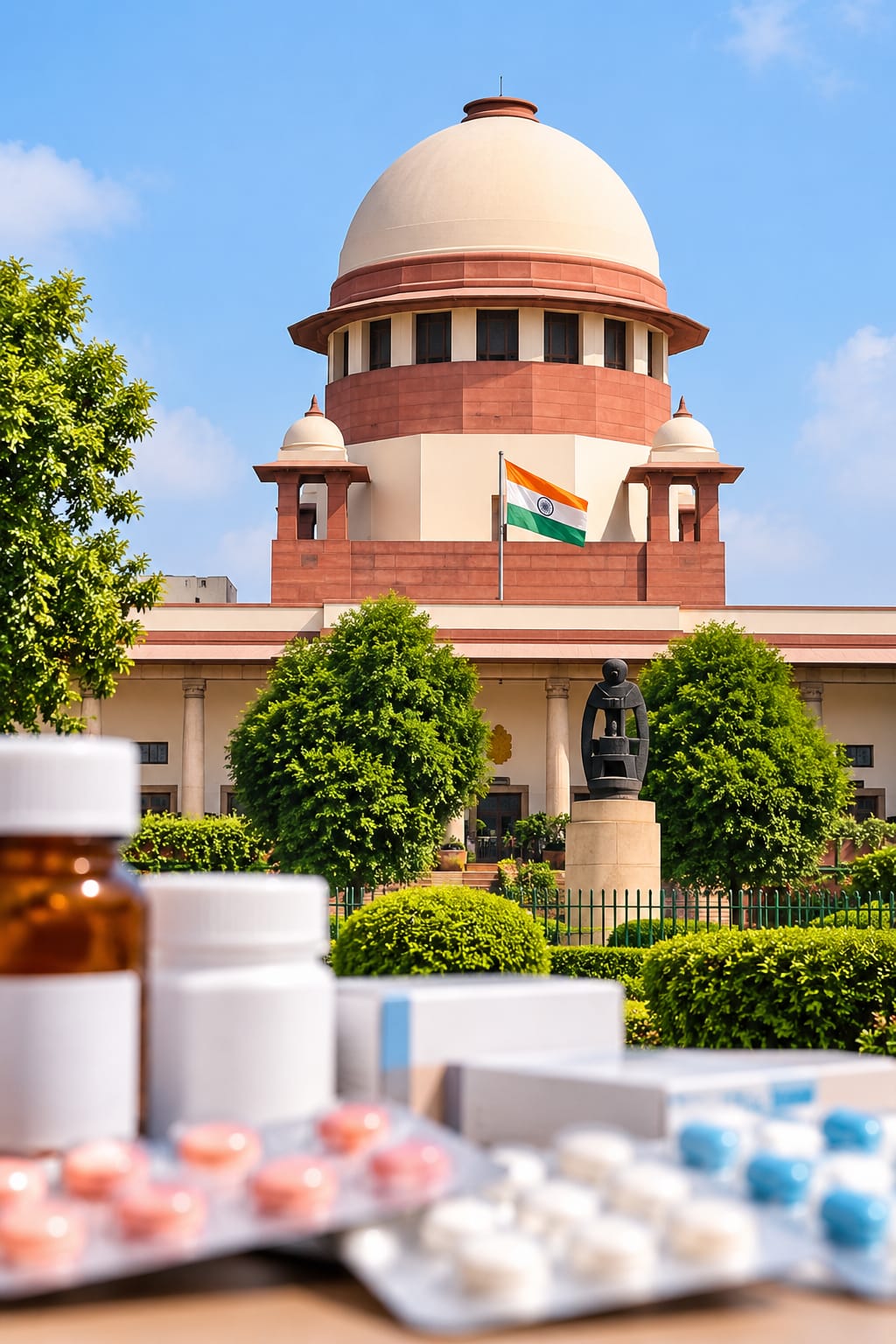
The Supreme Court has raised serious questions over the large gap between the maximum retail price (MRP) of life-saving medicines and the prices at which hospitals and private healthcare establishments may be charging patients.
A Bench of Justice Vikram Nath and Justice Sandeep Mehta was hearing a matter concerning regulation of prices of medicines, including cancer drugs. During the proceedings, the court questioned why a uniform rule could not be introduced to ensure that the price charged to patients does not exceed the permissible margin over the actual selling price.
The issue came into focus after the Bench referred to an example involving a cancer medicine. According to the discussion recorded in the newspaper report, a medicine carrying an MRP of around Rs. 27,000 was being supplied to a retailer for approximately Rs. 2,700. The significant difference between the two figures prompted the court to question the basis for such pricing.
Supreme Court questions 16% pricing rule
The Bench also questioned why a uniform framework could not be adopted under which the price charged by retailers would remain within 16% above the purchase price, referring to the existing regulatory framework for certain medicines.
The court was examining issues connected with the Drugs (Prices Control) Order, 2013, as well as pricing regulations concerning medicines and medical devices.
The Bench observed that patients are often dependent on hospitals or designated pharmacies for purchasing essential medicines. It questioned whether patients are effectively compelled to purchase medicines from a particular medical store or pharmacy and whether this creates additional financial pressure.
Court seeks explanation over huge price difference
The proceedings also focused on the question of who ultimately benefits when there is a substantial difference between a medicine’s supply price and the price paid by the patient.
According to the report, the Solicitor General told the court that pharmaceutical companies do not appear to be benefiting from the entire difference and suggested that the issue may involve private hospitals and other intermediaries.
The Bench sought a mechanism that could balance the interests of all stakeholders while preventing patients from facing unreasonable costs for essential medicines.
Cancer patients could face the biggest burden
Cancer treatment frequently involves long-term medication and repeated purchases, making medicine prices a major component of the overall cost of care. The court’s observations therefore bring renewed attention to transparency in hospital billing and the pricing of medicines supplied directly to patients.
The Bench also indicated that hospitals should examine whether patients can be allowed to purchase medicines independently rather than being compelled to obtain them from a particular in-house pharmacy or medical store.
The Supreme Court has sought further responses from the government and other parties. The matter is scheduled for further hearing on October 12.
Why the case matters
The proceedings highlight three key issues:
Large differences between procurement prices and MRPs
Pricing of essential and life-saving medicines in private hospitals
Whether patients should have greater freedom to purchase prescribed medicines from outside pharmacies
Any regulatory change resulting from the proceedings could have implications for the way medicines are priced and supplied to patients, particularly in high-cost treatments such as cancer care.