

New Delhi : HL September 20, 2026
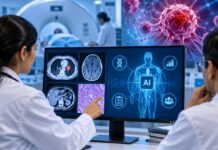
The Ministry of Ayush is accelerating the use of Artificial Intelligence (AI) across Ayurveda and the broader Ayush sector, building on the digital infrastructure created through the Ayush Grid. The initiative aims to make traditional medicine knowledge more accessible, strengthen research and education, and develop technology-enabled healthcare services.
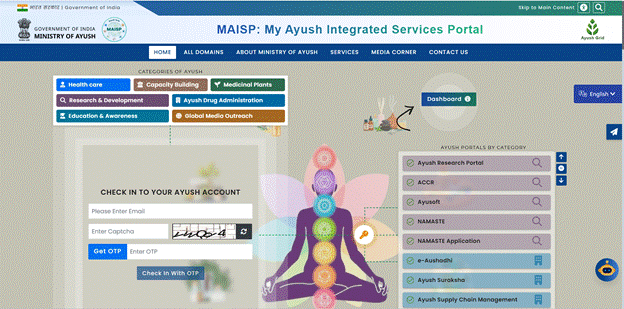
A growing range of AI-powered platforms is being developed for citizens, researchers, students, practitioners and investors. These include the MAISP Chatbot, which provides conversational access to Ayush-related information; the ARP Research Assistant, a Generative AI-based tool designed to help researchers explore Ayurveda and other Ayush literature; and the eLMS Chatbot, which supports student life-cycle management in Ayush educational institutions.
The Ministry has also introduced AI applications for specialised areas of the Ayush ecosystem. The e-CHARAK Chatbot is designed to assist with medicinal-plant trade-related information, while Yoga Saarthi provides AI-supported yoga recommendations. Nivesh Saarthi, meanwhile, functions as an AI assistant aimed at facilitating investment-related information within the Ayush sector.
AI and Evidence-Based Ayurveda
The growing role of AI in Ayurveda was also highlighted at the IndiaAI Impact Summit 2026. An AI health casebook developed in partnership with the World Health Organization featured an Ayush use case titled “AI-driven Decision Support for Ayurveda: A Retrieval-Augmented Generation (RAG) Approach.”
The use of Retrieval-Augmented Generation is significant because it can help AI systems retrieve relevant information from defined knowledge sources while generating responses. In the Ayush context, this approach is being explored to improve the discoverability and accessibility of Ayurvedic knowledge while supporting evidence-informed digital services.
Focus on Healthcare, Research and Patient-Centric Solutions
The Ministry is also participating in the IndiaAI Innovation Challenge, exploring AI solutions specifically suited to the Ayush sector. Proposed applications include voice-enabled Electronic Health Records, disease-trend detection and personalised treatment-support systems.
These technologies are intended to support healthcare delivery, generate useful clinical insights and improve patient-centric services across Ayurveda and other Ayush systems. Their development also reflects the broader global discussion around the responsible use of AI in traditional medicine.
WHO, ITU and WIPO Highlight AI Applications in Traditional Medicine
The global potential of AI in traditional medicine was examined in a technical brief released jointly by the World Health Organization (WHO), International Telecommunication Union (ITU) and World Intellectual Property Organization (WIPO) on July 11, 2025.
The document examined possible applications of AI in traditional medicine while emphasising the need for approaches that are responsible, evidence-informed and culturally appropriate. The discussion is particularly relevant to Ayurveda, where large bodies of traditional knowledge are increasingly being connected with digital technologies.
Ayush Collaborates With IndiaAI and Bhashini
The Ministry of Ayush has also been working with IndiaAI and the Digital India Bhashini Division (DIBD), Ministry of Electronics and Information Technology (MeitY). These collaborations are intended to explore AI, language technologies, digital health and advanced computing for the Ayush ecosystem.
Ayush-related digital artefacts are also being made available through AI Kosh, supporting broader research and dissemination in Ayurveda and other Ayush domains.
The collaboration with Bhashini is further expanding linguistic accessibility. Ayush Grid portals serving practitioners, students and citizens are being made available in 22 scheduled Indian languages, enabling people from different linguistic backgrounds to access digital Ayush services.
Technology to Support, Not Replace Traditional Knowledge
The Ministry’s expanding AI ecosystem represents a broader shift from conventional digital portals towards interactive and intelligent services. AI-powered assistants can help users discover information, support researchers in navigating literature, facilitate educational services and connect stakeholders across the Ayush ecosystem.
The approach places technology in a supporting role, with the objective of strengthening the discoverability, accessibility and evidence-oriented use of traditional knowledge rather than replacing the underlying Ayurvedic knowledge system.
With initiatives involving Ayush Grid, IndiaAI and Bhashini, the Ministry of Ayush is continuing to build a technology-enabled ecosystem aimed at making Ayurveda and traditional medicine more accessible to citizens in India and audiences worldwide.