
New Delhi: HL July 26, 2026
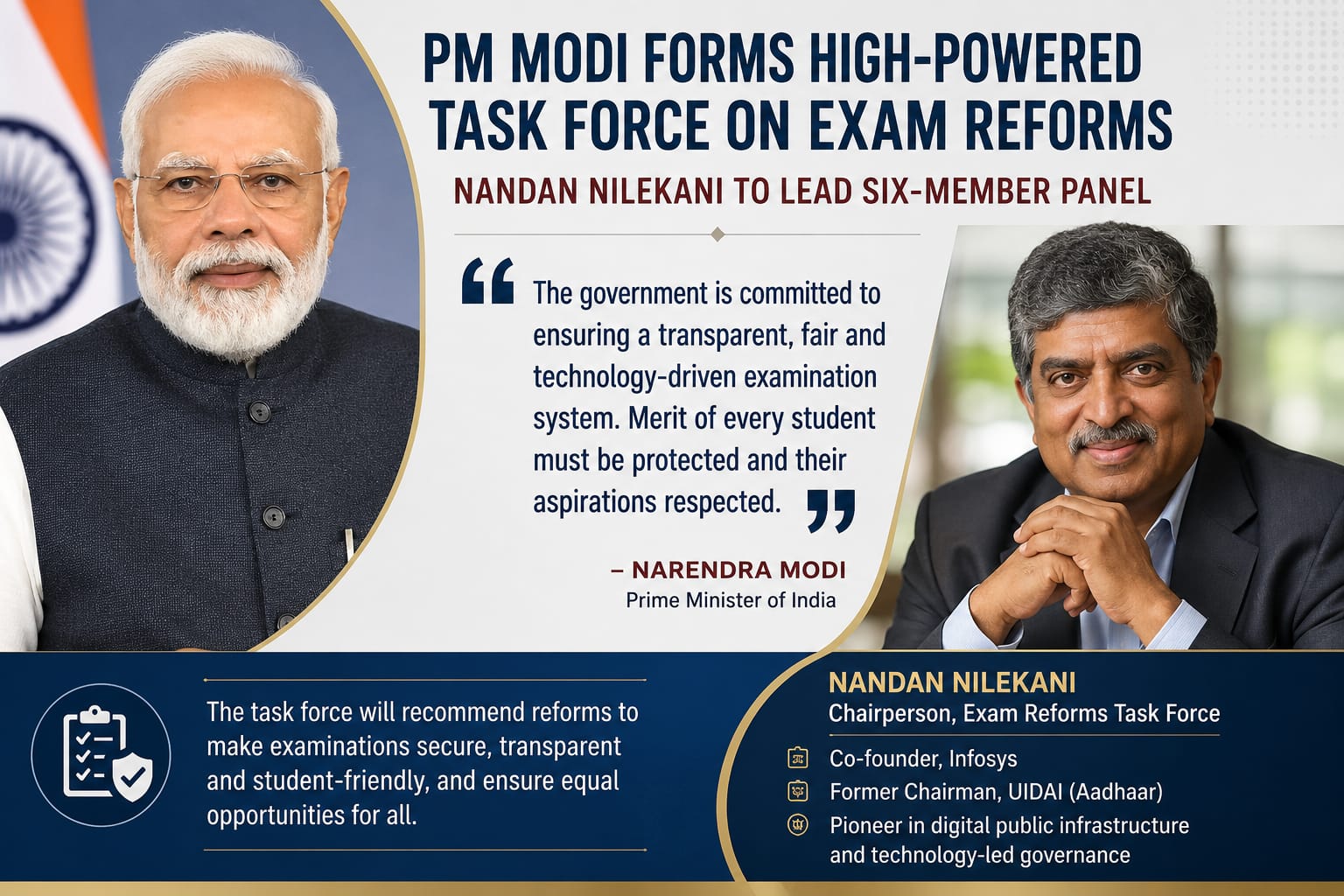
In a significant move to strengthen the credibility of India’s examination system, Prime Minister Narendra Modi has announced the formation of a six-member high-level task force to recommend comprehensive reforms in the conduct of public examinations. The panel has been entrusted with preparing a long-term strategy to improve transparency, security and efficiency in entrance and recruitment examinations conducted across the country.
The initiative comes in the wake of repeated concerns over question paper leaks, impersonation, organised cheating and administrative lapses that have affected several competitive examinations in recent years. The government has stated that the task force will suggest structural, technological and administrative reforms to ensure that future examinations are fair, secure and merit-based.
Nandan Nilekani to Lead the Reform Process
The task force will be chaired by Nandan Nilekani, one of India’s leading technology entrepreneurs and a co-founder of Infosys. Nilekani is widely recognised for leading the creation of Aadhaar, the world’s largest digital identity programme, during his tenure as the founding Chairman of the Unique Identification Authority of India (UIDAI). His experience in building secure digital public infrastructure is expected to play a key role in modernising India’s examination ecosystem through technology-driven solutions.
Members
The committee brings together experts from diverse fields to address different aspects of examination reforms:
Nandan Nilekani – Chairperson; technology leader and former UIDAI Chairman.
Dr. S. Somanath – Former ISRO Chairman, bringing expertise in large-scale scientific and technological systems.
Tapan Deka – Former Director of the Intelligence Bureau, expected to advise on security, risk assessment and fraud prevention.
Anita Karwal – Former Union Education Secretary with extensive experience in school education, examinations and policy implementation.
Prof. V. Kamakoti – Director, IIT Madras, known for his work in computer science, cybersecurity and artificial intelligence.
Amrit Lal Meena – Senior civil servant with experience in governance, infrastructure and public administration.
Key Areas of Focus
The panel has been asked to recommend measures that will:
Make examinations resistant to paper leaks and organised malpractice.
Strengthen digital security and cybersecurity safeguards.
Improve governance and accountability of examination agencies.
Introduce modern technology for secure question paper management and candidate verification.
Enhance transparency in the conduct of examinations.
Restore public confidence in national entrance and recruitment tests.
The recommendations are expected to influence reforms in examinations conducted by the National Testing Agency (NTA) as well as other central and state-level examination bodies. The government’s objective is to create a robust examination system where every candidate competes on equal terms and merit remains the sole criterion for selection.
Officials have indicated that the task force will consult experts from academia, technology, public administration and law enforcement before submitting its recommendations to the government.