

New Delhi: HL September 05, 2026
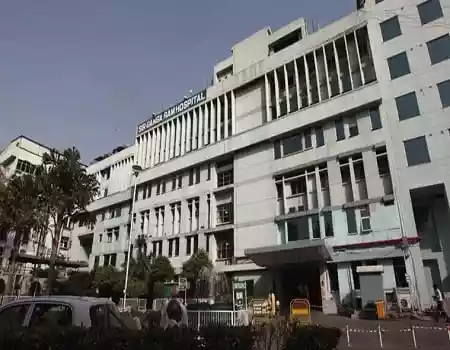
In a challenging head-and-neck cancer surgery, doctors at Sir Ganga Ram Hospital, New Delhi, successfully removed a massive thyroid tumour from a 43-year-old woman, whose tumour had grown around the carotid artery and extended towards critical structures in the neck.
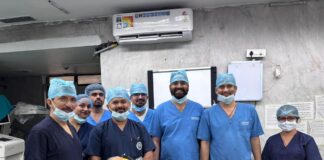
The complex operation was led by Dr. Sangeet Agrawal, Senior Consultant, Head & Neck Surgical Oncology, with a multidisciplinary team involving specialists from head-and-neck surgical oncology, vascular surgery and plastic surgery.
The case was particularly challenging because the tumour was closely associated with the carotid artery, while also extending towards the trachea and oesophagus. The surgical team had to remove the tumour while protecting major blood vessels and the nerves responsible for the patient’s voice.
43-year-old woman had lived with the neck swelling for years
The patient, a 43-year-old woman, had a large swelling in her neck that had been present for approximately 10 years. The mass had gradually increased in size over the years, but its growth became more noticeable in the recent period, prompting her to seek specialist medical attention.
Detailed evaluation showed that the tumour had become extensive and was involving or closely abutting important structures in the neck.
The unusual size and anatomical location made the case considerably more complicated than a routine thyroid operation.
Tumour had grown around the carotid artery
One of the most significant challenges was the tumour’s relationship with the carotid artery, a major blood vessel supplying blood to the brain.
The tumour had grown around the vessel, creating a major surgical risk. Removing the tumour without damaging the artery required meticulous dissection and careful surgical planning.
The growth also extended towards the trachea and oesophagus, structures essential for breathing and swallowing.
Doctors initially faced concern about an aggressive thyroid cancer
Because of the tumour’s size, long-standing history and subsequent increase in growth, doctors had to carefully establish its exact nature.
The clinical picture initially raised concern about a potentially aggressive thyroid malignancy. Further diagnostic assessment, including biopsy, identified the disease as papillary thyroid cancer.
Dr. Sangeet Agrawal led the complex operation
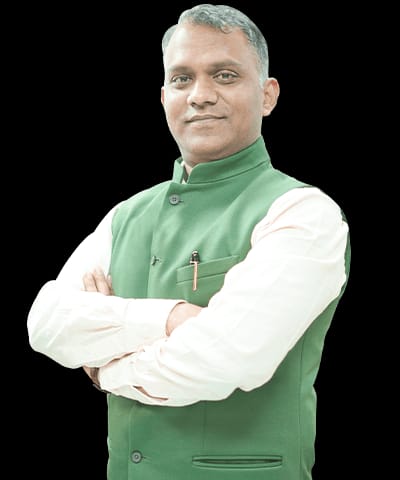
Dr. Sangeet Agrawal, Senior Consultant in Head & Neck Surgical Oncology, led the surgical management of the patient.
Given the tumour’s proximity to the carotid artery and other vital structures, the operation required collaboration between multiple specialties.
The multidisciplinary team included specialists in:
- Head & Neck Surgical Oncology
- Vascular Surgery
- Plastic Surgery
Such collaboration was essential because the surgeons needed to simultaneously achieve tumour removal and protect critical anatomical structures.
Carotid artery preserved despite tumour involvement
A major achievement of the operation was the successful separation of the tumour from the carotid artery while preserving the vessel.
Because the carotid artery is a major source of blood flow to the brain, injury during surgery can have potentially serious consequences. The surgeons therefore performed meticulous dissection around the vessel.
The successful preservation of the artery allowed the tumour to be removed without sacrificing this critical blood supply.
Voice preservation was another major priority
The tumour’s location also placed the nerves responsible for voice function at risk.
Damage to these nerves during extensive thyroid and neck surgery can result in significant changes in the patient’s voice. The surgical team therefore carefully identified and protected both voice-related nerves during the procedure.
Preserving these nerves was particularly important in ensuring that cancer treatment did not unnecessarily compromise the patient’s ability to speak.
Trachea and oesophagus added to the surgical complexity
The tumour’s extension towards the trachea and oesophagus further complicated the operation.
The trachea is responsible for carrying air into the lungs, while the oesophagus carries food from the throat to the stomach. Tumours located close to these structures require careful surgical planning to avoid functional complications.
The multidisciplinary approach enabled the team to address the tumour’s extensive anatomical involvement while maintaining focus on preservation of vital structures.
A decade-long tumour highlights importance of timely evaluation
The patient’s history also highlights the importance of seeking medical evaluation when a neck swelling persists or changes in size.
Although her swelling had been present for approximately a decade, the subsequent increase in size prompted further investigation. Large thyroid and neck masses can gradually become more difficult to treat as they grow and become closely associated with major blood vessels, nerves and other structures.
Why the case is medically significant
The successful operation illustrates the challenges involved in treating large thyroid tumours with involvement of major neck structures.
For surgeons, the objective in such cases is not simply to remove the tumour. The operation must also consider:
- Complete and safe tumour removal
- Preservation of major blood vessels
- Protection of nerves responsible for voice
- Protection of the airway
- Preservation of swallowing function
- Reconstruction where required
- Long-term quality of life
The case demonstrates how multidisciplinary surgical planning and specialised head-and-neck oncology expertise can help manage complex tumours while preserving important functions.
Dr. Sangeet Agrawal at the centre of the surgical team
The successful surgery places Dr. Sangeet Agrawal at the centre of the multidisciplinary effort to manage this highly challenging case.
His role as a head-and-neck surgical oncologist was particularly important given the tumour’s location around the carotid artery and its proximity to the trachea, oesophagus and voice-related nerves.
The operation represents the kind of complex cancer surgery in which close coordination between oncology, vascular and reconstructive specialists can be critical to achieving a safe outcome.
The case underscores the importance of early evaluation of persistent neck swellings, specialised cancer surgery and multidisciplinary teamwork in treating large and anatomically challenging thyroid tumours.