
New Delhi : HL August 06, 2026
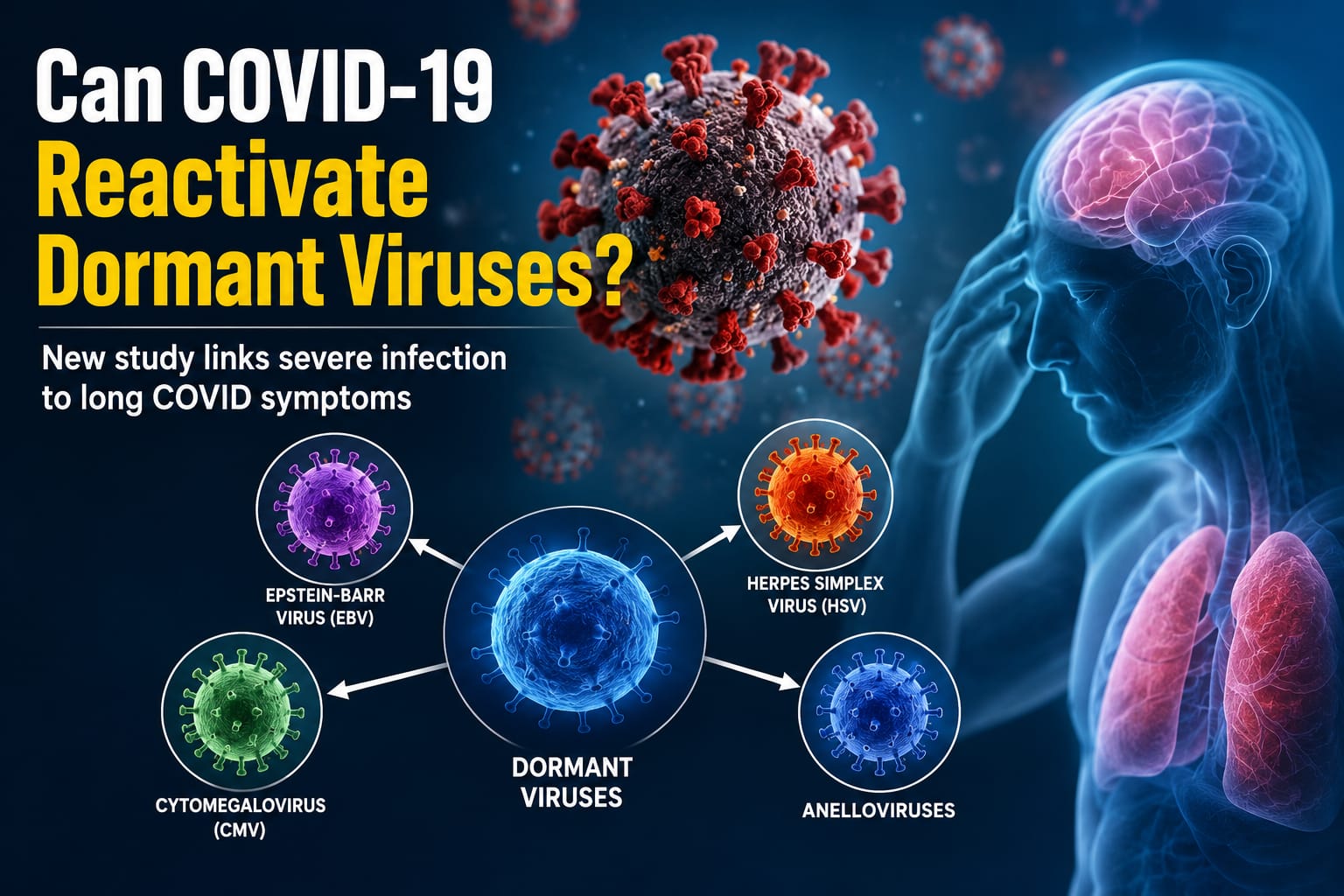
A new scientific study has raised fresh concerns about the long-term impact of COVID-19, suggesting that severe coronavirus infection may trigger the reactivation of dormant viruses that have remained inactive in the body for years. Researchers say this phenomenon could play a role in the development of long COVID, although further studies are needed before drawing definitive conclusions.
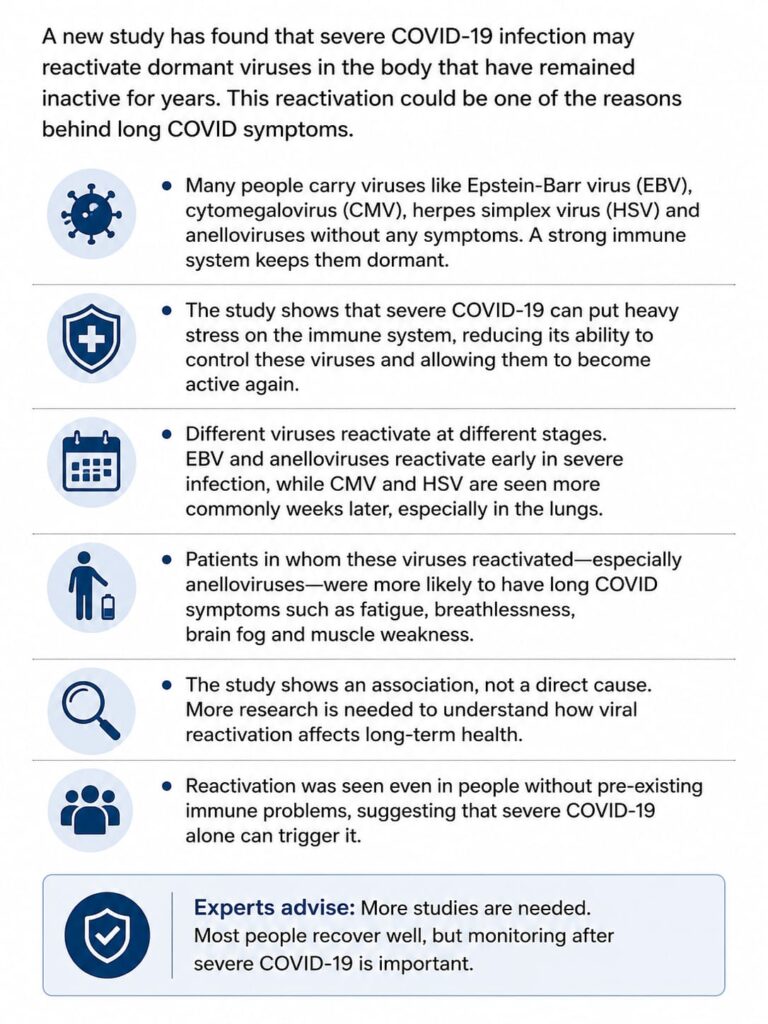
According to a study published in Nature, many people carry viruses such as Epstein-Barr virus (EBV), cytomegalovirus (CMV), herpes simplex virus (HSV), and anelloviruses without experiencing symptoms. These viruses typically remain dormant because a healthy immune system keeps them under control.
However, scientists found that a severe COVID-19 infection can place enormous stress on the immune system, temporarily weakening its ability to suppress these latent viruses. As a result, some dormant viruses may become active again, potentially worsening inflammation and complicating recovery.
Different Viruses Reactivate at Different Stages
Researchers observed that not all dormant viruses become active at the same time. Epstein-Barr virus and anelloviruses tended to reactivate early during severe COVID-19 infection, while cytomegalovirus and herpes simplex virus were more commonly detected several weeks later, particularly in the lungs and respiratory tract.
Possible Link to Long COVID
The research also followed patients for up to one year after infection. It found that individuals who experienced reactivation of certain dormant viruses, particularly anelloviruses, were more likely to report persistent symptoms commonly associated with long COVID. These symptoms included prolonged fatigue, breathlessness, difficulty concentrating (brain fog), and muscle weakness.
Despite these findings, the researchers stressed that the study establishes only an association and does not prove that dormant virus reactivation directly causes long COVID. It is possible that viral reactivation simply reflects severe immune system stress rather than being the primary cause of prolonged illness.
Healthy Individuals Also Affected
One of the study’s notable findings was that viral reactivation was observed even in patients without pre-existing immune disorders. Scientists had previously believed that this mainly occurred in people with weakened immune systems or those taking immunosuppressive medications. Instead, the new evidence suggests that severe COVID-19 alone may be sufficient to temporarily disrupt immune function.
Experts Urge Caution
Health experts emphasize that the findings should not cause unnecessary alarm. Most people recover from COVID-19 without experiencing dormant virus reactivation, and additional research is required to fully understand the relationship between COVID-19, latent viruses, and long COVID.
The study nevertheless adds to the growing body of evidence highlighting the importance of monitoring patients after severe COVID-19 infections and improving understanding of the long-term health effects of the disease.