

New Delhi: HL August 06, 2026
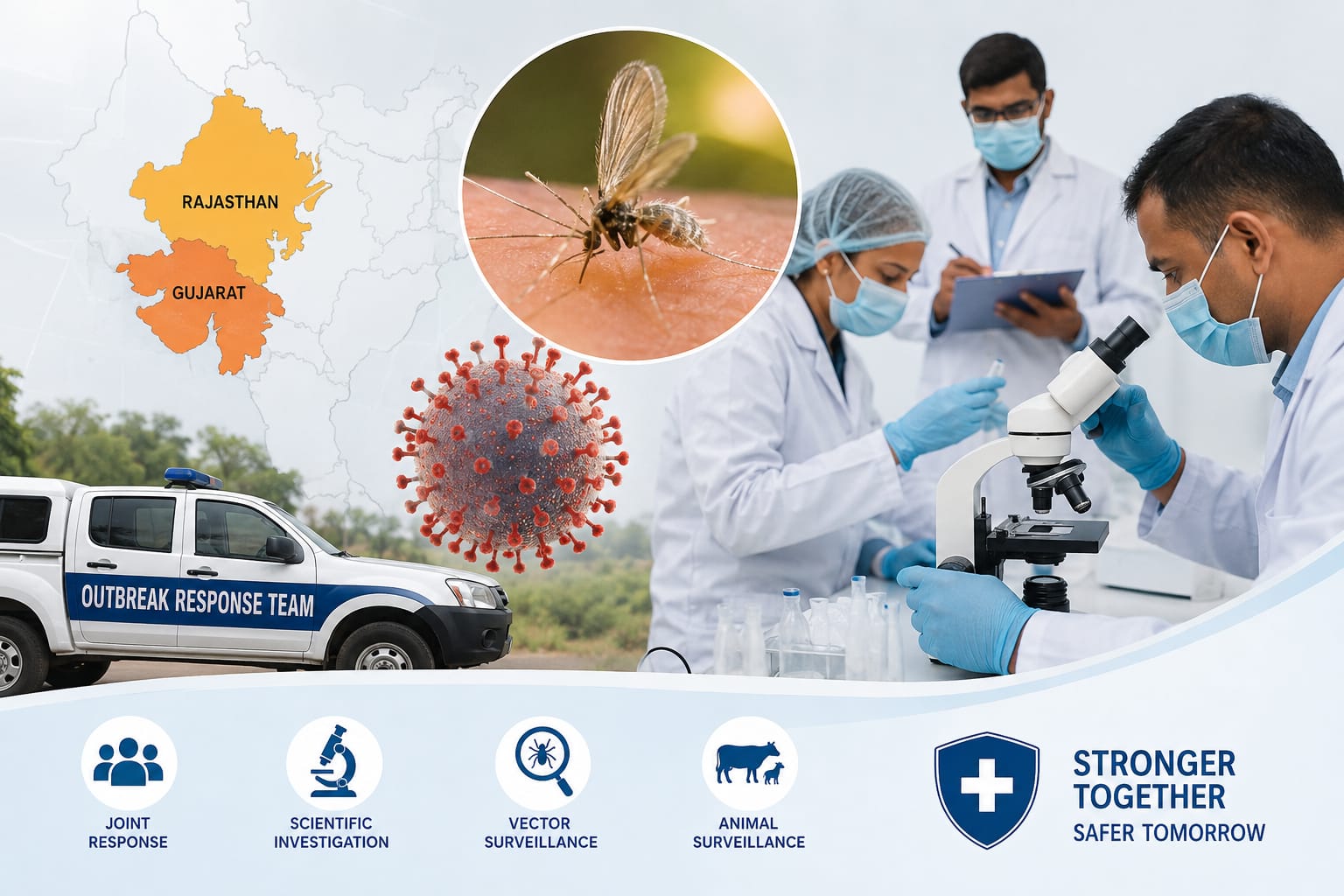
India is witnessing one of its most comprehensive public health responses to the Chandipura Virus (CHPV) outbreak as the Union Government strengthens surveillance, scientific investigations, and field operations in Gujarat and Rajasthan. The deployment of a National Joint Outbreak Response Team (NJORT) reflects growing concern over the virus, which has largely affected children and has been linked to cases of Acute Encephalitis Syndrome (AES).
The multidisciplinary response team includes experts from the National Centre for Disease Control (NCDC), the Indian Council of Medical Research (ICMR), and the Department of Animal Husbandry and Dairying (DAHD). Working closely with state governments, the team is investigating the outbreak, enhancing laboratory testing, improving patient management, monitoring insect vectors, and recommending measures to contain the spread.
The Centre has also activated the Public Health Emergency Operations Centre (PHEOC) to coordinate surveillance and response activities across affected regions.
A Virus First Identified Six Decades Ago
Chandipura virus is not a new pathogen. It was first identified in 1965 from the blood of a patient suffering from fever in Chandipura village of Maharashtra’s Nagpur district, which later gave the virus its name. It belongs to the Rhabdoviridae family under the Vesiculovirus genus.
For several decades, the virus remained relatively unnoticed because many infections were either mild or asymptomatic. However, the situation changed dramatically in 2003, when Andhra Pradesh witnessed a major outbreak of Acute Encephalitis Syndrome among children. Since then, sporadic outbreaks have also been reported from Gujarat, Maharashtra, and other parts of western and central India.
A significant outbreak in Gujarat during 2024 prompted scientists to strengthen surveillance and research. The current 2026 outbreak has once again raised concerns and triggered an extensive nationwide scientific investigation.
What Is Happening in the Current Outbreak?
The latest outbreak has primarily affected Gujarat, with additional cases reported from Rajasthan. Health authorities have confirmed 35 laboratory-confirmed Chandipura virus infections in Gujarat, while 22 children have died during the outbreak. Several patients continue to receive treatment under close medical supervision.
Scientists from multiple premier institutions—including ICMR-NIV Pune, ICMR-NIE Chennai, ICMR-NIVCR Puducherry, ICMR-NIPCR Hyderabad, ICAR-NIVEDI Bengaluru, and Gujarat Biotechnology Research Centre—are jointly studying the outbreak.
The investigations include:
Active surveillance of patients with Acute Febrile Illness (AFI) and Acute Encephalitis Syndrome (AES).
Community serosurveys to detect silent or asymptomatic infections.
Whole-genome sequencing to identify possible genetic changes in the virus.
Laboratory testing of insect vectors collected from affected villages.
Animal surveillance involving cattle, buffaloes, goats, and milk samples to determine whether domestic animals play any role in virus circulation.
Researchers are also examining whether insects other than sandflies, including mosquitoes, ticks, and mites, may contribute to transmission. However, officials have clarified that no conclusions have been reached until scientific investigations are completed.
How Does Chandipura Virus Spread?
Current scientific evidence indicates that the virus is primarily transmitted through the bite of infected sandflies, which are tiny blood-feeding insects commonly found in rural and semi-rural areas.
Although researchers are studying mosquitoes, ticks, and mites as possible carriers, sandflies remain the only confirmed vector at present.
Who Is Most at Risk?
Children below the age of 15 years are considered the most vulnerable. Most severe cases reported during previous outbreaks involved young children, particularly those living in rural areas with high sandfly populations.
Symptoms of Chandipura Virus Infection
Many infected individuals experience only mild illness, while others can develop life-threatening neurological complications.
Early Symptoms
High fever
Headache
Body pain
Weakness
Nausea or vomiting
Severe Symptoms
Seizures
Confusion or altered consciousness
Drowsiness
Acute Encephalitis Syndrome (brain inflammation)
Coma
Death if treatment is delayed
Doctors advise parents to seek immediate medical care if a child develops sudden fever accompanied by seizures, excessive sleepiness, or confusion.
Is There Any Treatment?
There is no specific antiviral medicine or licensed vaccine available for Chandipura virus. Treatment mainly involves supportive care, including fever management, hydration, seizure control, intensive care support when required, and early hospitalisation to reduce complications.
Precautions to Prevent Infection
Health experts recommend the following preventive measures:
Use mosquito and sandfly nets while sleeping.
Apply insect repellents on exposed skin.
Wear full-sleeved clothes and long trousers, particularly during dusk and dawn when sandflies are most active.
Keep surroundings clean and eliminate damp areas where insects may breed.
Install window screens wherever possible.
Maintain personal hygiene and ensure children avoid insect-prone areas during evening hours.
Immediately consult a healthcare facility if symptoms such as high fever, seizures, or altered behaviour develop.
Government Adopts One Health Strategy
The Government of India has adopted a One Health approach that integrates human, animal, and environmental health. Experts from medical, veterinary, entomology, epidemiology, and laboratory sciences are working together to understand how the virus spreads and how future outbreaks can be prevented.
Officials say the ongoing investigations are expected to provide valuable evidence on virus evolution, transmission patterns, and effective control strategies, strengthening India’s preparedness against future outbreaks.