
New Delhi| HL June 30, 2026
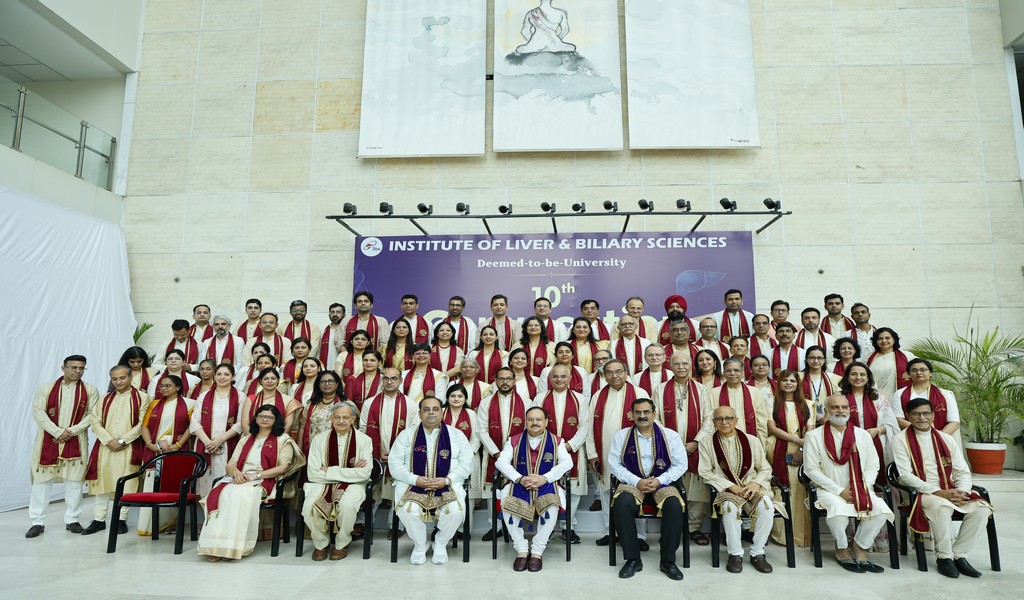
The Institute of Liver and Biliary Sciences (ILBS) celebrated its landmark 10th Convocation Ceremony on Tuesday, marking a decade of excellence in medical education, research and clinical innovation in liver sciences. Union Health Minister Jagat Prakash Nadda used the occasion to announce major healthcare priorities, including the expansion of medical education, strengthening preventive healthcare and the development of a national liver disease screening framework.
A total of 36 post-doctoral scholars and eight Ph.D. graduates received degrees across various super-speciality disciplines, completing the tenth batch of highly trained liver physicians, transplant specialists, scientists and nursing professionals produced by the institute.
Addressing the graduating students, Nadda congratulated them on earning degrees from what he described as one of the world’s foremost dedicated liver universities. He praised ILBS for emerging as a global centre of excellence in liver care and for playing a pioneering role in both the treatment and prevention of liver diseases.
Calling super-speciality education both a privilege and a responsibility, the Union Minister urged graduates to uphold the highest standards of medical ethics while ensuring advanced liver care reaches every part of the country.
Highlighting the Centre’s focus on strengthening healthcare infrastructure and medical education, Nadda said the government has set a target of adding 75,000 undergraduate medical seats over the next five years, with nearly 25,000 seats already created. He also noted that postgraduate medical seats have increased from around 30,000 to more than 80,000, significantly boosting the availability of specialist doctors.
To strengthen the healthcare delivery system, the minister said more than 1.85 lakh Ayushman Arogya Mandirs have been established across the country as the first point of contact for primary healthcare. These centres, he said, are transforming healthcare by integrating preventive, promotive, curative and rehabilitative services.
Emphasising preventive healthcare, Nadda highlighted the success of nationwide screening programmes for non-communicable diseases. He said over 42 crore people have been screened for hypertension, leading to the detection of more than 7.3 crore cases, while another 42 crore people have undergone diabetes screening, identifying nearly 5 crore cases. Screening for oral cancer has covered over 35 crore people, with more than 2.3 lakh cases detected. Breast cancer screening has reached over 16 crore women, identifying more than 86,000 cases, while cervical cancer screening has covered over 9 crore women, resulting in around one lakh diagnoses.
In a significant announcement for liver healthcare, Nadda directed ILBS to prepare a national framework for liver disease screening through Ayushman Arogya Mandirs, aimed at promoting early diagnosis and reducing the burden of chronic liver diseases. He also assured continued support from the Ministry of Health and Family Welfare for innovative public health initiatives undertaken by the institute.
“The vision of Viksit Bharat cannot be achieved without a Swasth Bharat,” the minister said, stressing that prevention, early screening and timely diagnosis would remain the pillars of India’s healthcare strategy.
Presenting the institute’s annual report, “Yakrit Deep – The Eternal Flame of Liver,” ILBS Founder Director Prof. S.K. Sarin highlighted the institute’s achievements during 2025. He said ILBS treated more than 1.6 lakh liver patients, managed 10,800 liver emergencies, and crossed the milestone of 1,392 successful liver transplants, including 162 liver transplants performed during the year.
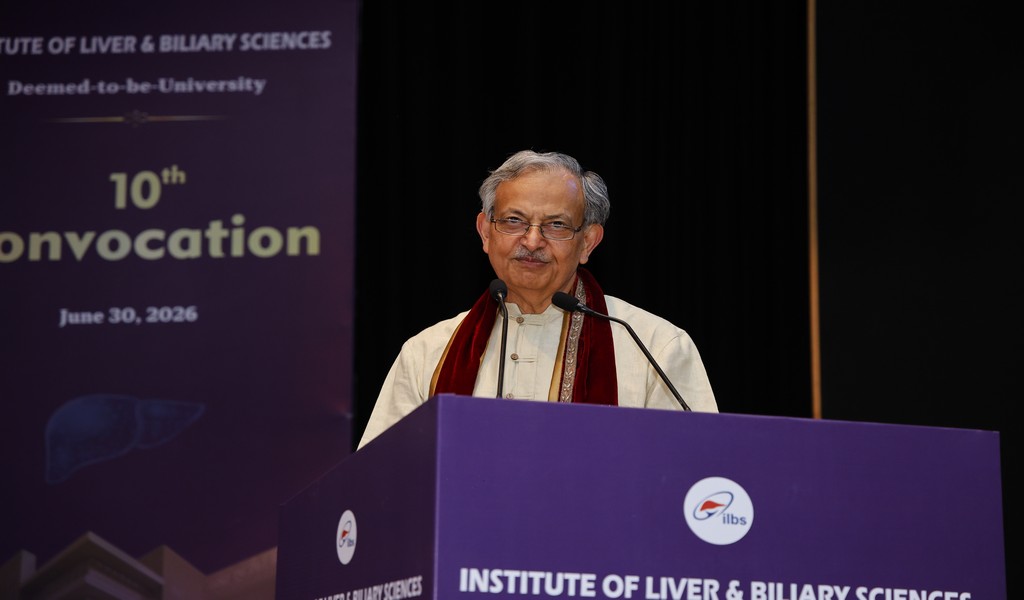
He added that the institute also conducted 372 kidney transplants, with nearly 29 per cent of beneficiaries belonging to economically weaker sections. ILBS has also emerged as Delhi’s leading centre under Ayushman Bharat PM-JAY, providing treatment to over 2,000 beneficiaries, including kidney transplant recipients.
Prof. Sarin highlighted the institute’s expanding global academic and research footprint, including the introduction of Artificial Intelligence and Machine Learning programmes, Digital Pathology, India’s National Liver Disease Biobank, new DM programmes, international collaborations and competitive research funding. He also outlined public health initiatives such as the Swasth Yakrit Mission, Liver Smiles Clinics, and Y-Smiles programme for schoolchildren, aimed at promoting liver health awareness.
Thanking the Union Health Minister for supporting the national initiative to reduce fatty liver disease, Prof. Sarin said preventing liver disease today would also reduce the future burden of diabetes, cardiovascular diseases and cancer.
Congratulating the graduating students, he reminded them that, “Universities become great not by producing good graduates, but when their graduates make history,” urging them to remain lifelong learners and transform healthcare through compassion, innovation and leadership.
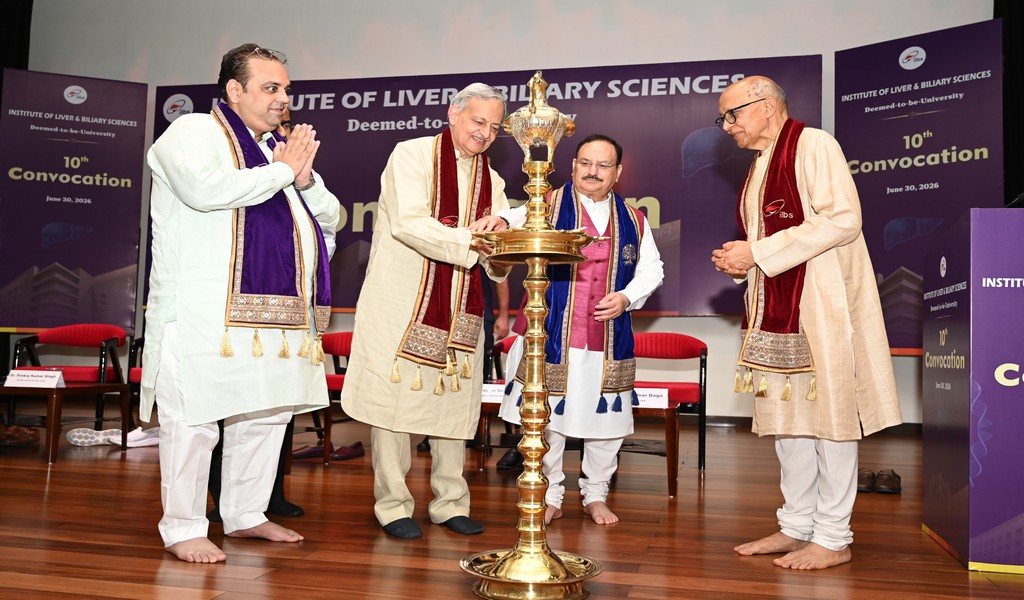
The ceremony was attended by Delhi Health Minister Dr. Pankaj Kumar Singh as the Guest of Honour and Rajeev Verma, IAS, Chief Secretary of the Government of NCT of Delhi and Chairman of ILBS, along with senior faculty members, researchers, healthcare professionals, students and alumni.