

New Delhi: HL September 08, 2026
A new study published in The Lancet Public Health has highlighted the enormous health burden caused by second-hand or passive smoke exposure in India. The study estimates that 325,600 people in India died in 2023 from diseases attributable to second-hand smoke—equivalent to roughly 892 deaths every day.
The findings are particularly concerning because the number of people exposed to second-hand smoke has increased in absolute terms. Around 444 million Indians were exposed to second-hand smoke in 2023, making India the second-highest country globally by the number of exposed people, behind China.
Deaths have risen sharply since 1990
According to the study’s estimates, deaths attributable to second-hand smoke increased from approximately 217,700 in 1990 to 325,600 in 2023, representing an increase of nearly 50%. At the same time, the age-standardised prevalence of exposure declined from 43.2% to 30.6%. This means that although the proportion of people exposed has fallen, India’s growing population has resulted in a larger absolute number of people exposed.
The estimated 2023 death toll included approximately 168,700 men and 156,900 women. The study also estimated 9.28 million disability-adjusted life-years (DALYs) lost in India because of second-hand smoke exposure.
Passive smoke is linked to serious diseases
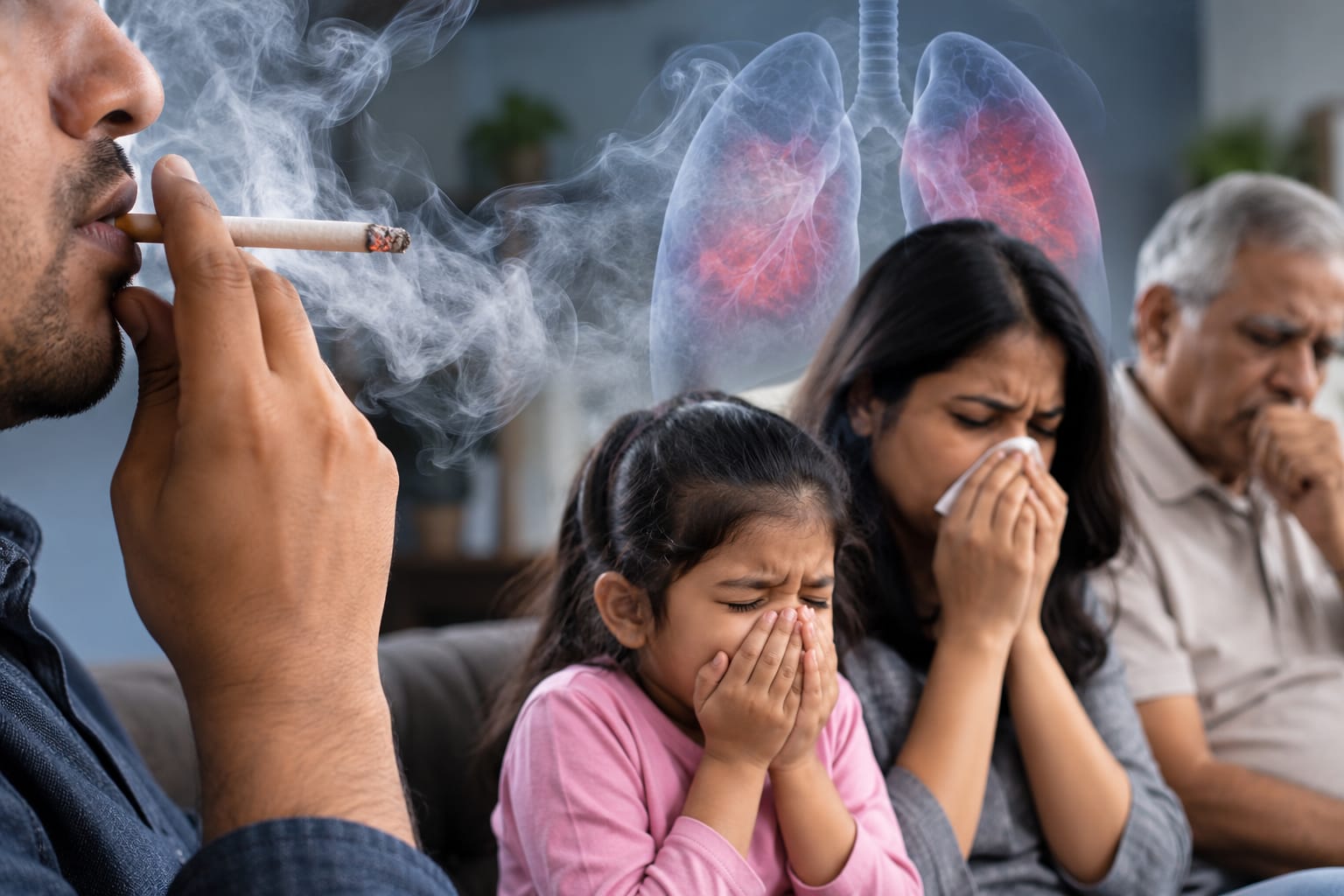
Second-hand smoke is not merely an inconvenience or an issue of smell. Long-term exposure can contribute to serious illnesses, including ischaemic heart disease, stroke, lung cancer, chronic obstructive pulmonary disease (COPD), asthma, type 2 diabetes and respiratory infections.
Children are particularly vulnerable because their lungs are still developing. The study indicates that lower respiratory infections were a major contributor to the disease burden among children exposed to second-hand smoke.
A major public-health warning
The findings underline that tobacco use can affect far more people than those who actively smoke. Family members, children, colleagues and others sharing indoor environments with smokers can inhale tobacco smoke involuntarily.
Experts quoted in reports on the study have stressed the need for greater public awareness and stronger protection against second-hand smoke, particularly for women and children.
Globally, the study estimated that 2.71 billion people were exposed to second-hand smoke in 2023, contributing to around 1.66 million deaths and 44.8 million DALYs.