

New Delhi: HL July 23, 2026
A proposed tariff policy announced by US President Donald Trump on imported generic medicines has raised concerns for India’s pharmaceutical industry, one of the largest suppliers of affordable medicines to the American market. If implemented as proposed, the policy could increase costs for exporters and reshape global pharmaceutical supply chains.
According to the announcement, imported generic medicines will continue to enjoy zero import duty for the first two years. After that, a 100% tariff is proposed for one year, followed by a 200% tariff. The stated objective is to encourage pharmaceutical manufacturers to shift production to the United States and strengthen domestic manufacturing.
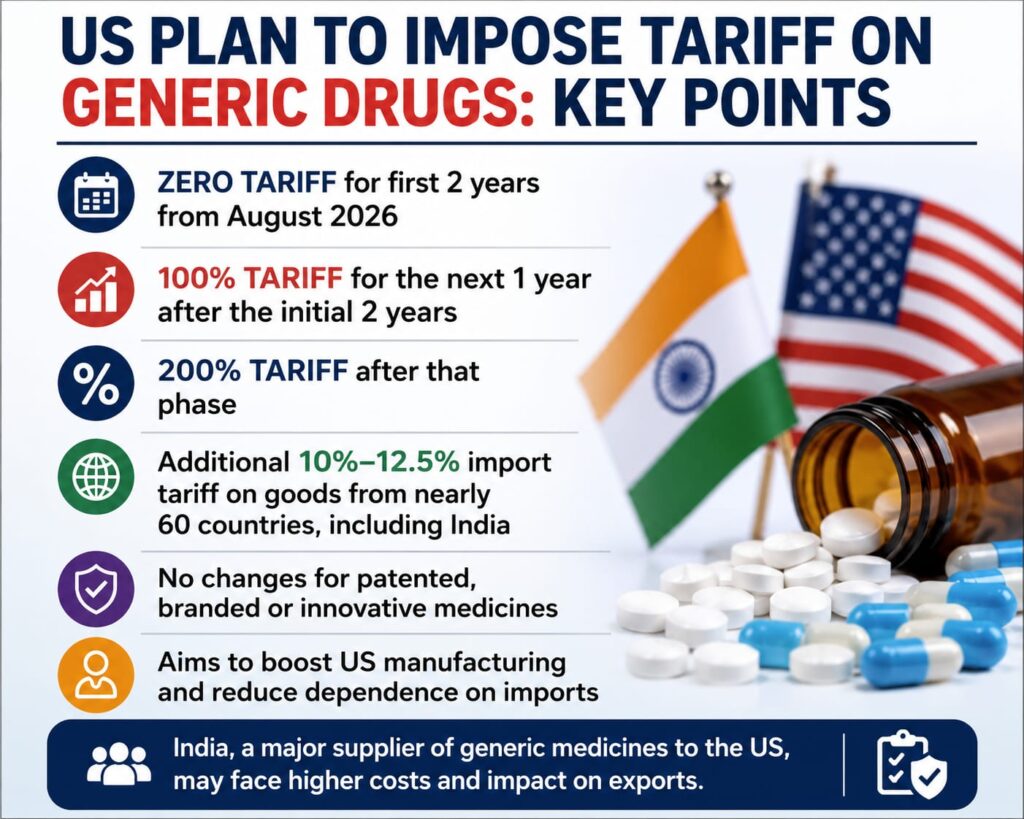
India, often referred to as the “pharmacy of the world,” is expected to be among the countries most affected because it exports a significant volume of generic medicines to the US. Indian pharmaceutical companies supply low-cost medicines used for treating conditions such as diabetes, cancer, hypertension and infectious diseases.
In addition to the proposal on generic medicines, the Trump administration has also indicated that it is considering new import tariffs of around 10% to 12.5% on goods from nearly 60 countries, including India. However, the proposed changes are not expected to apply to patented, branded or innovative medicines.
Industry experts say that while the move is aimed at boosting manufacturing within the US, it could also lead to higher medicine prices and increased healthcare costs for American consumers if imports become more expensive. Supply chains may also face disruptions if companies are forced to relocate production.
The proposal is likely to be closely watched by India’s pharmaceutical sector, policymakers and global healthcare companies, as the US remains one of the country’s largest export markets for medicines.